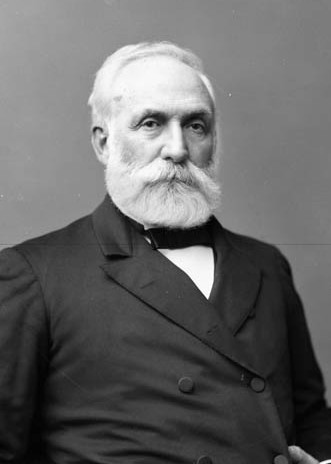
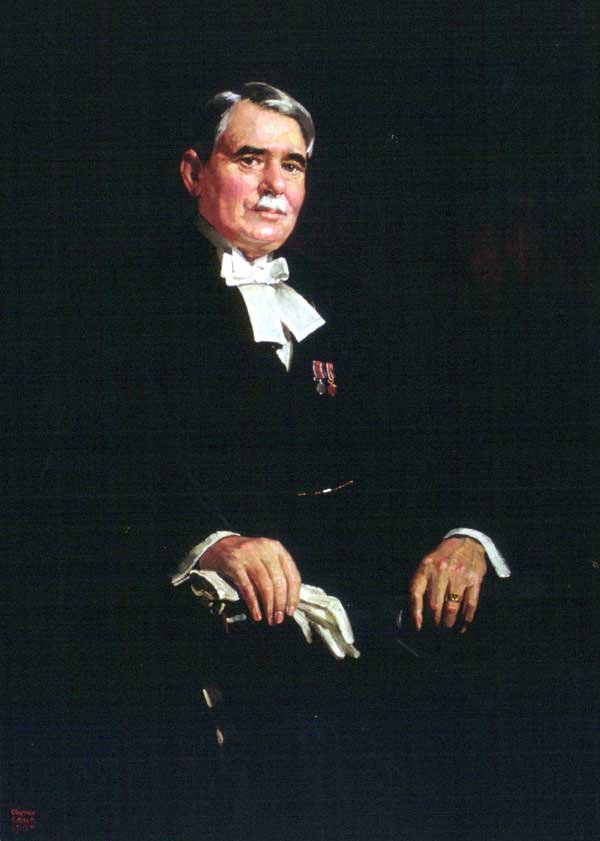
WALLBRIDGE, Lewis
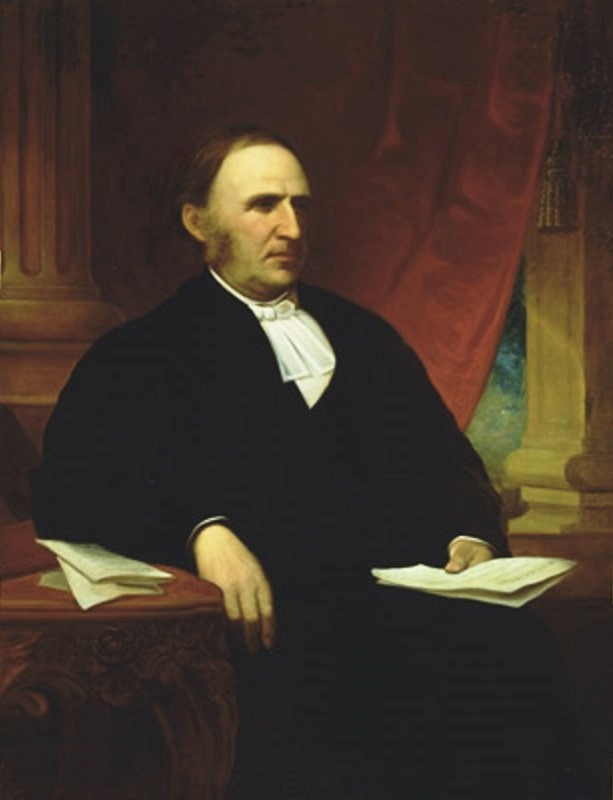
- Born
- 1816-11-27
Belleville, Upper Canada - Died
- 1887-10-20
Winnipeg, Manitoba - Role
- Speaker of the Legislative Assembly of the Province of Canada, 1863–1867; MLA for Hastings South, 1857–1867; Solicitor General for Canada West, 1863; Chief Justice of Manitoba, 1882–1887
Lewis Wallbridge was the Speaker of the Legislative Assembly of the Province of Canada during the Confederation debates of 1865, the presiding officer for the three-week sitting that approved the Seventy-Two Quebec Resolutions. He never sat in the Dominion Parliament that Confederation created: he declined to contest the first federal election of 1867 rather than run against his own anti-confederate brother, and his one later attempt at a Commons seat, in 1878, ended in defeat. He finished his career as Chief Justice of Manitoba, an appointment conferred on him by his old political antagonist John A. Macdonald, and in that office sat on the panel that heard and rejected Louis Riel’s final appeal.
Early life
Wallbridge was born in Belleville, Upper Canada, on 27 November 1816, the son of William Wallbridge, a farmer, trader, and lumber merchant, and Mary Everett. His paternal grandfather and great-uncle were New England Loyalists who had settled in the Bay of Quinte district around 1800. He studied for two years at Dr. Benjamin Workman’s school in Montreal and then at Upper Canada College in York (Toronto) from 1831 to 1833, before articling briefly in Belleville and then in Toronto, under the supervision of Robert Baldwin. He was called to the Upper Canada bar in 1839.
He practised in Belleville, taking mainly land, chancery, and criminal cases, and built the largest legal practice in the district; by 1880 he was described as one of the oldest and most prominent barristers in Ontario. He was elected to the Law Society of Upper Canada in 1855 and, the following year, was made Queen’s Counsel. From 1862 to 1865 he sat as a director of the Bank of Upper Canada.
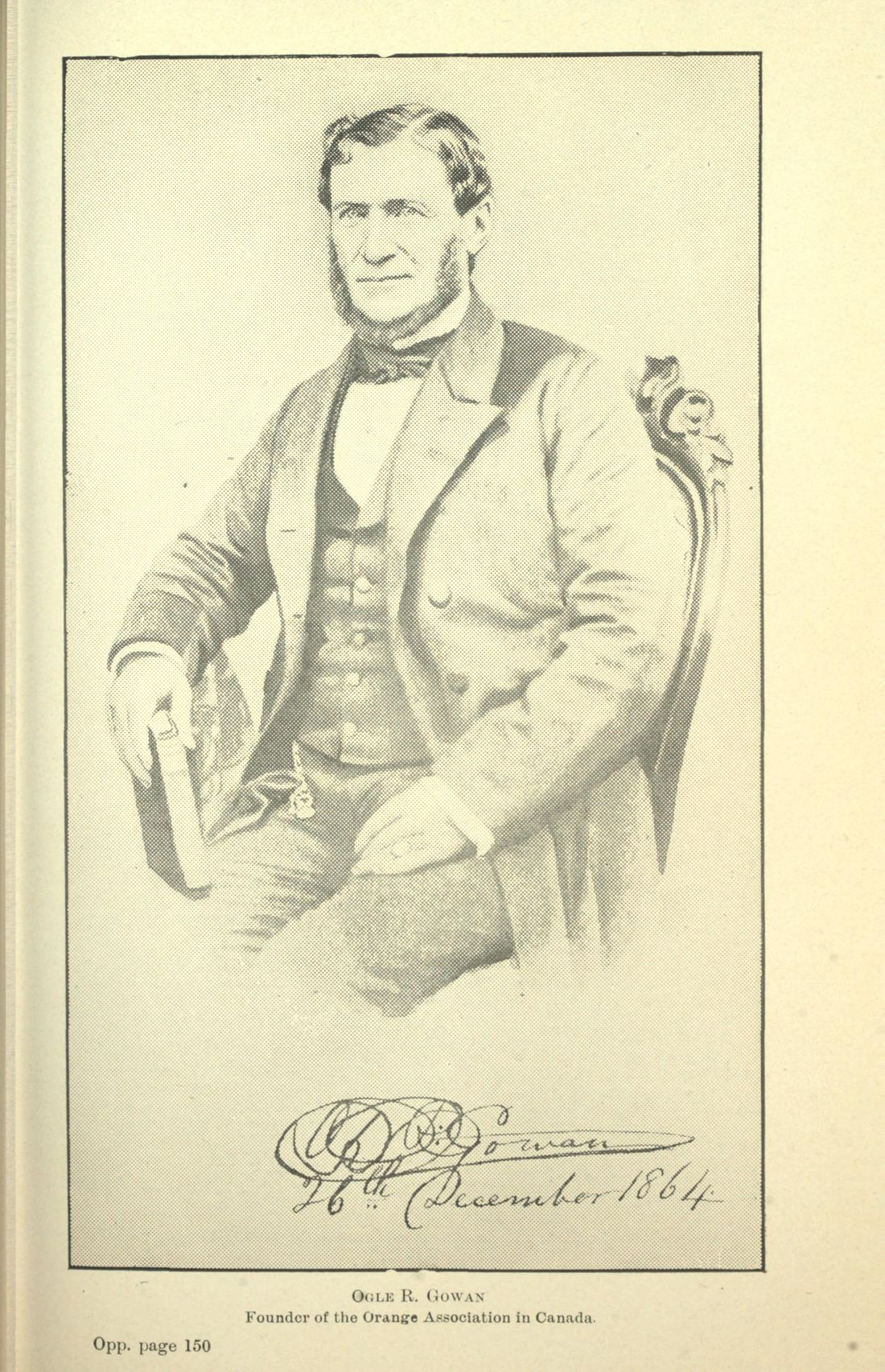
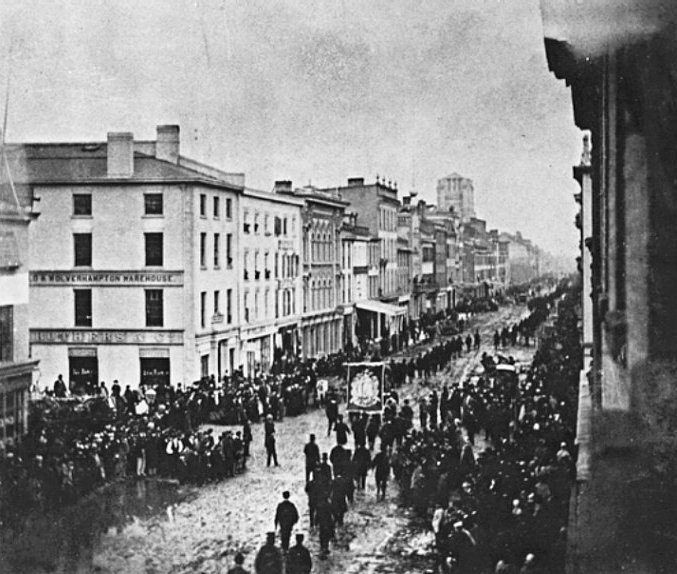
Orange Order
His lodge affiliation was with L.O.L. No. 274 in Belleville, the same district jurisdiction that produced Mackenzie Bowell. The two men, Liberal and Conservative respectively, were lifelong political opponents and personal friends.
Legislative Assembly of the Province of Canada
Wallbridge stood unsuccessfully for Hastings South in 1854. He won the seat in 1857 for the Reform (Liberal) caucus, campaigning for representation by population, a national system of education, free enterprise, and a reduction of the government subsidies then flowing to the Grand Trunk Railway, and held it through the elections of 1861 and 1863.
In May 1863 he joined other moderate Reformers in the reconstructed ministry of John Sandfield Macdonald and Antoine-Aimé Dorion, becoming Solicitor General for Canada West. He was elected Speaker of the Legislative Assembly that August, over some resistance from Lower Canadian members, and held the chair through the Taché–Macdonald ministry and the Great Coalition that followed it, including the 1865 session in which the Assembly debated and approved the Quebec Resolutions. His Dictionary of Canadian Biography entry records that he presided “with tact, skill, and firmness.” The Assembly sat for the last time, in Ottawa, in the summer of 1866; Wallbridge held the Speaker’s chair until the Province of Canada itself was dissolved by Confederation on 1 July 1867.

Confederation and its aftermath
Wallbridge did not stand in the first Dominion election of 1867. His brother, Thomas Campbell Wallbridge, had represented the neighbouring riding of Hastings North since 1863 and was a committed opponent of Confederation, while Lewis had thrown his support behind Macdonald’s coalition once representation by population was secured. Running against his own brother, on opposite sides of the confederation question, was a contest he chose to avoid. Neither Wallbridge sat in the first Dominion Parliament, and Lewis stayed out of elected politics for the next eleven years.

In 1878 he returned to public life as the Conservative candidate for the newly created federal riding of Hastings West, a change of party allegiance and constituency alike. He lost the contest, undone in part by Catholic opposition and by lingering Conservative resentment of his Reform background.
Chief Justice of Manitoba
Out of public life after his 1878 defeat, Wallbridge made it known that he wanted a judicial appointment. In December 1882 John A. Macdonald named him Chief Justice of Manitoba and a judge of its Court of Queen’s Bench, his first judicial post of any kind. Macdonald’s own private correspondence from the period, since published, shows the prime minister worried that Wallbridge’s missing teeth would “lower the dignity” of the Manitoba Bench, and that he asked Mackenzie Bowell to broach the subject with their fellow Belleville man. The dental diplomacy, such as it was, came to little; Wallbridge took his seat in Winnipeg as Chief Justice regardless. Justice Minister Alexander Campbell defended the appointment publicly by pointing to Wallbridge’s familiarity with the many Ontario-trained lawyers then practising in Manitoba and his expertise in land law. The appointment cost the bench one sitting judge: Mr. Justice Miller resigned in protest.
In September 1885 Wallbridge sat with Justices Taylor and Killam on the Court of Queen’s Bench panel that heard Louis Riel’s appeal against his conviction for treason. The court unanimously rejected the appeal on every ground argued, including a challenge to the court’s own jurisdiction and the defence of insanity, and confirmed the conviction; Riel was executed at Regina the following November. The Manitoba Historical Society’s biographical note on Wallbridge records that his part in that panel has since been cited in arguments for reconsidering the legitimacy of the 1885 conviction, though the court’s own published reasoning found its jurisdiction to hear the case, under the North-West Territories Act, 1880, to be sound.
Wallbridge’s temper was a recurring subject of comment on the Manitoba bench; one account of his years as Chief Justice describes him losing patience in open court and throwing a statute book across the room. Off the bench, he served Macdonald as an informant on Manitoba political affairs and mediated repeatedly between the Conservative premier, John Norquay, and the prime minister. In 1886 he served, reluctantly, as royal commissioner investigating corruption charges against Norquay, and exonerated the premier of personal wrongdoing.
Personal life
Wallbridge never married. He was an active member of the Church of England and sat on the senate of Albert College in Belleville, the institution where his brother Thomas had endowed a professorship of mining and agriculture in 1869. In his later years at Belleville he took up gentleman farming and was elected second vice-president of the Beekeepers’ Association of Ontario in 1880. Contemporaries described him as moderate and pragmatic; the Conservative-aligned Daily British Whig went so far as to call him “a Conservative at heart” despite his lifelong Reform affiliation, while colleagues found him intellectually cautious and, in Mackenzie Bowell’s private assessment, marked by “extreme egotism.”
Death
Wallbridge died in Winnipeg on 20 October 1887, at the age of seventy, while still serving as Chief Justice of Manitoba. He was buried in Belleville, the town where he had spent most of his working life.
Trace Your Orange Roots
Surname matches, haplogroup placement, and living relatives. FamilyTreeDNA's testing kits pick up where archival records on the Wallbridge line end.
Affiliate links. We earn a small commission at no cost to you. Full disclosure →
Sources
- Bruce W. Hodgins, 'WALLBRIDGE, LEWIS,' Dictionary of Canadian Biography, vol. 11 — Authoritative scholarly biography; primary source for family background, education, the Canada West solicitor-generalship, his refusal to contest the 1867 election against his own brother, and his 1878 federal defeat.
- Lewis Wallbridge — Wikipedia — Corroborates the DCB's account that he sat in the pre-Confederation Legislative Assembly only, and never in the House of Commons.
- 8th Parliament of the Province of Canada — Wikipedia — Confirms Wallbridge held the Speaker's chair for the full life of the Parliament, 1863 to its dissolution at Confederation, with the final session sitting in Ottawa in the summer of 1866.
- Memorable Manitobans: Lewis Wallbridge, Manitoba Historical Society — Source for his Manitoba judicial career, the Miller resignation, his role on the panel that heard Riel's appeal, and the courtroom temper anecdote.
- Queen v. Riel, Court of Queen's Bench of Manitoba, 1885 — Primary record of the appeal panel (Wallbridge, C.J., with Taylor and Killam, JJ.) and its unanimous rejection of Riel's appeal.
- UVic Confederation Debates Project — Lewis Wallbridge as Speaker, Legislative Assembly of the Province of Canada — Academic primary-source archive of the Confederation debates. Wallbridge presided from the Speaker's chair through much of the 1864–1865 session that produced the Quebec Resolutions.
- Linked Parliamentary Data Project — Lewis Wallbridge — Provincial-era parliamentary record for Hastings South; confirms no federal House of Commons service.
- The Globe, 1882–1887, reports on the Manitoba bench — Contemporary press coverage of his tenure as Chief Justice.
Further reading
As an Amazon Associate we earn from qualifying purchases. Full disclosure →
- The Canadian Directory of Parliament, 1867–1967 — J. K. Johnson, editor. Public Archives of Canada, 1968.
- The Confederation Debates in the Province of Canada, 1865 — Reprint edition edited by P. B. Waite, McClelland & Stewart / Carleton Library, 1963.