The Loyal True Blue and Orange Home, Richmond Hill

The Loyal True Blue and Orange Home was a Protestant children’s home operated jointly by the Loyal True Blue Association and the Grand Orange Lodge of Canada, opened at Richmond Hill, Ontario, on Dominion Day, 1 July 1923. It stood on Yonge Street north of Toronto, at its intersection with Silverwood Avenue, and became one of the recognisable institutional landmarks of Richmond Hill. Local residents knew it informally as the “Orange Orphanage.” The building still stands, is carried on the town’s heritage inventory, and today operates as a licensed non-profit childcare centre, the same charitable board having converted the property from orphanage to daycare use when Ontario’s child-welfare system moved away from institutional homes in the early 1980s.
Origins, the Picton orphanage
The Home’s institutional history starts in 1889, not in Richmond Hill. Mrs. Joseph Hilton, whose lodge affiliation was Toronto’s Lady Verner True Blue Lodge, brought the condition of Protestant orphan care before the 1890 Grand Lodge of the Loyal True Blue Association.
The concept drew support across the Ontario True Blue membership quickly. The Picton Lodge in Prince Edward County took the initial lead, securing a property in the town. The orphanage was formally opened at Picton, Ontario, on 23 August 1899.
Outgrowing Picton
By the early 1910s the Picton accommodation was plainly inadequate to the demand. The enterprise had strong support across the True Blue membership but needed a larger institutional base and a broader funding coalition.
In 1916 the Provincial Grand Orange Lodges of Ontario East and Ontario West joined the board of management, the first formal institutional cross-over between the True Blue and mainstream Orange bodies on the orphanage. In 1919 a larger property was purchased at Richmond Hill, on Yonge Street north of Toronto. In 1920 the Ladies’ Orange Benevolent Association (LOBA) of Ontario East and West joined the project, bringing the women’s wing of the senior Orange Order into the management partnership.
The Richmond Hill building
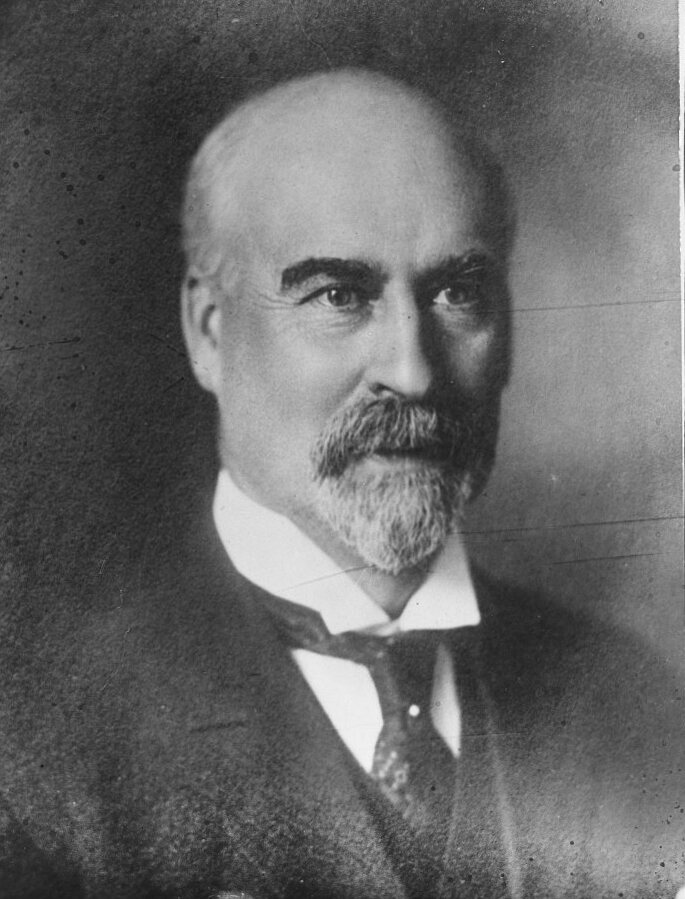
The cornerstone of the Richmond Hill building was laid on 22 October 1921 by H. C. Hocken, former Mayor of Toronto and then Grand Master of the Grand Orange Lodge of Canada.
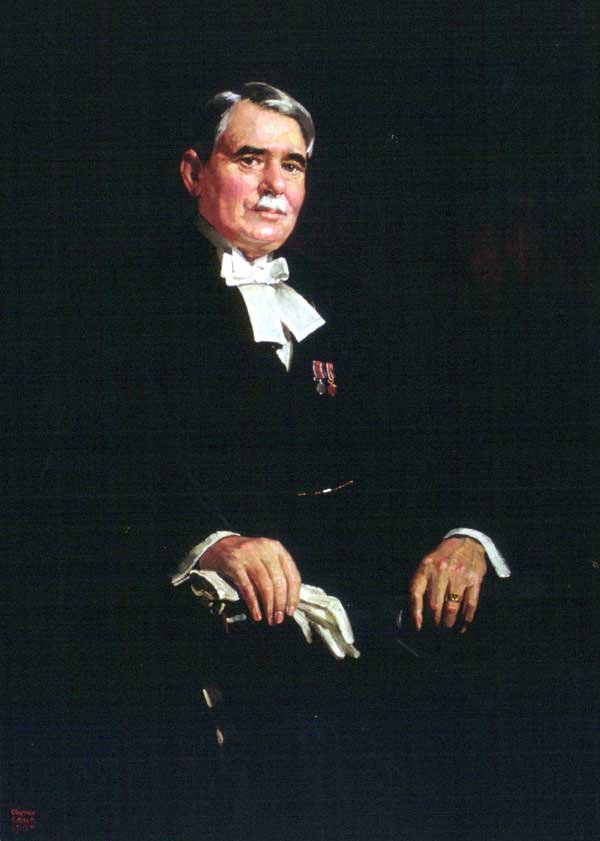
W. W. Fitzgerald presided at the opening ceremony. Reverend W. L. L. Lawrence delivered the dedicatory prayer. The Honourable W. D. McPherson, K.C., the then Grand Master of the Grand Orange Lodge of Canada, delivered the Grand Lodge’s formal approval. H. C. Hocken was present again, this time in his capacity as the federal Member of Parliament for Toronto West. George Farley, Grand Master of the Loyal True Blue Association, represented the Home’s originating body. Mary Cullum, the founder and first Grand Mistress of the LOBA, represented the women’s wing.
Operation
The Home operated through the middle decades of the 20th century as a Protestant residential children’s facility. The institutional pattern was typical of the early-20th-century Canadian voluntary sector in child welfare: a denominationally-affiliated residential home, governed by a volunteer board, funded by a combination of Grand Lodge per-capita levies, LOBA fundraising, individual donations, and modest provincial child-welfare grants. Children in residence wore distinctive uniforms, a common practice in institutional child care of the period that visibly marked them, inside and outside the Home, as its wards. A 1926 brochure described the Home’s capacity and daily routine.
The Home’s founding motto, reproduced on the original Dominion Day 1923 dedication document and on the 1926 brochure, was: “They stand straightest who stoop to help a little child.”
Closure and later uses
The institutional-orphanage model the Home had operated on since 1899 came to an end in the early 1980s, when Ontario’s Ministry of Community and Social Services moved provincewide away from residential orphanages and toward foster care as the standard placement for children without parental care. The Home closed as an orphanage in 1982; the building itself was extended that same year rather than vacated. Rather than wind the institution down, the charitable board that had run the orphanage pivoted to a new purpose, opening a licensed childcare centre on the site to continue serving the community’s children under the same founding mandate.
In the years that followed, the building also housed other tenants and community organisations, among them a St. John Ambulance branch and the Learning Disabilities Association. Century Montessori School occupied part of the building beginning in 1994, enrolling its first students there in 1997. Seniors’ housing was later built on sections of the former Home property.
Current status
The building, at the corner of Yonge Street and Silverwood Avenue, remains on the Town of Richmond Hill’s Inventory of Cultural Heritage Resources. It also remains in active use: the same board that once ran the orphanage now operates the Loyal True Blue & Orange Home as a non-profit, flexible childcare centre at 11181 Yonge Street, serving families in Richmond Hill on weekdays and, for eligible families, with fee assistance administered through York Region. More than a century after Mrs. Joseph Hilton first raised the question of Protestant orphan care before the True Blue Grand Lodge, the institution she prompted is still, in a different form, caring for children on the same road.
Trace Your Orange Roots
Surname matches, haplogroup placement, and living relatives. FamilyTreeDNA's testing kits pick up where archival records end.
Affiliate links. We earn a small commission at no cost to you. Full disclosure →
Sources
- The Loyal True Blue and Orange Home — Wikipedia — Source for the orphan uniform practice, the 1982 closure under Ontario's ministry policy shift, and the building's subsequent tenants (St. John Ambulance, the Learning Disabilities Association, Century Montessori School).
- Loyal True Blue & Orange Home — About Us — The successor organization's own account of the 1980s transition from orphanage to non-profit childcare centre and its current operations at 11181 Yonge Street.
- Richmond Hill Inventory of Cultural Heritage Resources — The Richmond Hill municipal heritage inventory lists the building as a landmark structure.
- Grand Orange Lodge of Canada — Annual Reports of Proceedings, 1890–1925 — Primary record of the appointment of the orphanage board (1890), the Picton property purchase (1899), the Richmond Hill property purchase (1919), and the 1923 opening.
- Loyal True Blue Association — Minute books, 1870–1925 — Institutional records of the True Blue side of the enterprise. Holdings split across the Archives of Ontario and private lodge collections.
- The Richmond Hill Liberal, coverage 1919–1925 — Contemporary local press covering the Richmond Hill construction, cornerstone laying, and 1923 opening. Also the source for the Home's informal community name, the 'Orange Orphanage.'
Further reading
As an Amazon Associate we earn from qualifying purchases. Full disclosure →
- Early Days in Richmond Hill: A History of the Community to 1930 — Robert M. Stamp. Richmond Hill Public Library Board, 1991. Free electronic edition at edrh.rhpl.ca; covers the Home's establishment in context of early-20th-century Richmond Hill.