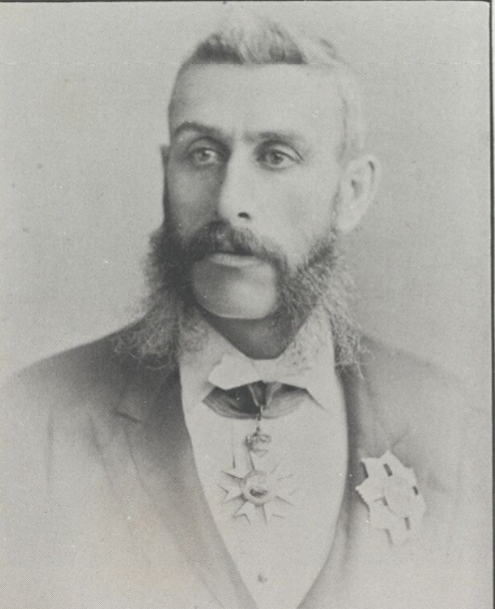
WINTER, Sir James Spearman
- Born
- 1845-01-01
Lamaline, Newfoundland - Died
- 1911-10-06
Toronto, Ontario - Role
- Premier of Newfoundland 1897–1900; Attorney General 1885–1889; Solicitor General 1882–1885; Speaker of the House of Assembly 1877–1878; Judge of the Supreme Court of Newfoundland 1893–1896; Member for Burin and for Harbour Grace at various dates, 1873–1900
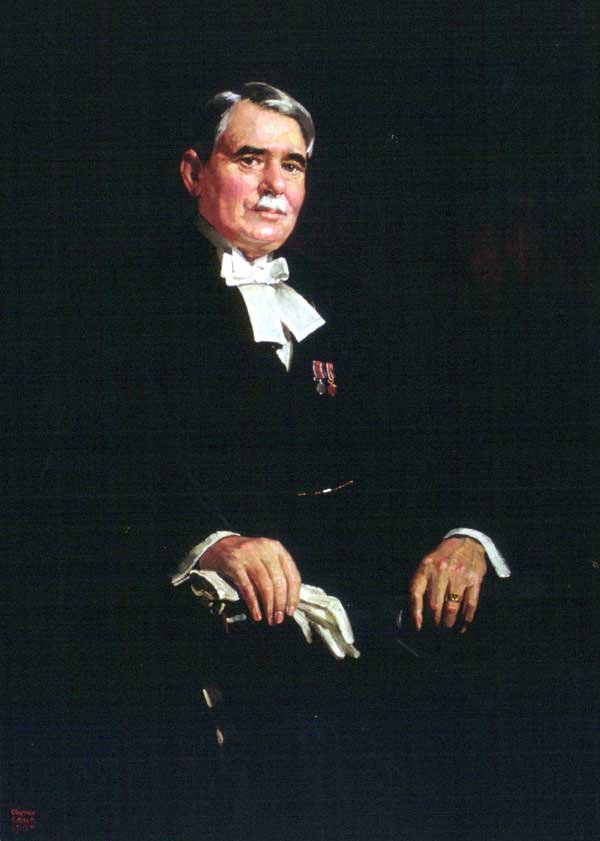
Sir James Spearman Winter served as Premier of Newfoundland from 1897 to 1900, the first premier born in one of the island’s outports. His public life ran, across nearly four decades and with two significant breaks, through twenty-seven years as an elected member of the House of Assembly, three years as a Supreme Court judge, three law-officer portfolios, the Speaker’s chair, a knighthood earned at the negotiating table in Washington, and finally the Premier’s office itself.
Early life and legal training
Winter was born at Lamaline, on the Burin Peninsula, on 1 January 1845, the son of James M. Winter, an officer in the Newfoundland customs service, and Harriet Pitman. Lamaline was a classic Newfoundland outport, an inshore cod-fishing community dependent on the Grand Banks trade.

On 22 October 1881 he married Emily Julia Coen, daughter of Captain William J. Coen, governor of the Newfoundland penitentiary. They had eight children, four sons and four daughters. Emily died in 1908, three years before her husband.
The Harbour Grace Affray and Winter’s early career
Winter was first elected to the Newfoundland House of Assembly in 1873 as the member for Burin, the district that contained his native Lamaline. He held the seat until 1885.
Between 1877 and 1878 he held the Speaker’s chair of the House of Assembly. He became Solicitor General in 1882 under Sir William Whiteway’s government, a post he held until 1885, when he moved to Attorney General in the Thorburn ministry, holding that portfolio until 1889. Across roughly the same years he also served as the Orange Order’s Provincial Grand Master for Newfoundland, from 1878 to 1885.
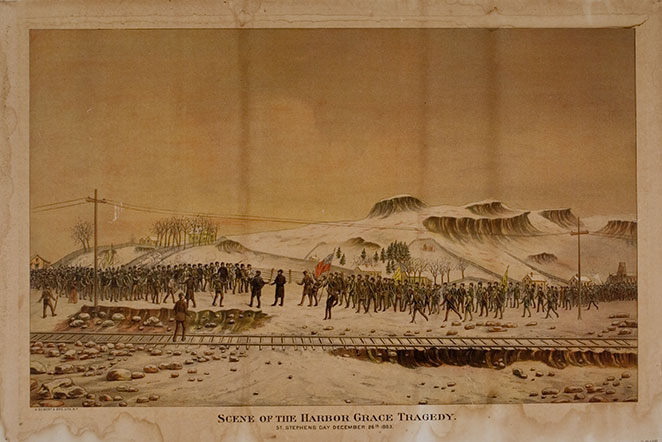
In December 1883 the Harbour Grace Affray, the 26 December 1883 clash between Orangemen and Catholic Riverhead residents at Harbour Grace in which four men were killed and seventeen injured, came to trial at the Assizes. Nineteen men stood accused of murder; Winter appeared for the Crown as prosecutor, and the trials closed with two acquittals. In the general election of 1885 he switched constituencies, standing for Harbour Grace itself as the New Party (Thorburn) candidate, and held that seat through the 1885 and 1887 elections. His early opposition to Whiteway’s first railway construction contract, in 1881, marked him from the start of his career as a critic of the railway-concession politics he would later have to manage himself, as Premier, in the Reid Contract of 1898.
Defeated at Harbour Grace in the 1889 general election, when the Whiteway-led Liberal coalition swept back into power, Winter spent the next three years out of the legislature. He stayed politically active: in 1890 he travelled to London as an unofficial representative of the Patriotic Association on the French Shore fishery question, and in the autumn of 1891 he made a secret visit to Ottawa, travelling under the name “Mr. Spearman,” to sound out Canadian support for Newfoundland’s confederation with the Dominion. Nothing came of the approach. He returned to the House of Assembly by winning a by-election for Burin in November 1892, then left it again the following year, accepting appointment to the Supreme Court of Newfoundland in May 1893. On the bench he presided over the contentious cases brought under the Controverted Elections Act in February and March 1894, unseating several sitting Liberal members. He resigned the judgeship in November 1896 to return to politics, was elected leader of the Tory Party in February 1897, and won back a seat for Harbour Grace in the general election that followed later that year.
Knighthood and the Washington fisheries conference
Winter represented Newfoundland at the international fisheries conference held in Washington over the winter of 1887 to 1888, at which the colonial secretary Joseph Chamberlain negotiated a treaty governing North Atlantic fishing rights that the United States Senate ultimately declined to ratify. For his service at the conference, Winter was appointed a Knight Commander of the Order of St Michael and St George (KCMG) in 1888, nine years before he became Premier and not, as sometimes stated, during his premiership itself.
Premier of Newfoundland, 1897–1900
Winter led the Tory Party into the 1897 general election on a Protestant-rights platform that drew the Orange constituency in the Avalon Peninsula and the south-east coast. The Tories won, and Winter was sworn in as Premier, combining the office with the portfolios of Attorney General and, later, Minister of Justice.

His three years in office saw the completion of the Newfoundland Railway to Port aux Basques, the 1898 Reid Contract that transferred large Crown land concessions to the railway-builder Robert Gillespie Reid in exchange for operating and shipping commitments, and mounting controversy over those concessions. In 1898 he travelled again to London to press Newfoundland’s case on the French Shore question and represented the colony at the Anglo-American conference held that year at Quebec. Late in 1899, amid a cabinet rift over the direction of the government, he dismissed his colleague Alfred Bishop Morine from the executive and then forced Morine’s outright resignation; Morine went on to defeat Winter for the party leadership after Winter’s government fell the following spring. The 1900 general election returned the Liberals under Sir Robert Bond, who had campaigned against the Reid deal. Winter lost his own seat in Harbour Grace, his government fell, and he resigned the premiership on 5 March 1900.
Retirement and death
Winter made one further attempt to return to elected office, standing unsuccessfully for Burin in 1904 as a United Opposition candidate. In 1909 and 1910 he served as one of the counsel for the British side in the North Atlantic Coast Fisheries arbitration between Great Britain and the United States, appearing before the Permanent Court of Arbitration at The Hague.
Winter died in Toronto, at the home of a married daughter, at midnight between 6 and 7 October 1911, at the age of sixty-six.
Trace Your Orange Roots
Surname matches, haplogroup placement, and living relatives. FamilyTreeDNA's testing kits pick up where archival records on the Winter line end.
Affiliate links. We earn a small commission at no cost to you. Full disclosure →
Sources
- NEARY, PETER. 'WINTER, Sir JAMES SPEARMAN', Dictionary of Canadian Biography, vol. 14 — Authoritative scholarly biography; primary source for the 1889 Harbour Grace defeat, the 1892 Burin by-election, the 1893–1896 Supreme Court interlude, the secret 1891 Ottawa visit, and the Morine break.
- 'WINTER, Sir James Spearman', Dictionary of National Biography, 1912 Supplement — Contemporary obituary-biography, published within a year of his death. Source for his marriage details, the exact 1888 KCMG date and its Washington-conference basis, and the circumstances of his death in Toronto.
- James Spearman Winter — Wikipedia — Tertiary overview only; every material claim on this page is verified against the DCB entry, the DNB supplement, the Rooms archives, and the House of Assembly Journals below.
- Rooms Provincial Archives of Newfoundland and Labrador — Winter papers
- Journal of the House of Assembly of Newfoundland, sessional volumes 1873–1900 — Primary record of Winter's legislative career, speakership, and premiership.
Further reading
As an Amazon Associate we earn from qualifying purchases. Full disclosure →
- A History of Newfoundland and Labrador — Frederick W. Rowe. McGraw-Hill Ryerson, 1980. Standard single-volume political history.