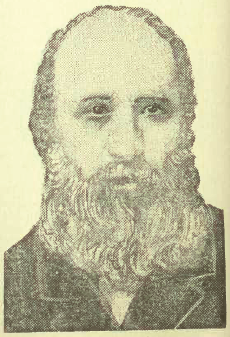
BEARD, Joshua George
- Born
- 1797-01-01
England - Died
- 1866-11-09
Toronto, Canada West - Role
- Mayor of Toronto, 1854; Toronto city councillor for St. Lawrence Ward 1834–1854; Chairman of the Toronto Board of Public School Trustees 1852–1864; coal merchant and wharf proprietor
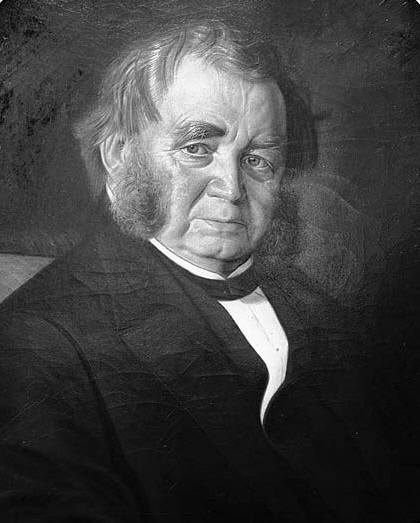
Joshua George Beard was mayor of Toronto in 1854, the council’s answer to the previous year’s Ten Thousand Pound Job scandal. When the Toronto Board of Public School Trustees ran short of construction money for the city’s first common school, he personally guaranteed a nine-thousand-pound promissory note so the building could be finished. That was the kind of civic weight he carried. He had taken his seat on Toronto’s first council the day the city was incorporated in March 1834, held St. Lawrence Ward for twenty consecutive years, and chaired the Board of Trustees through twelve of the years in which tax-supported public schooling was being built from scratch in Canada West.
Early life and business
Beard was born in England in 1797. He emigrated to Upper Canada as a young man and set up in the coal trade at York, where he served for a period as sheriff’s clerk and secretary for the town before its incorporation as a city. His firm, J. G. Beard and Sons, operated from a yard at the foot of Jarvis Street on the Toronto lakefront. The holdings included a large wharf and a grain elevator, and by the 1840s the firm was the largest coal merchant in the town. Beard’s real-estate interests reached beyond the wharf property: he held land in Clarke Township, in what is now Durham Region, and an interest in Beard’s Hotel in York, and by the peak of his career was counted among the city’s largest individual property owners.

Toronto’s first city council
When York became the City of Toronto under the Act of Incorporation of 6 March 1834, Beard was elected as the councillor for St. Lawrence Ward.

Mayor of Toronto, 1854
Beard’s elevation to the mayoralty followed directly from a scandal that had nothing to do with him. In 1853 Mayor John George Bowes had used his position to profit personally from a municipal investment in railway stock, taking an undisclosed gain of roughly ten thousand pounds in what the Toronto press dubbed the Ten Thousand Pound Job. Eight aldermen resigned over the affair, the city sued Bowes, and he was forced to repay his profit. Against that backdrop, the council in January 1854 wanted a mayor whose personal financial standing and reputation for probity were beyond question. Beard, the coal merchant whose credit had underwritten the school board’s building fund, fit the requirement exactly. His election was unanimous.
Beard fell seriously ill within days of taking office. John Beverley Robinson, later the lieutenant governor of Ontario, acted as mayor through the early spring, during which the city moved to clear out temporary cholera-quarantine housing left over from an earlier public health scare. Beard returned to the chair in April and served the rest of the year without further incident. He did not stand for re-election as mayor in January 1855, but continued to sit as an alderman for St. Lawrence Ward for another decade, declining re-election to council only in 1865.
Toronto Board of Public School Trustees
Beard had joined the Board of Trustees for the Toronto public schools at its formation in 1850. He was elected chairman of the Board in 1852 and held the office for twelve years, until 1864, when he retired citing poor health. He was an early and consistent advocate for free, tax-supported public education, at a time when that position was contested in Canada West.
When the Board’s first common school ran short of construction money, Beard personally guaranteed a nine-thousand-pound promissory note, a substantial sum in mid-19th-century Toronto, so the building could be completed. By the time he stepped down, the Board operated nine schools and served nearly six thousand pupils.
Family and retirement
Three of Beard’s sons worked in the family firm, and it was they who took over J. G. Beard and Sons when their father retired from public life in the mid-1860s.
Death
Beard died in Toronto on 9 November 1866, at the age of sixty-nine.
Trace Your Orange Roots
Surname matches, haplogroup placement, and living relatives. FamilyTreeDNA's testing kits pick up where archival records on the Beard line end.
Affiliate links. We earn a small commission at no cost to you. Full disclosure →
Sources
- Joshua George Beard — Wikipedia — Tertiary overview only; every material claim on this page is verified against Russell's *Mayors of Toronto* (1982), the Board of Trustees minute books, and *The Globe* coverage below. Source for the sheriff's clerk role, the Clarke Township and Beard's Hotel holdings, the 1865 council and trustee departures, and the 'Corporation Beauties' nickname.
- Victor L. Russell, Mayors of Toronto, Volume 1: 1834–1899. Boston Mills Press, 1982
- Minutes of the Toronto Board of Public School Trustees, 1850–1864 — Archival record of Beard's chairmanship, held by the Toronto District School Board Archives.
- The Globe (Toronto), January–May 1854 — Contemporary reporting on Beard's mayoral election and illness.
- Adam Bunch, 'Toronto's Most Scandalous Mayors' — Source for the Ten Thousand Pound Job scandal that preceded Beard's 1854 mayoral selection: Mayor John George Bowes's undisclosed profit from a municipal railway-stock transaction, the resignation of eight aldermen, and Bowes's forced repayment.
Further reading
As an Amazon Associate we earn from qualifying purchases. Full disclosure →
- Robertson's Landmarks of Toronto — John Ross Robertson. Reprint of the multi-volume historical sketches of Toronto from 1792 to 1914; contains a contemporary sketch of Beard's firm and the Jarvis Street wharf.