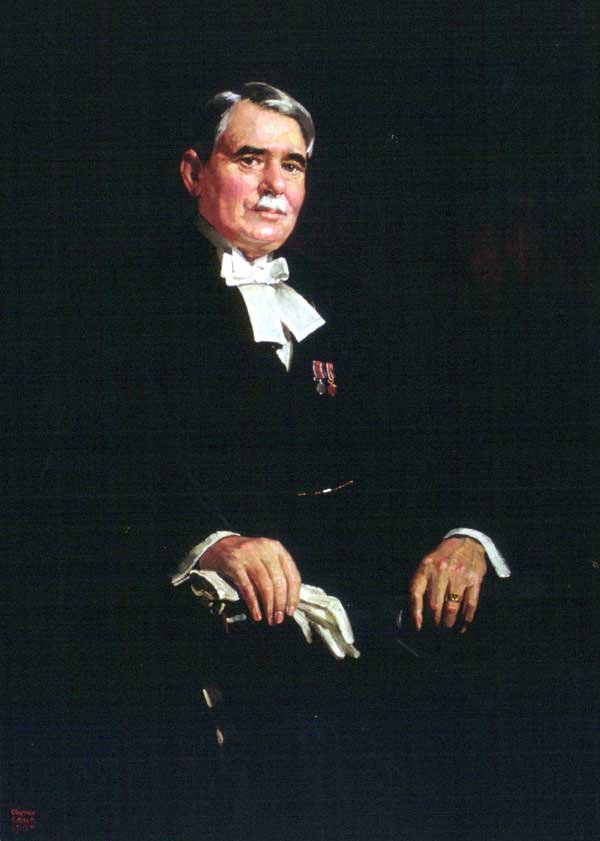
FENWICK, Charles Philip
- Born
- 1891-07-10
St. John's, Newfoundland - Died
- 1954-03-20
Toronto, Ontario - Role
- 14th Surgeon General of the Canadian Army; Major-General; Commanding Officer of the 2nd Field Ambulance at the Battle of Amiens 1918; physician
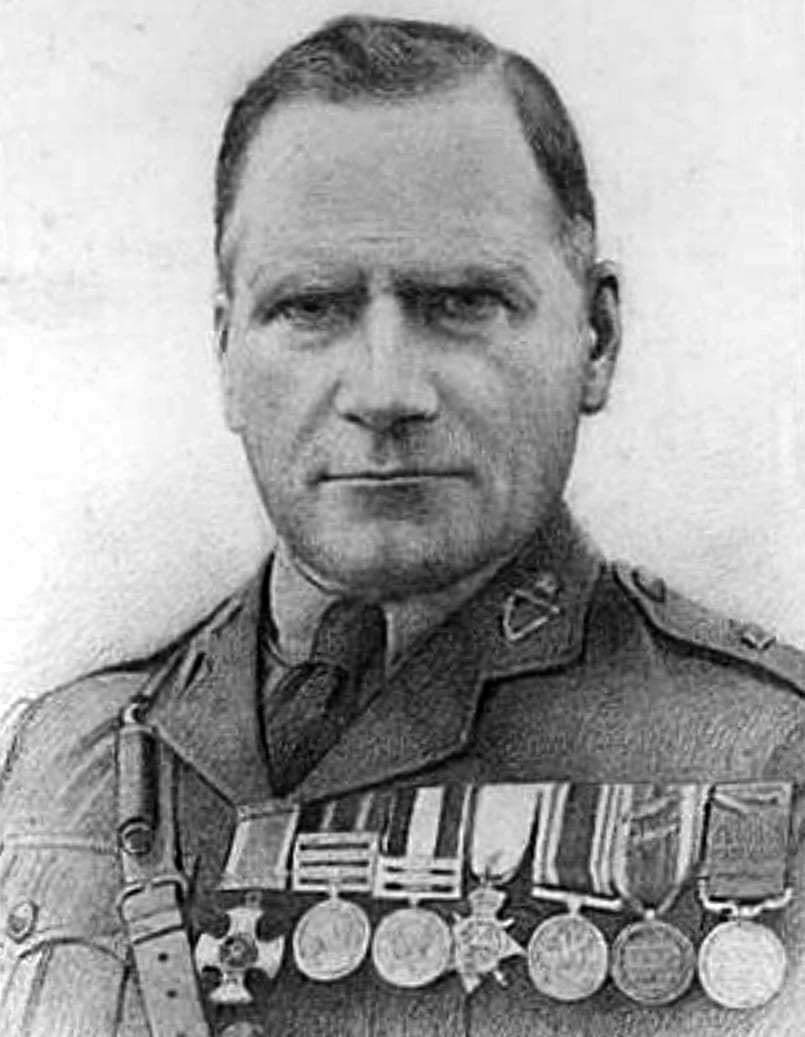
Major-General Charles Philip Fenwick served as the 14th Surgeon General of the Canadian Army. His career spanned both world wars: a First War Military Cross earned in command of a field ambulance at Amiens, a stint between the wars in civilian medical practice, and a return to uniform in 1939 that carried him through five years of the Canadian Army’s medical organisation in England and Northwest Europe, ending in his appointment as Director-General of Medical Services for the Canadian Army overseas. He retired from the military in 1946 and spent the rest of his working life as chief of medical services for the Canadian Pacific Railway.
Early life
Fenwick was born in St. John’s, in the Colony of Newfoundland, on 10 July 1891. Newfoundland was then a self-governing British dominion in its own right; it did not join Canadian Confederation until 1949, five years after Fenwick’s death. He took his medical training at the University of Toronto and graduated with his Bachelor of Medicine in 1916, the graduating class whose members overwhelmingly went into the Canadian Army Medical Corps as the First World War entered its attritional phase.
First World War
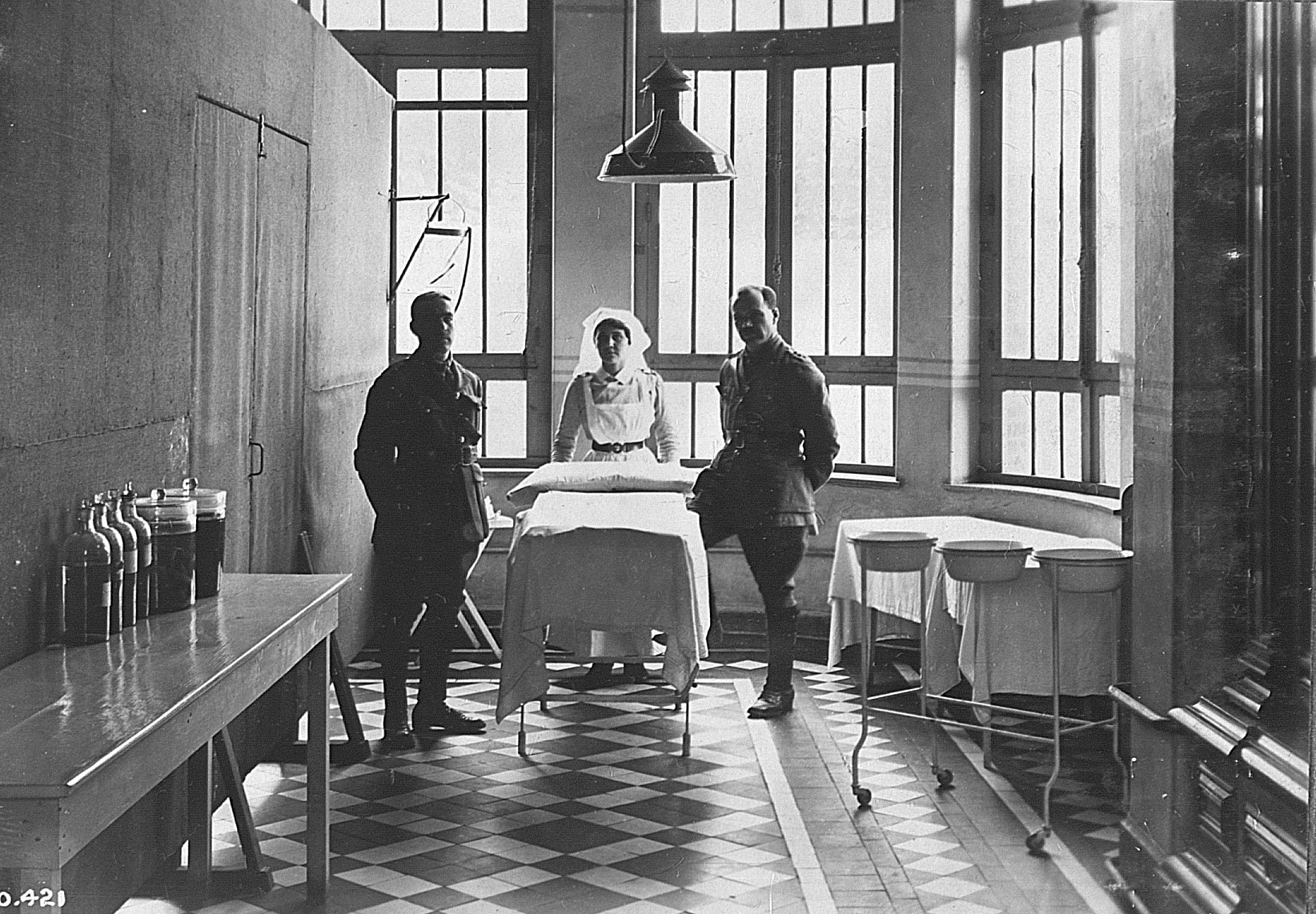
Fenwick joined the Canadian Army in June 1916, was posted to the CAMC, and went overseas. In 1917 he was promoted to Lieutenant-Colonel and given command of the Canadian 2nd Field Ambulance.
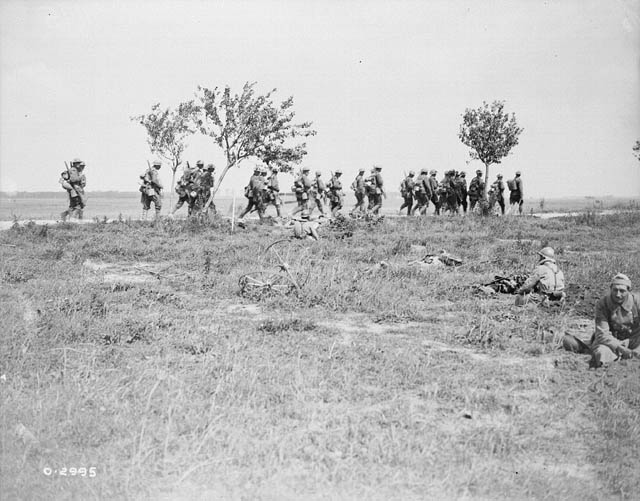
The 2nd Field Ambulance served with the 1st Canadian Division. It was deployed at the Battle of Amiens in August 1918, the opening action of what became known as Canada’s Hundred Days, the final Allied offensive of the war. For his conduct at Amiens, Fenwick was awarded the Military Cross, gazetted on 2 December 1918. The MC is unusual for an officer at lieutenant-colonel rank; it recognised personal gallantry at the front line rather than administrative command alone.
Inter-war civilian practice
Fenwick was demobilised and returned to Canada. He set up a civilian medical practice at Niagara Falls, Ontario, where he worked from 1920 to 1923, before relocating to Toronto and practising there for the next sixteen years.
Orange Order
His lodge affiliation through this period was with McKinley L.O.L. No. 275, the Toronto lodge that had earlier counted Francis Henry Medcalf as its Master and John Shaw as a member.
Second World War
Fenwick re-enlisted at the outbreak of war in 1939 and went overseas with the 1st Canadian Division.
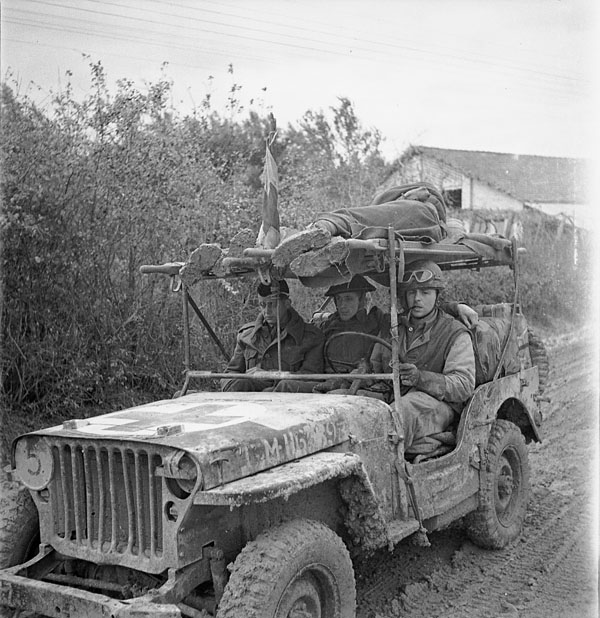
By 20 May 1940 he held the appointment of Assistant Director of Medical Services for the 2nd Canadian Infantry Division in England, a post he held for nearly three years. On 15 January 1943 he was promoted acting Brigadier and moved up to Deputy Director of Medical Services for II Canadian Corps. On 26 May 1943 he was appointed Deputy Director of Medical Services for the 1st Canadian Army, with the temporary rank of Brigadier confirmed the same day, and held that post through the Normandy campaign and the advance into the Low Countries and Germany.
He was made acting Major-General on 16 December 1944 and, on 24 January 1945, Director-General of Medical Services, the senior Canadian medical appointment in the European theatre and, with it, the office of the 14th Surgeon General of the Canadian Army. He was named a Commander of the Order of the British Empire (CBE) in the 1944 New Year Honours and a Companion of the Order of the Bath (CB) in the 1946 New Year Honours, and held an Efficiency Decoration (ED). He held the Director-General post until 31 January 1946, when he retired from the army; his promotion to the substantive rank of Major-General was confirmed that January, backdated to 16 December 1944.
Post-war career
Fenwick did not return to private practice after leaving the army a second time. He was appointed chief of medical services for the Canadian Pacific Railway, a post he held for the rest of his life, and served as president of the Defence Medical Association of Canada from 1946 to 1947.
Death
Fenwick died in Toronto on 20 March 1954, at the age of sixty-two.
Trace Your Orange Roots
Surname matches, haplogroup placement, and living relatives. FamilyTreeDNA's testing kits pick up where archival records on the Fenwick line end.
Affiliate links. We earn a small commission at no cost to you. Full disclosure →
Sources
- Charles Philip Fenwick — Wikipedia — Tertiary overview; used here for the 1939 re-enlistment date, the Canadian Pacific Railway post-war appointment, and the Defence Medical Association presidency, none of which appear in the military-service database below.
- The London Gazette — Military Cross award to Captain C. P. Fenwick, 2 December 1918 — Primary citation for the Military Cross.
- generals.dk — Biography of Major-General Charles Philip Fenwick — Dated posting-by-posting record of Fenwick's Second World War appointments and promotions, drawn from official Canadian Army orders; corrects the 1943 re-enlistment date carried in earlier drafts of this page.
- Library and Archives Canada — Canadian Army Medical Corps service files
- Department of National Defence — Surgeon General's Office history
Further reading
As an Amazon Associate we earn from qualifying purchases. Full disclosure →
- The Canadian Army Medical Corps in the First World War — Sir Andrew Macphail. Official history volume, King's Printer, 1925.
- Canada's Army: Waging War and Keeping the Peace — J. L. Granatstein. University of Toronto Press, 2002.