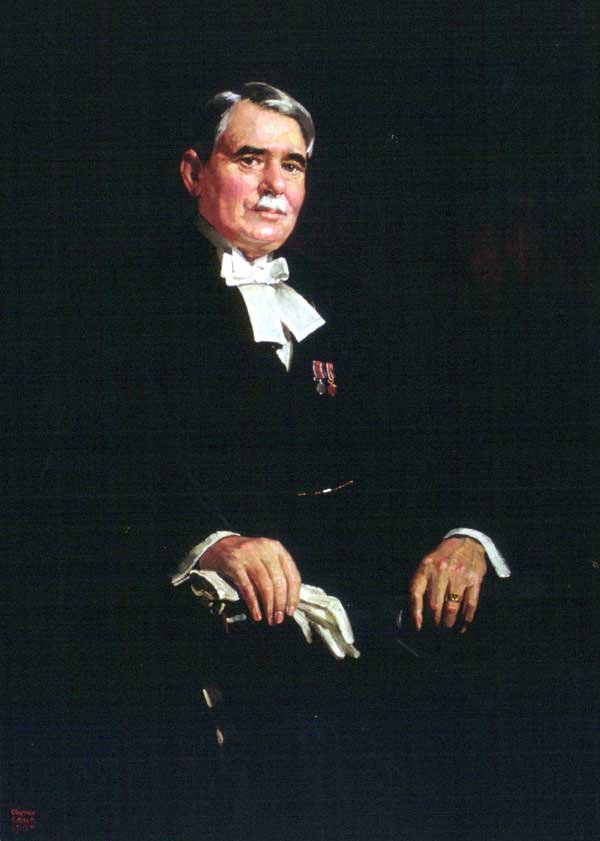
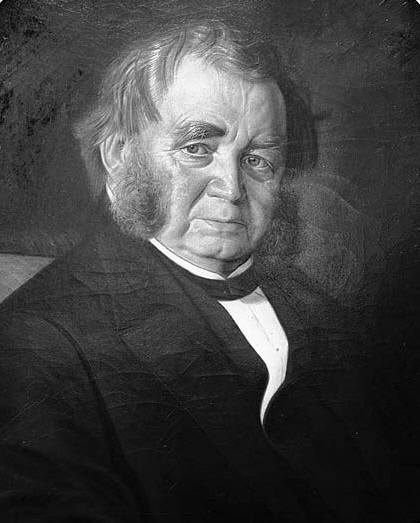
ROBINS, Frederick Burton
- Born
- 1866-08-05
Stroud, Ontario - Died
- 1948-10-18
Toronto, Ontario - Role
- Toronto real-estate developer; Honorary Colonel, Toronto Scottish Regiment; proprietor of the Armour Heights Estate
Frederick Burton Robins bought the Armour family farm on Yonge Street in 1910 for an upmarket subdivision north of the city. The First World War took the plan off the table. In 1917 he donated a section of the acreage to the Royal Flying Corps instead, and the RFC opened Armour Heights Field there that summer; the School of Special Flying that made the field notable followed in early 1918, one of the first advanced-instructor courses of its kind in the British Empire. His own 1914 Tudor-Revival house on the highest point of the estate, which he named Strathrobyn, survived the subdivision that eventually went up around it. It stands today as the officers’ mess of Canadian Forces College on Yonge Street, and is the last physical trace of the Armour Heights Field era.
Early life
Robins was born at Stroud, Ontario, on 5 August 1866. He moved to Toronto as a young man and in 1885 entered the real-estate business, a move that, over the next three decades, would make him a wealthy man and a prominent speculator and developer in the city’s northward expansion.
Orange Order
His lodge affiliation was with Loyal Orange Lodge No. 275, the same Toronto lodge to which Francis Henry Medcalf and John Shaw had belonged.
Toronto Scottish Regiment
Robins held an honorary colonelcy with the Toronto Scottish Regiment, a militia affiliation that sat alongside his business career in the Toronto commercial establishment of the 1910s and 1920s.
Armour Heights
Robins acquired the Armour family farm on Yonge Street in 1910, from the family of the original settler, John Armour, whose name the neighbourhood still carries. The property lay north of the City of Toronto boundary in what was then York Township. His plan was to develop it as an upmarket residential subdivision, Armour Heights, and in 1914 he commissioned a Tudor-Revival country house, Strathrobyn, on the highest point of the land as his own residence.
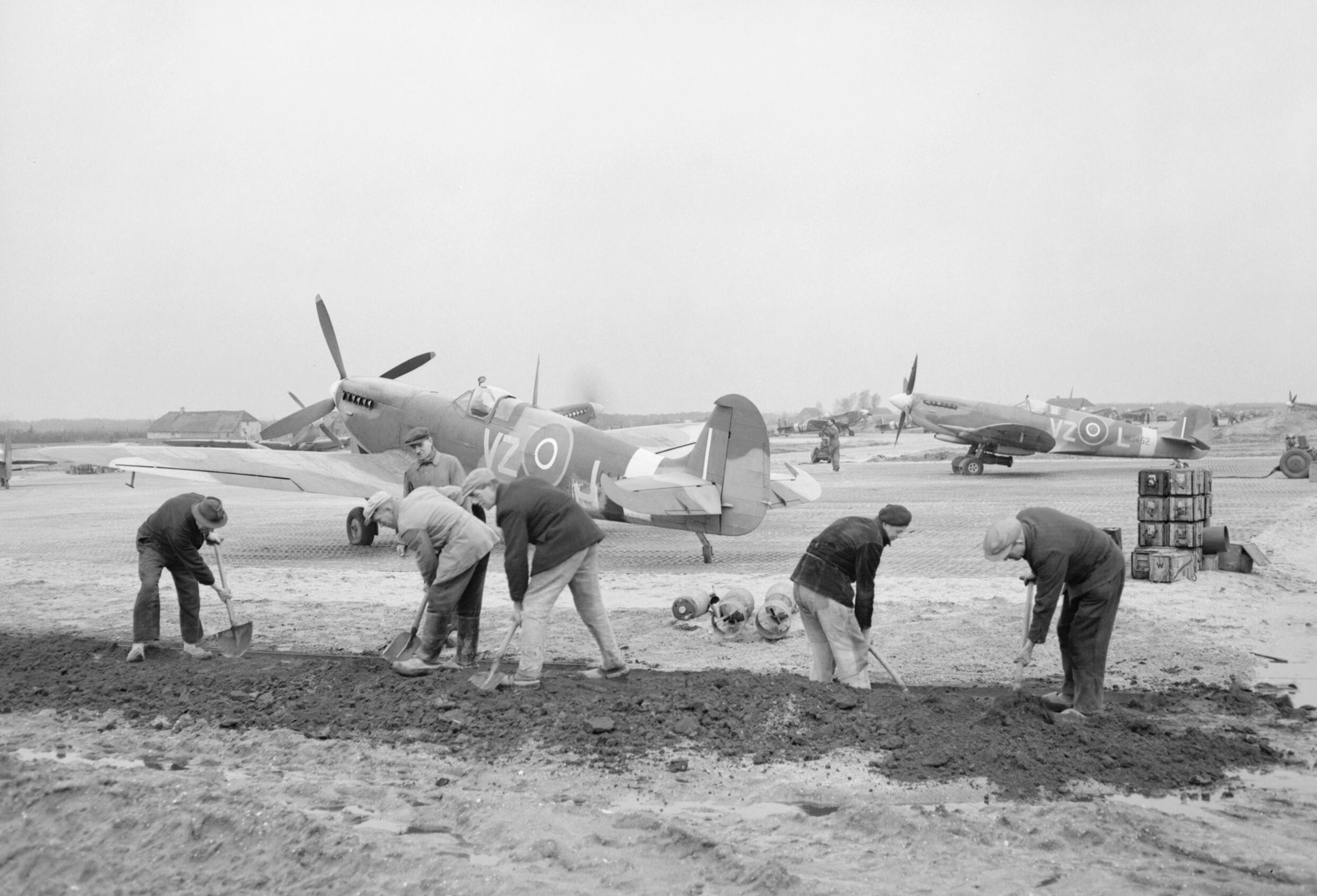
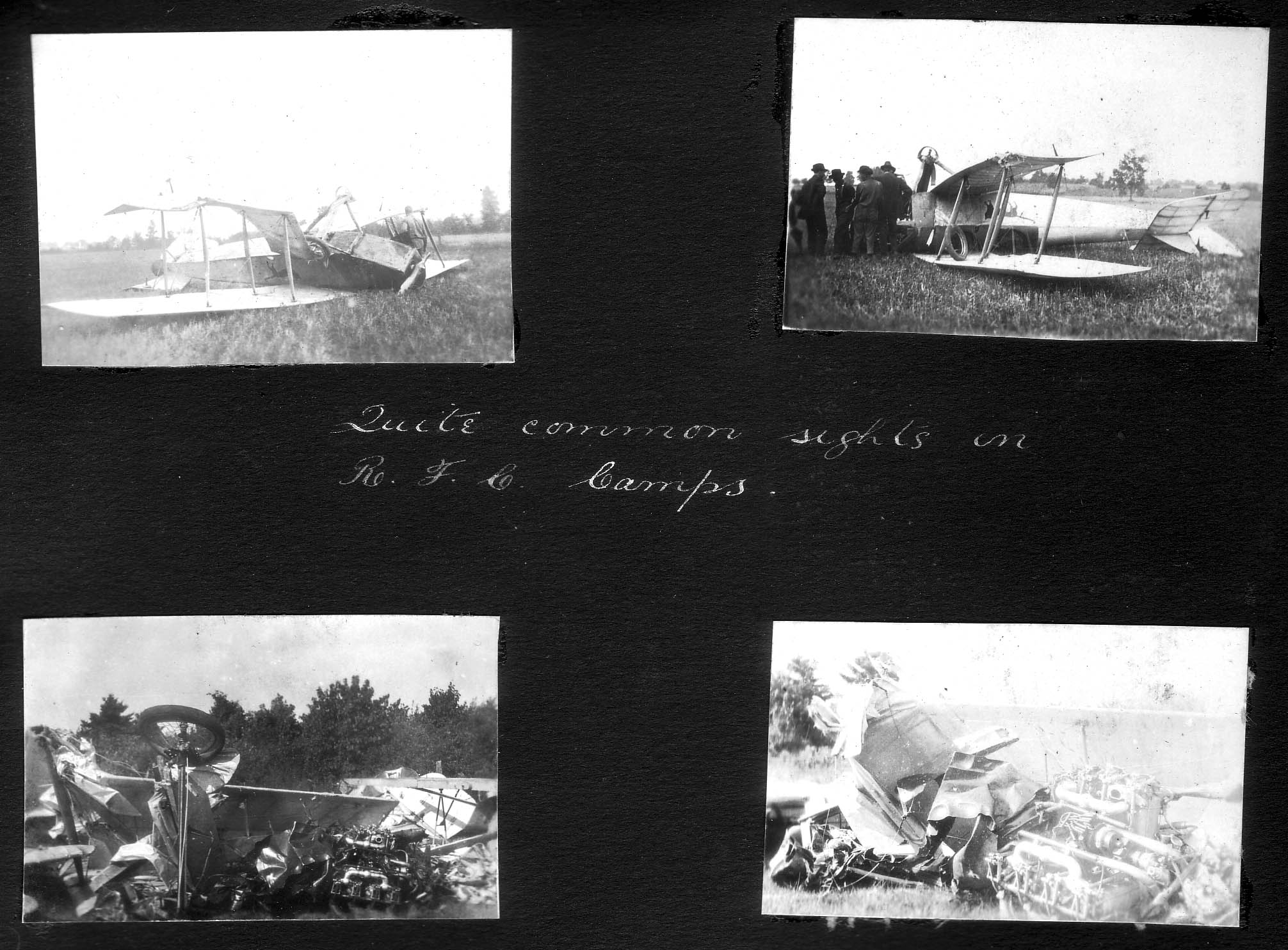
The First World War intervened. Instead of pressing ahead with subdivision work on a large estate north of the city during a wartime construction freeze, Robins gifted a portion of the Armour Heights acreage to the Royal Flying Corps in 1917 for use as a flying field. Armour Heights Field opened that July with six hangars and an office building. The School of Special Flying, established there in early 1918, was among the first of its kind in the British Empire, a dedicated course for advanced pilot instructors using aerobatic technique developed by Major Robert Smith-Barry, and it ran until the Armistice.
The American aviator Amelia Earhart, then serving in Toronto as a Voluntary Aid Detachment nurse’s aide at Spadina Military Hospital during 1917 to 1919, spent the winter of 1918 as a guest of No. 21 Canadian Training Squadron at Armour Heights, watching pilots put Curtiss JN-4 trainers through their paces on her days off. She later credited those visits with sparking the interest in flying that became her life’s work. The Prince of Wales, later briefly Edward VIII and, after the abdication, the Duke of Windsor, is said to have stayed at Robins’s Armour Heights house during the Prince’s 1924 Canadian tour.
Postwar, the RFC field closed, and for two years, 1919 to 1921, the airmen Billy Bishop and William Barker, Canada’s two most decorated fighter pilots of the war, ran a commercial aviation venture called Bishop-Barker Aeroplanes Limited from the former field, offering charter flights, aircraft sales, and maintenance before the business folded. The Armour Heights subdivision then resumed under a revised plan. By 1929 Robins, together with developer W. P. Mulock, had sold their remaining interests in the neighbourhood to R. J. Lillico & Associates in what was reported at the time as one of Toronto’s largest real-estate transactions.
Death
Robins died in Toronto on 18 October 1948, at the age of eighty-two.
Trace Your Orange Roots
Surname matches, haplogroup placement, and living relatives. FamilyTreeDNA's testing kits pick up where archival records on the Robins line end.
Affiliate links. We earn a small commission at no cost to you. Full disclosure →
Sources
- Armour Heights — Wikipedia — Sourced to Bill Aird, 'Timeline of North York' (North York Historical Society, nyhs.ca, 2019); confirms the 1910 purchase date, the estate name Strathrobyn, and Robins's rank as (Honorary) Colonel. Verified 2026-07-12.
- Armour Heights Field — Wikipedia — Overview of the 1917 RFC field and the School of Special Flying that opened there in early 1918; confirms the postwar Bishop-Barker Aeroplanes Limited operation, 1919–1921, run by aces Billy Bishop and William Barker. Verified 2026-07-12.
- Amelia Earhart in Toronto — Defining Moments Canada — Documents Earhart's 1917–1919 Voluntary Aid Detachment service at Spadina Military Hospital and her winter-1918 visits to Armour Heights as a guest of No. 21 Canadian Training Squadron, an experience she later credited with sparking her interest in flying. Verified 2026-07-12.
- Canadian Forces College — Armour Heights Officers' Mess history — The 1914-built Tudor-Revival house Robins commissioned is now the officers' mess of Canadian Forces College on Yonge Street.
- City of Toronto Archives — Armour Heights development records
- The Globe (Toronto), coverage of the 1910 Armour farm sale and 1917 RFC donation
Further reading
As an Amazon Associate we earn from qualifying purchases. Full disclosure →
- Wings for Victory: The Remarkable Story of the British Commonwealth Air Training Plan in Canada — Spencer Dunmore. McClelland & Stewart, 1994. Covers the origins of RFC pilot training in Canada at Armour Heights and Camp Borden.