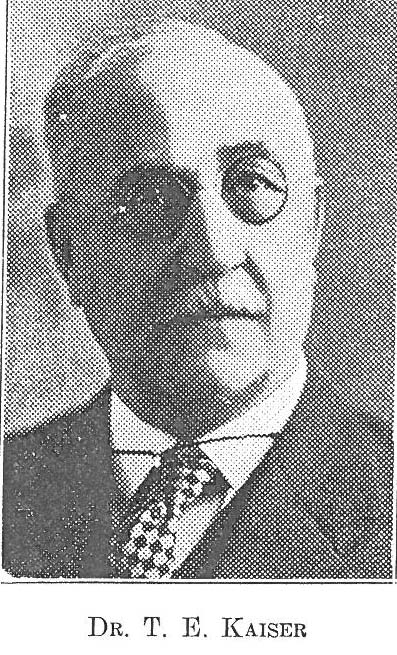
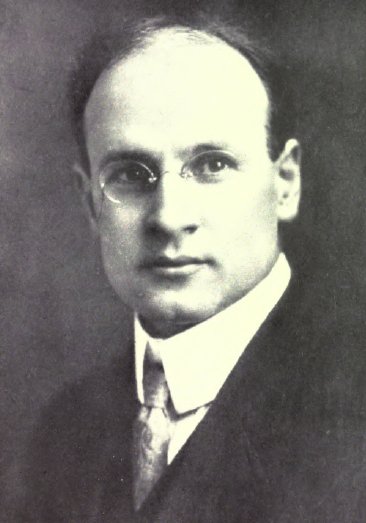
STEVENS, Henry Herbert
- Born
- 1878-12-08
Bristol, England - Died
- 1973-06-14
Vancouver, British Columbia - Role
- Member of Parliament for Vancouver City, Vancouver Centre, and Kootenay East; Minister of Trade and Commerce 1930–1934; founder and only elected MP of the Reconstruction Party of Canada, 1935
Henry Herbert Stevens spent nearly three decades as one of British Columbia’s most durable federal Conservatives, chaired a royal commission whose findings his own prime minister wanted buried, walked out of the Bennett cabinet when those findings were suppressed, and founded the Reconstruction Party of Canada, which in the 1935 election drew over four hundred thousand votes and elected one member: himself. He was also, throughout his career, a committed and public opponent of Asian immigration, a record that culminated in his central role in the 1914 Komagata Maru affair and that the federal government publicly repudiated in 2019.
Early life
Stevens was born in Bristol, England, on 8 December 1878, and emigrated with his family to Peterborough, Ontario, as a boy. The family later moved on to Vernon, in the British Columbia interior, in 1894. He began working at sixteen as a grocery clerk in Vernon, then passed through a mining camp, a stint as a fireman on the Canadian Pacific Railway, and stagecoach driving. In 1899 he enlisted in the United States Army and served in the Philippines and, during the Boxer Rebellion, in China, before returning to British Columbia in 1901 to work again in groceries and as an accountant.
Before entering politics, Stevens served as a Methodist lay preacher, occasionally conducting services in remote logging camps, and built a public profile in Vancouver through an anti-crime crusade, visiting opium dens, saloons, and illegal gambling houses and exposing them in the press. The campaign forced the resignation of the city’s police chief and won him a seat on Vancouver City Council in 1910.
Federal politics, 1911–1930
Stevens was elected to the House of Commons in the Borden sweep of 1911, representing Vancouver City from 1911 to 1917 and, after redistribution, Vancouver Centre from 1917 to 1930.
The Komagata Maru affair
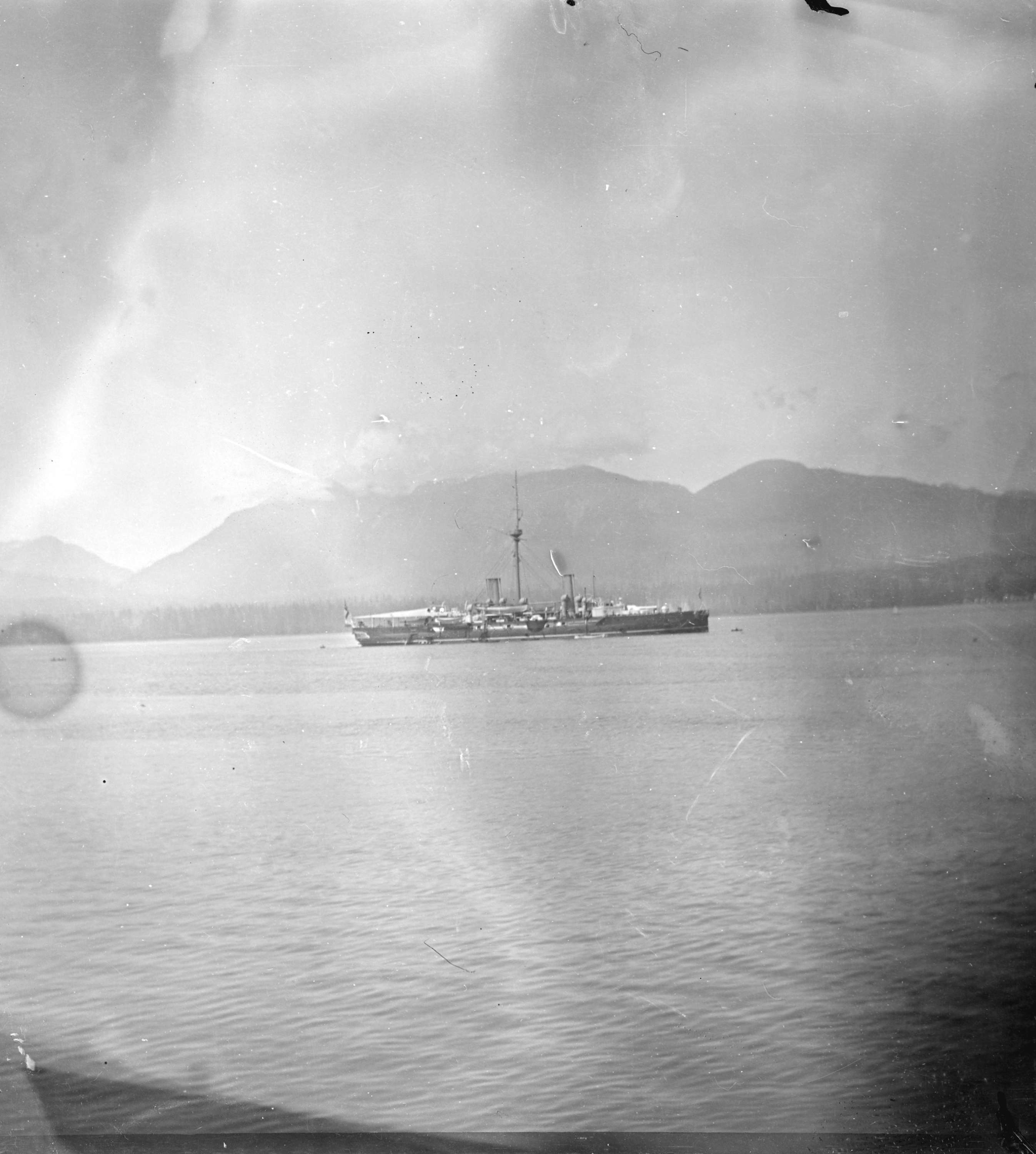
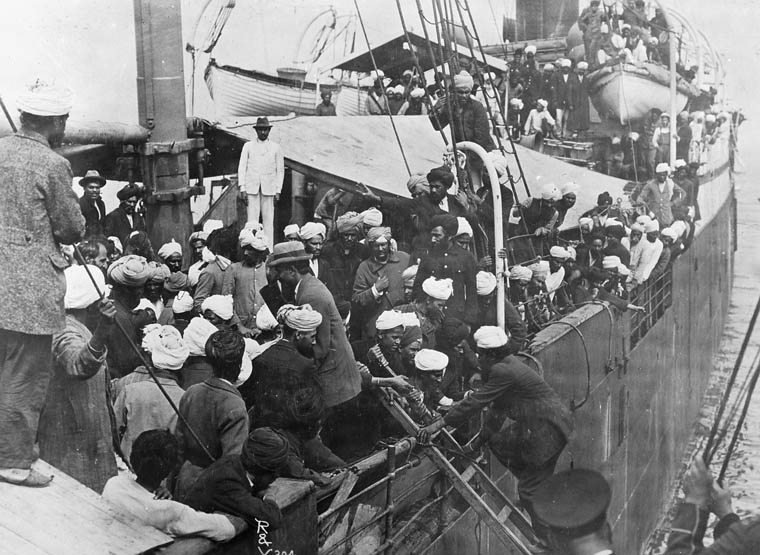
Stevens’ name is tied permanently to the Komagata Maru affair of 1914, in which a chartered steamship carrying 376 passengers from British India, most of them Sikh, was held in Vancouver harbour for two months and ultimately forced to sail back without most of its passengers being allowed to land. Stevens, then a first-term MP for a Vancouver riding, was an energetic public opponent of Asian immigration; in a speech that year he said, “We cannot hope to preserve the national type if we allow Asiatics to enter Canada in any numbers.” He had earlier promoted Malcolm R. J. Reid into the post of Vancouver immigration agent, and worked closely with Reid through the crisis, helping devise the strategy of keeping the ship’s passengers confined aboard, cut off from shore contact, until the charter lapsed for lack of funds and the ship was compelled to leave.
In August 2019 the federal government removed Stevens’ name from a Vancouver office building it had carried for decades, a gesture it tied explicitly to the Komagata Maru anniversary; the building reverted to its street address, 125 10th Avenue East.
The Bennett cabinet and the Price Spreads Commission
When R. B. Bennett won the 1930 general election, Stevens became Minister of Trade and Commerce. The Depression steadily radicalised him. By 1934 he was publicly criticising retail chains and large manufacturers for using their buying power to squeeze suppliers and wages. Bennett appointed a Royal Commission on Price Spreads with Stevens as chair. Its report, tabled in April 1935, named the meat packers, bakeries, cotton mills, and department stores whose practices Stevens had called out, and it proposed federal intervention on a scale Bennett was unwilling to endorse.
The Reconstruction Party
Stevens resigned from the Bennett cabinet in the autumn of 1934 and from the Conservative caucus the following July.
The 1935 general election gave the Reconstruction Party 8.7 per cent of the national vote, roughly 400,000 ballots, and one seat: Stevens’s own, Kootenay East. By drawing Conservative voters in about thirty ridings the new party materially contributed to the scale of Bennett’s defeat. One of the handful of Conservatives who survived in the Prairies was a young Saskatchewan lawyer, John G. Diefenbaker, who would spend the next three decades rebuilding the party.
Return to the Conservative Party
Stevens returned to the Conservative fold in 1938 and considered standing for the party leadership at the Winnipeg convention that year but did not put his name forward. He did not seek re-election in Kootenay East in 1940; running instead in the neighbouring riding of Kamloops, he was defeated, and left Parliament after nearly three decades in the House.
Stevens remained active in public life through the 1940s and into the 1950s, without returning to elected office. He stood again for the Progressive Conservative leadership at the 1942 convention, was eliminated on the first ballot, and saw John Bracken win instead. He was elected president of the B.C. Natural Resources Conservation League the same year. He made two further unsuccessful attempts to return to the Commons for Vancouver Centre, in 1949 and 1953, and chaired the Vancouver Board of Trade in 1952. He remained a member of the Orange Order throughout his life.
Later life and death
Stevens retired to Vancouver and died there on 14 June 1973, at age ninety-four, the last surviving member of Bennett’s cabinet. The Globe and Mail’s obituary credited him as “the leader of Canada’s only successful third-party revolt against a governing party from inside its own ranks”, a characterisation that is contestable on the details but captures the shape of the 1935 breakaway. His papers are held at Library and Archives Canada and at Trent University.
Trace Your Orange Roots
Surname matches, haplogroup placement, and living relatives. FamilyTreeDNA's testing kits pick up where archival records on the Stevens line end.
Affiliate links. We earn a small commission at no cost to you. Full disclosure →
Sources
- Henry Herbert Stevens — Wikipedia — Biographical overview with citations to Hansard and the 1935 Royal Commission on Price Spreads. Source for his pre-political career, the exact riding history, the 1926 customs investigation, the King-Byng Affair connection, and the 1940 Kamloops defeat, which corrects the Kootenay East defeat stated in earlier drafts of this page.
- Linked Parliamentary Data Project — H. H. Stevens — Federal parliamentary record: ridings, terms, party affiliations across six decades.
- Report of the Royal Commission on Price Spreads (Ottawa, 1935) — Stevens chaired this commission. Its findings on the meat-packing, baking, and textile industries were the proximate cause of his break with the Bennett government.
- Stevens, H.H. (1878–1973), Komagata Maru Journey (South Asian Canadian Legacy Project) — Source for his promotion of Malcolm Reid to the Vancouver immigration agency and his role devising the ship's detention.
- Government of Canada, Public Services and Procurement Canada, news release, 9 August 2019 — Primary record of the 2019 removal of Stevens' name from the federal building at 125 10th Avenue East, Vancouver, tied to the Komagata Maru anniversary.
- 'H. H. Stevens, Reconstruction Leader, Dies at 94', The Globe and Mail, 15 June 1973 — Contemporary obituary.
Further reading
As an Amazon Associate we earn from qualifying purchases. Full disclosure →
- H. H. Stevens, 1878–1973 — J. R. H. Wilbur. University of Toronto Press, 1977. The standard scholarly biography of Stevens.
- In Search of R.B. Bennett — P. B. Waite. McGill-Queen's University Press, 2012. Covers the Stevens split in substantial detail from Bennett's side.