FOOTE, John Weir
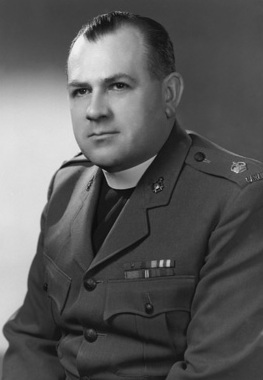
- Born
- 1904-05-05
Madoc, Ontario - Died
- 1988-05-02
Hamilton, Ontario - Role
- Presbyterian minister; Canadian Chaplain Service captain; Victoria Cross recipient (Dieppe, 1942); Ontario MPP and Minister of Reform Institutions 1950–1957
The Reverend John Weir Foote is the only chaplain in the history of the British Commonwealth to have been awarded the Victoria Cross for action against an enemy in the field. He earned it on the shingle at Dieppe on 19 August 1942, where he worked for eight hours under continuous German fire tending the wounded of the Royal Hamilton Light Infantry, and then refused a place on a landing craft leaving the beach in order to surrender with the men he could not carry off.
Early life
Foote was born in Madoc, a small town north-east of Belleville, on 5 May 1904, to Gordon and Helena Foote. Family tradition held that the line ran back through Ulster Protestant emigration. As a boy he played the organ at the local Presbyterian church. He married Edith Sheridan, of Brockville, on 31 August 1929, and worked for a time in his father-in-law’s Cornwall hardware business before he turned to the ministry.
His theological training took him through three universities, Western Ontario, Queen’s at Kingston, and McGill, with his divinity degree conferred by the Presbyterian Theological College in Montreal in 1934.
Orange Order and ministry
That same year, 1934, he was initiated into the Orange Institution at Fraserville L.O.L. No. 46 in Ontario. He took his first pastoral postings at Fort Coulonge in Quebec and then at Port Hope in Ontario.
Dieppe
When Canada declared war in September 1939, Foote enlisted with the Canadian Chaplain Service and took a captain’s commission. He was attached to the Royal Hamilton Light Infantry, a Hamilton-raised unit that would be in the first wave of the Allied landings at Dieppe on 19 August 1942. The Glengyle, the assault ship from which the RHLI was transferred to landing craft, carried him into the Channel the night before. Dieppe was meant as a reconnaissance-in-force across a fifteen-mile front; it became one of the most costly single-day actions in Canadian military history. Of the 4,963 Canadians who embarked, 3,367, roughly two in three, became casualties: 907 killed, 586 wounded, and 1,946 taken prisoner. Foote was one of only two Canadians awarded the Victoria Cross for the raid.
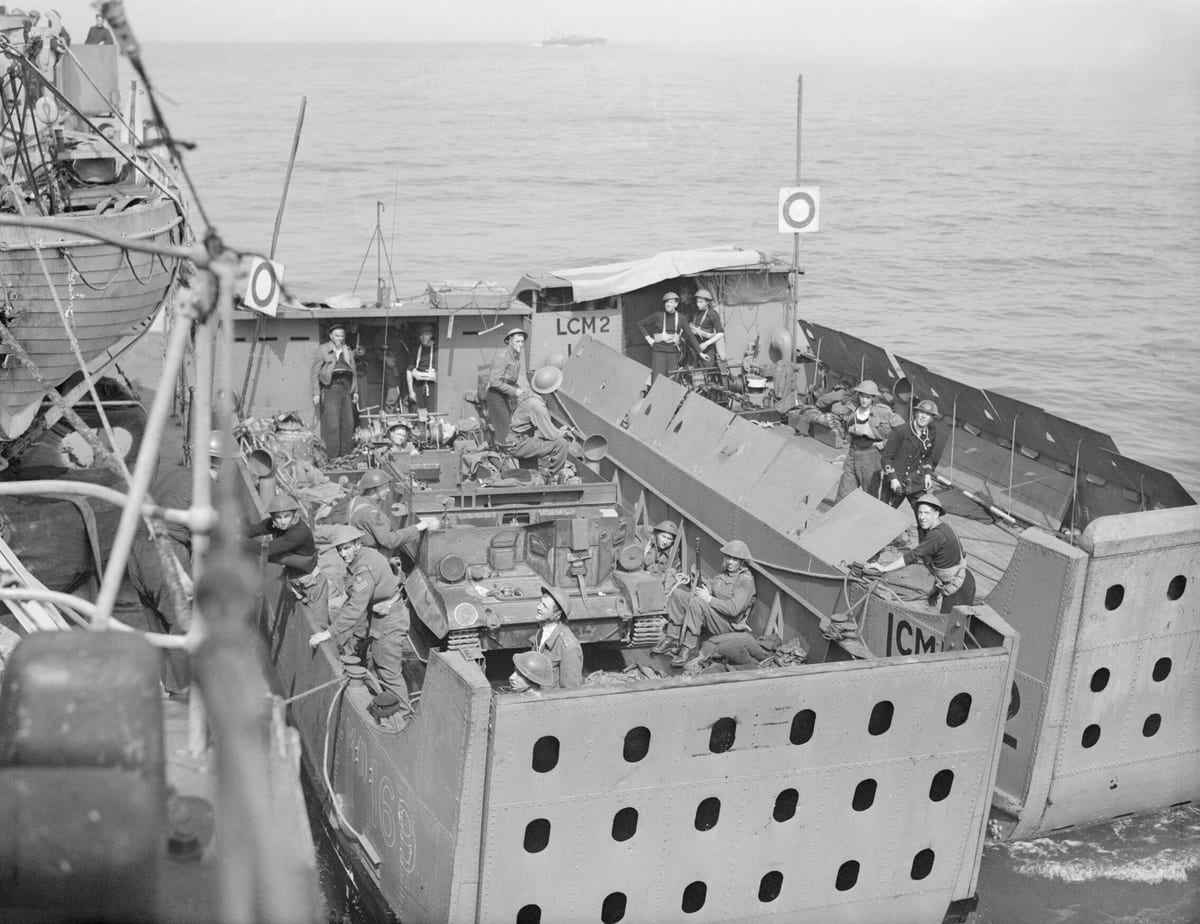
Chaplains of the British and Canadian forces were non-combatants by convention and were not required, or even expected, to go ashore in the assault wave. Foote went ashore anyway. The Victoria Cross citation later summarised what he did there:
“Upon landing on the beach under heavy fire he attached himself to the Regimental Aid Post which had been set up in a slight depression on the beach, but which was only sufficient to give cover to men lying down. During the subsequent period of approximately eight hours, while the action continued, this officer not only assisted the Regimental Medical Officer in ministering to the wounded in the Regimental Aid Post, but time and again left this shelter to inject morphine, give first-aid and carry wounded personnel from the open beach to the Regimental Aid Post. On these occasions, with utter disregard for his personal safety, Honorary Captain Foote exposed himself to an inferno of fire and saved many lives by his gallant efforts.”
When the order came for re-embarkation, Foote reached a landing craft that could have taken him back to the ship. He climbed out of it, waded ashore, and stayed with the roughly nineteen hundred Canadians who were about to be taken prisoner.
Prisoner of war
Foote spent thirty-four months in German prisoner-of-war camps. Survivors of Dieppe had spoken of a tall chaplain they had christened “Padre X”, the Canadian authorities did not identify the figure as the six-foot-three-inch Foote until months later. In the camps he held services irrespective of prisoners’ denominations, improvising altars from Red Cross ration boxes, and made repeated formal protests to the German authorities over conditions. He was liberated on 25 April 1945.
The Victoria Cross
The Victoria Cross was gazetted on 14 February 1946, cited to Hon. Captain John Weir Foote of the Canadian Chaplain Service and the Royal Hamilton Light Infantry. When Foote first heard the news he thought there had been a mistake. He received the cross in a private investiture.
Later career and death
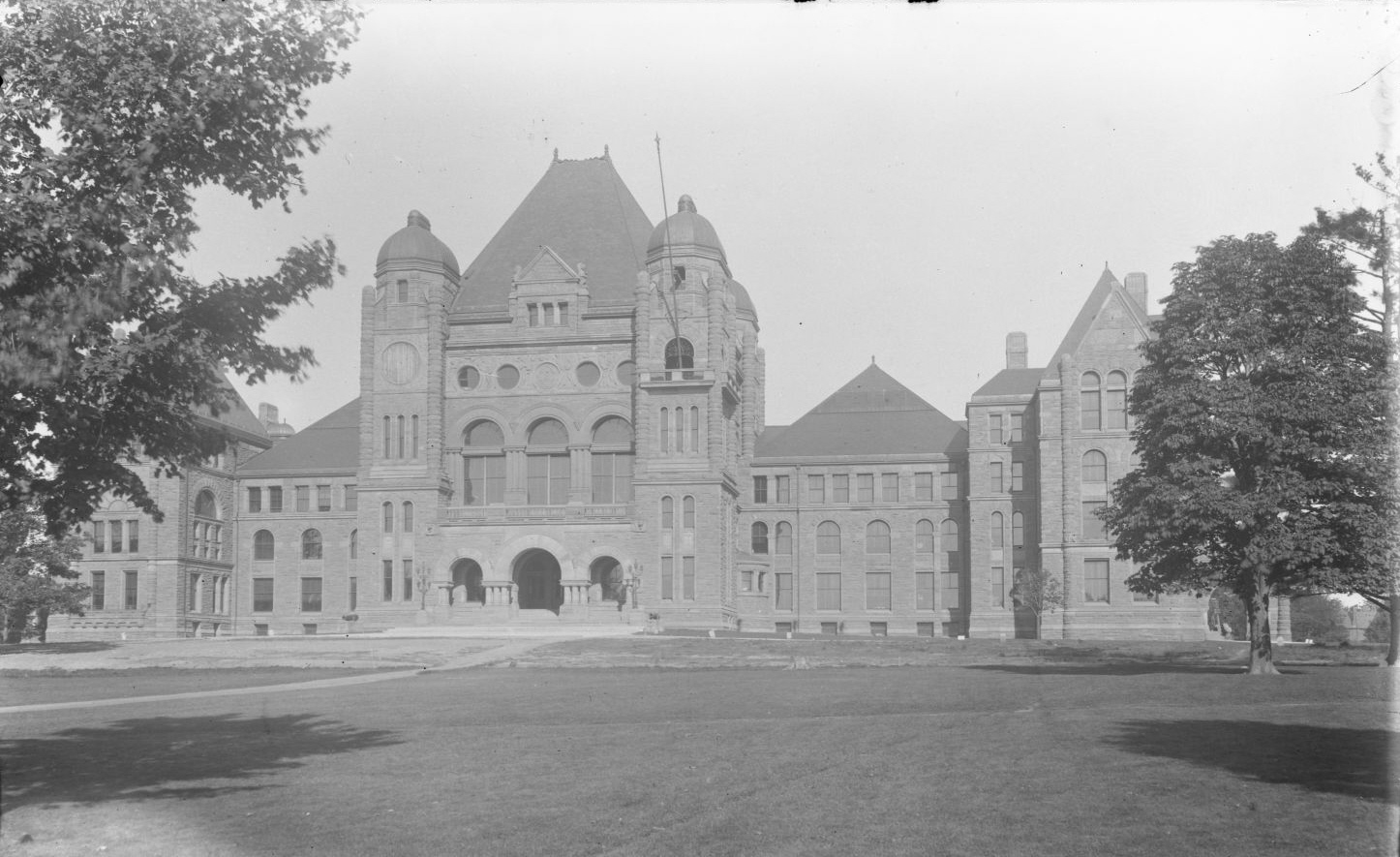
Foote stayed in uniform after Dieppe, rising to the rank of Major in the Royal Canadian Army Chaplain Corps and serving out the rest of the war and its aftermath at Camp Borden, Ontario, until his demobilization in 1948. That same year he entered Ontario politics, winning the Legislative Assembly seat for Durham as a Progressive Conservative. He was appointed Deputy Commissioner of the Liquor Control Board of Ontario before joining cabinet as Minister of Reform Institutions, an office he held from 1950 to 1957 under premiers George Drew and Leslie Frost. He stepped down from cabinet after suffering a series of heart attacks; Matthew Dymond succeeded him in the portfolio. He left the Legislature altogether in 1959, after two terms.
Foote returned to the Royal Hamilton Light Infantry as its Honorary Lieutenant-Colonel in 1964 and served in that role until 1973. He made his home in Cobourg, Ontario, with Edith. He died in Hamilton on 2 May 1988, three days short of his eighty-fourth birthday, and is buried in Union Cemetery, Cobourg.
Legacy
Foote’s decorations, beyond the Victoria Cross, included the 1939-1945 Star, the France and Germany Star, the Defence Medal, the Canadian Volunteer Service Medal with Overseas and Dieppe clasps, the War Medal, the Queen Elizabeth II Coronation Medal of 1953, the Canadian Centennial Medal of 1967, the Queen Elizabeth II Silver Jubilee Medal of 1977, and the Canadian Forces’ Decoration. He donated his medals to the Royal Hamilton Light Infantry, where they remain on display at the RHLI Heritage Museum. The Royal Canadian Legion branch at Grafton, Ontario, was renamed the Lt. Col. John W. Foote V.C. C.D. Branch 580 in his honour in 1982, and the RHLI’s home armoury at 200 James Street North in Hamilton was rededicated as the John W. Foote VC Armoury on 8 September 1990; the building was designated a Classified Federal Heritage Building in 1986.
Trace Your Orange Roots
Surname matches, haplogroup placement, and living relatives. FamilyTreeDNA's testing kits pick up where archival records on the Foote line end.
Affiliate links. We earn a small commission at no cost to you. Full disclosure →
Sources
- The London Gazette, 14 February 1946 — Victoria Cross citation for Hon. Captain John Weir Foote — Primary source for the VC citation and official account of his conduct at Dieppe.
- Canadian Virtual War Memorial / Library and Archives Canada — Foote service record
- John Weir Foote — Wikipedia — Biographical overview with citations to Gazette, RHLI unit histories, and Hansard.
- Legislative Assembly of Ontario — Members' roster — Record of service 1948–1959 as MPP and Minister of Reform Institutions.
- Veterans Affairs Canada — Lieutenant-Colonel John Weir Foote, VC, CD Armoury — Armoury dedication date and address. Verified July 2026.
- 'The Dieppe Raid' — Veterans Affairs Canada — Overall Canadian casualty figures for the raid. Verified July 2026.
Further reading
As an Amazon Associate we earn from qualifying purchases. Full disclosure →
- The Shame and the Glory: Dieppe — Terence Robertson. McClelland & Stewart, 1962. Narrative history of the raid with extensive treatment of Foote's conduct.
- Dieppe 1942: The Jubilee Disaster — Ronald Atkin. Macmillan, 1980. Standard operational study of the raid.
- The Sash Canada Wore: A Historical Geography of the Orange Order in Canada — Houston & Smyth, University of Toronto Press, 1980.