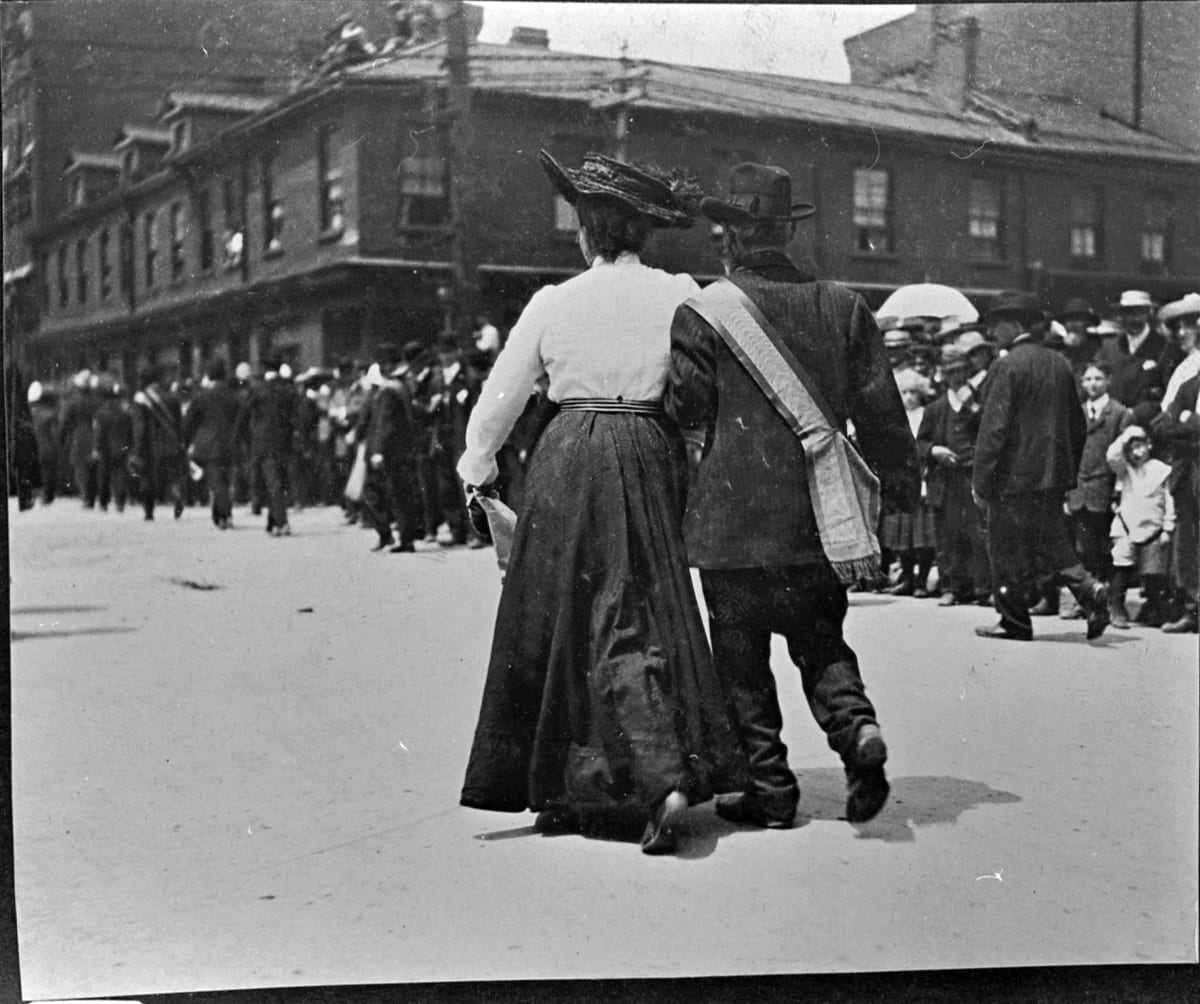
BOWELL, Sir Mackenzie
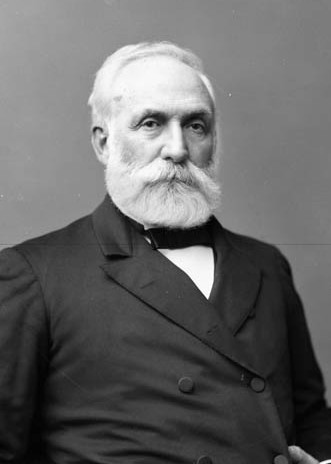
- Born
- 1823-12-27
Rickinghall, Suffolk, England - Died
- 1917-12-10
Belleville, Ontario - Role
- Prime Minister of Canada 1894–1896; Member of Parliament for Hastings North 1867–1892; Senator 1892–1917; Grand Master of the Loyal Orange Association of British America 1870–1878
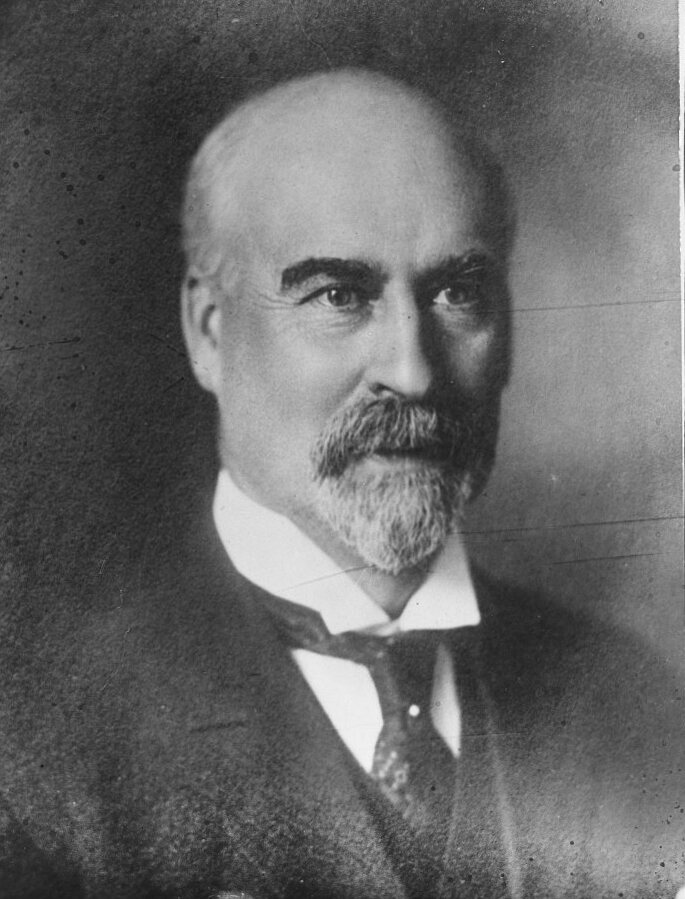
No other working printer has ever been Prime Minister of Canada. No other Prime Minister has come to the office from the Senate. And no other Canadian Prime Minister has been forced out by a cabinet mutiny inside his own party. Sir Mackenzie Bowell managed all three. He had also run the Belleville Intelligencer for the better part of fifty years, led the Grand Orange Lodge of British America through its most politically turbulent decade, and represented Hastings North in every single House of Commons from Confederation to 1892.
Early life
Bowell was born on 27 December 1823 at Rickinghall, a small Suffolk village, the son of a cabinet-maker. The family crossed to Upper Canada in 1833, when he was nine, and settled in Belleville on the Bay of Quinte. His formal schooling ended at twelve, printer’s apprentices in the 1830s didn’t have the luxury of a protracted education, and around 1834 or 1835 he began as an apprentice at the Intelligencer under its owner, George Benjamin. He became Benjamin’s trusted assistant, particularly once Benjamin’s own political career pulled him away from the office, and was foreman of the print room by twenty-three. He married Harriet Moore in 1847. In 1848 he obtained a partnership stake in the paper; the following year he and a brother-in-law took over its printing operations outright; by the early 1850s he held sole proprietorship. He added a daily edition in 1867 and incorporated the Intelligencer Printing and Publishing Company in 1875. Bowell helped found the Canadian Press Association in 1859 and served as its president in 1865 and 1866. Through his son he held the paper until the day he died in 1917.
Belleville’s civic institutions absorbed as much of his energy as the newspaper did. He chaired the town’s school trustees board and its grammar school board for extended periods, served as vice-president of the local board of agriculture and arts, and helped establish Belleville’s board of trade in 1865 alongside fellow local businessmen Henry Corby and Billa Flint.
Militia and Orange Order
Bowell joined the Orange Order in 1842, not yet nineteen. He organized the Belleville Volunteer Militia Rifle Company in 1857 and held a commission as an Ensign in it by 1864, a period of heightened militia activity driven by the American Civil War across the Great Lakes. He served in the militia through the Fenian raids of 1866, seeing active duty at Amherstburg and at Prescott, and retired in 1874 with the rank of lieutenant-colonel in the 49th (Hastings) Battalion of Rifles.
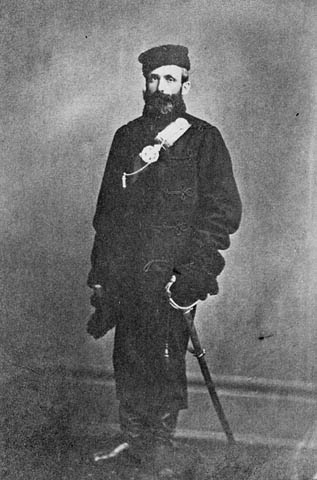
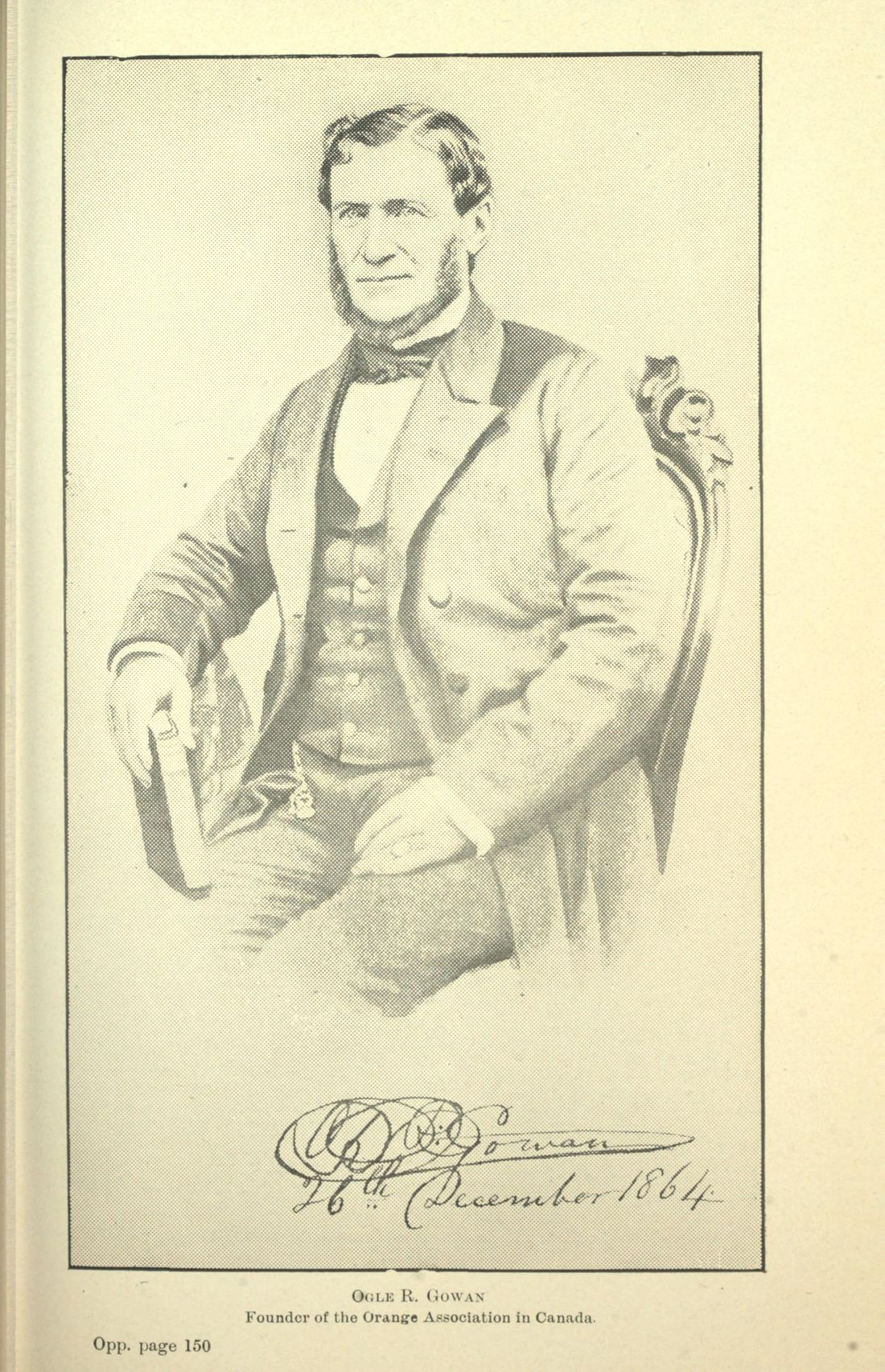
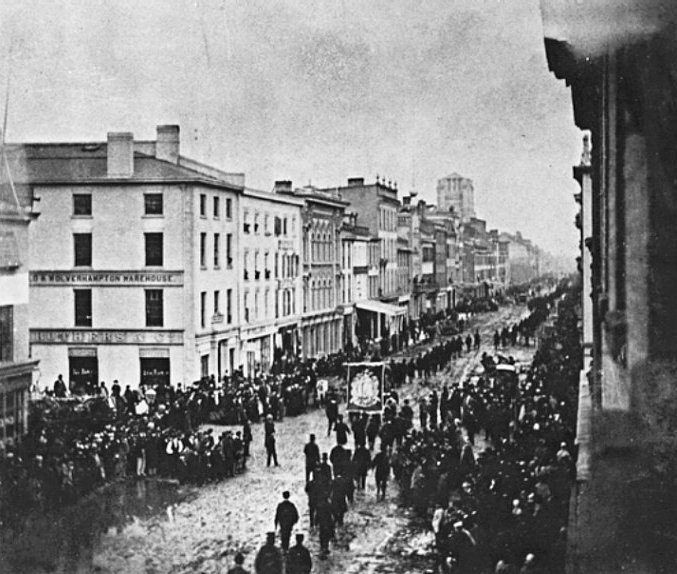
He was installed as Grand Master of the Loyal Orange Association of British America in 1870 and held the office until 1878, and in 1876 was elected president of the Order’s Imperial Triennial Council, its highest office anywhere in the Empire. His eight-year term as Grand Master covered the Ontario separate-schools controversy and the second Macdonald government’s first years.
Bowell’s Orange standing shaped his politics well before he reached the ministry. In April 1874, as an Orange spokesman in the Commons, he moved for the expulsion of Louis Riel following the Red River uprising, a motion that carried real weight in his own riding: Thomas Scott, the Orangeman from Hastings whose 1870 execution by Riel’s provisional government had inflamed English Canada, was a name Bowell’s constituents knew personally.
House of Commons
Bowell ran for the new House of Commons in the first post-Confederation general election, taking the riding of Hastings North on 20 September 1867. He held the seat continuously through seven general elections until December 1892. In the House he sat with the Liberal-Conservative and then the Conservative caucus. He had tried for elected office once before, unsuccessfully, standing as the Conservative candidate for Hastings North in the 1863 provincial election when George Benjamin declined re-election.
Cabinet
John A. Macdonald brought Bowell into the cabinet as Minister of Customs in October 1878. He held the Customs portfolio through the rest of Macdonald’s life, a stretch of nearly thirteen years, and added Minister of Militia and Defence briefly in 1891–1892. As minister he supervised the government’s principal source of revenue and, following the National Policy tariff of 1879, established a board of dominion customs appraisers in June 1879 with representatives at the major ports, an effort to stop the deliberate under-valuation of imported goods that had been costing the treasury. Macdonald occasionally pressed him for patronage favours, on one occasion in 1884 writing, “If you can possibly do this for the Bishop do it,” but Bowell held a firm line in clear cases of smuggling; on at least one occasion he talked Macdonald out of leniency toward a vessel owner and secured the prime minister’s agreement that “the most rigorous steps should be taken.” Under Sir John Abbott he moved to Minister of Trade and Commerce, a new portfolio created in 1892.
When John Thompson travelled to Paris in March 1893 for the Bering Sea sealing arbitration, seniority made Bowell acting prime minister for the duration. That September he travelled to Australia with Sandford Fleming to negotiate trade relations with the Australasian colonies and press the case for a Pacific telegraph cable, returning in January 1894 to organize an intercolonial conference at Ottawa the following June. Six of the seven Australian colonies attended, along with Fiji, Cape Colony, and Hawaii; Britain sent only an observer. Historians have called the conference the high point of Bowell’s abilities, reached at the age of seventy-one.
Senate
On 13 December 1892, Abbott appointed Bowell to the Senate. He sat as Government Leader in the Senate under John Thompson.
Prime Minister
Sir John Thompson collapsed and died at Windsor Castle on 12 December 1894, while being sworn in as a member of the Imperial Privy Council. The Governor General, Lord Aberdeen, declined to elevate any of the Commons Conservatives likely to succeed Thompson and turned instead to the Leader of the Government in the Senate, a choice that was as much a process of elimination as an endorsement: Aberdeen judged George Eulas Foster capable but too acerbic, John Graham Haggart able but indolent, and Charles Hibbert Tupper resolute but headstrong, while the elder Sir Charles Tupper, Canada’s High Commissioner in London, was deliberately passed over: Thompson had distrusted his ambition. Bowell consulted the prominent Roman Catholic senator Sir Frank Smith on 13 December, the day Aberdeen invited him to form a government, and by 21 December had assembled a cabinet that kept every Thompson-era minister but one. He took the oath as prime minister on 21 December 1894 and received his knighthood on New Year’s Day 1895. Aberdeen’s private judgment of him soured quickly: Bowell struck him as evasive, forgetful on the details of policy, and always looking, in the governor general’s own phrase, for “a trapdoor for escape in case of danger.”
His sixteen months in office foundered on the Manitoba Schools Question. Manitoba had abolished the province’s separate-school rights in 1890, and the Judicial Committee of the Privy Council’s ruling of 29 January 1895, in the Brophy case, held that Ottawa had the power to restore them by remedial legislation. Catholic and French-Canadian members of the cabinet wanted that legislation; Bowell’s Orange instincts pulled him against it, and the cabinet spent most of 1895 unable to agree on timing or terms. A remedial order compelling Manitoba to restore Catholic school rights was issued on 21 March 1895, largely on the insistence of the minister of justice, Charles Hibbert Tupper, who resigned that day when colleagues proposed delaying action into 1896 rather than moving at once, returning only after Aberdeen negotiated a firm commitment to introduce remedial legislation regardless. Through the rest of 1895 the government’s position kept eroding: Senator Auguste-Réal Angers resigned as minister of agriculture in July and Bowell could not find a French Canadian replacement willing to serve, the government lost two Quebec by-elections fought on the schools question, and in December the Orange grand master and principal anti-remedialist in cabinet, Nathaniel Clarke Wallace, resigned outright.
When Parliament opened on 2 January 1896 the cabinet was, in the words later used to describe it, in furious disarray. Within two days seven ministers, led by Foster, Haggart, and Walter Humphries Montague, resigned in a body and urged Aberdeen to replace Bowell with the elder Tupper, the “nest of traitors” the Dictionary of Canadian Biography entry by Gaffen and Brown attributes to Bowell’s own description of the men who had just sat at his cabinet table. Bowell resigned on 8 January, but Aberdeen, mistakenly believing the rebels opposed remedial legislation itself rather than Bowell personally, a misimpression Bowell had encouraged, refused the resignation on a technicality: the House had not yet voted on the Speech from the Throne. Word then reached the rebels that Aberdeen’s aide had also called on the Liberal leader, Wilfrid Laurier, and, fearing the governor general might turn to the opposition instead, they backed down. Charles Hibbert Tupper’s own account of the moment survives: “We all turned in like sheep into the fold, at the very rumour.” They rejoined cabinet on 15 January under a deal in which the elder Tupper would lead in the Commons for the rest of the session, after which Bowell would resign and Tupper would succeed him before the next election. Remedial legislation, introduced 11 February, was withdrawn 16 April as the dissolution deadline approached, and Bowell handed the premiership to Sir Charles Tupper on 27 April 1896, exactly as promised. Tupper’s Conservatives narrowly outpolled Laurier’s Liberals in the election that followed, forty-six percent to forty-five, but lost decisively on Quebec seats, forty-nine to sixteen, and Laurier formed the government.
Opposition Senate years and death
Bowell returned to the Senate and served there another twenty-one years, never forgetting the ministers who had walked out on him in January 1896. He was made a KCMG in 1895. He was the Leader of the Opposition in the Senate through the Laurier years, resigning that position in 1906 but keeping his seat to the end. In 1896 he resumed active control of the Intelligencer, the paper he had formally handed off in 1878 on entering Macdonald’s cabinet, and kept working at it for the rest of his life; at his ninetieth birthday in 1913 he was still going to the newspaper office, reportedly rather vain that visitors took him for sixty-five. In 1916, at ninety-three, he travelled to Vancouver to see his son and was making plans for a trip to the Yukon.
Contemporaries measured him unevenly. The Toronto Globe credited him with making the Orange order more conciliatory toward Catholics over his eight years as Grand Master. The Belleville Daily Ontario, at his death, judged that he had never been a great lawmaker or parliamentarian and lacked much independent analytical capacity, but that “mere mediocrity” could not have carried him so far: his gift was “administrative rather than constructive,” and at Customs he had discharged the department’s business “honestly, fearlessly, efficiently.” Lord Aberdeen’s private verdict, formed at closer range during the crisis of 1895 and 1896, was harsher still, that Bowell’s evident honesty read not as the triumph of a strong mind but as the refuge of a weak one. He died in Belleville on 10 December 1917, of pneumonia and old age, at the age of ninety-three, and is buried in Belleville Cemetery.
Trace Your Orange Roots
Surname matches, haplogroup placement, and living relatives. FamilyTreeDNA's testing kits pick up where archival records on the Bowell line end.
Affiliate links. We earn a small commission at no cost to you. Full disclosure →
Sources
- GAFFEN, FRED and ROBERT CRAIG BROWN. 'BOWELL, Sir MACKENZIE', Dictionary of Canadian Biography, vol. 14 — Authoritative scholarly biography.
- Linked Parliamentary Data Project — Sir Mackenzie Bowell — Federal parliamentary record 1867–1917.
- Library and Archives Canada — Mackenzie Bowell fonds (MG 27, I, E1) — LAC's collated holdings on Bowell, including correspondence and cabinet papers.
- The Belleville Intelligencer, 1867–1917 — Contemporary press of record. Bowell owned the paper for most of this period.