The Jesuit Estates Act, 1888–1889
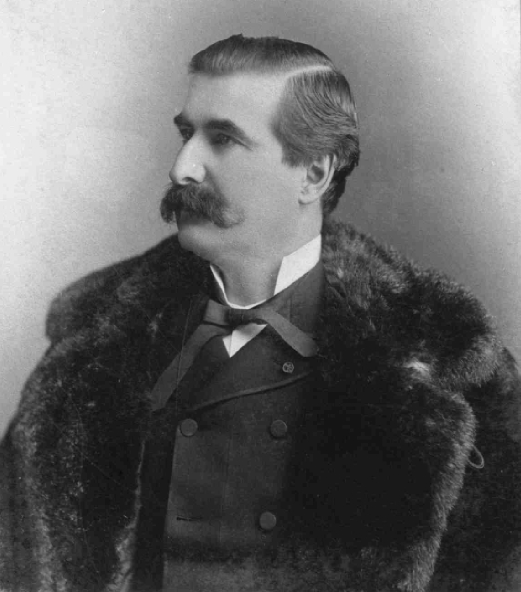
The Jesuit Estates Act of Quebec, passed in 1888 and assented to by the federal Governor General in early 1889, was one of the defining public controversies of late-19th-century Canada. It produced the famous “Noble Thirteen” vote in the House of Commons in March 1889, fuelled the rise of the Equal Rights Association, and indirectly delivered the Loyal Orange Association its long-sought federal act of incorporation in 1890.
The legal background
The estates at issue had belonged to the Society of Jesus from the French régime. The Society itself was suppressed by Pope Clement XIV in 1773. When the last Canadian Jesuit died in 1800, the British Crown assumed administration of the lands. With the 1814 restoration of the Society by Pope Pius VII and the return of Jesuits to Canada in 1842, the question of what to do with the confiscated estates re-emerged as a live political problem. The Roman Catholic Church argued that on the 1773 suppression the property had fallen to the diocesan bishops of Montreal and Quebec. The British Crown’s long administration of the estates, effectively as secular provincial assets, complicated the claim.
The Mercier act
Honoré Mercier, the Premier of Quebec, was a former Jesuit student. His government secured the incorporation of the restored Society of Jesus under a Quebec statute in 1887. The following year the Legislature passed the Act respecting the settlement of the Jesuits’ Estates, S.Q. 1888, c. 13, which set aside $400,000 as compensation and, critically, left the distribution of that sum to whichever beneficiary the Pope might name, Rome, the Archdiocese of Quebec, the restored Society of Jesus, or any other Catholic party the Holy See might choose.
Why Orange Canada took offence
Orange anger at the 1888 Quebec act operated on three levels. First, the Order had been petitioning for its own federal incorporation for decades and had repeatedly been refused; the easy incorporation of a Catholic body was felt as discriminatory. Second, the $400,000 transfer was a direct payment of public money toward what Orangemen argued was an essentially religious purpose. Third, and most damagingly to the standing of the John A. Macdonald federal government, the statute placed a foreign head of religion, the Pope, in the position of arbiter over the distribution of Canadian public funds.
The Grand Master of the Loyal Orange Association of Canada, Nathaniel Clarke Wallace, M.P. for York West, delivered a blistering speech against the Quebec act at the Grand Lodge’s 1888 session in Winnipeg. His core constitutional argument, that a foreign power ought not to exercise a final say in Canadian public policy, carried quickly through the Order’s papers and lodge meetings.
The federal disallowance motion and the Noble Thirteen
On 26 March 1889, Lieutenant-Colonel William Edward O’Brien, an Orangeman and Conservative MP for Muskoka, moved in the House of Commons that the House humbly request the Governor General to disallow the Quebec Jesuit Estates Act under the federal power of disallowance.
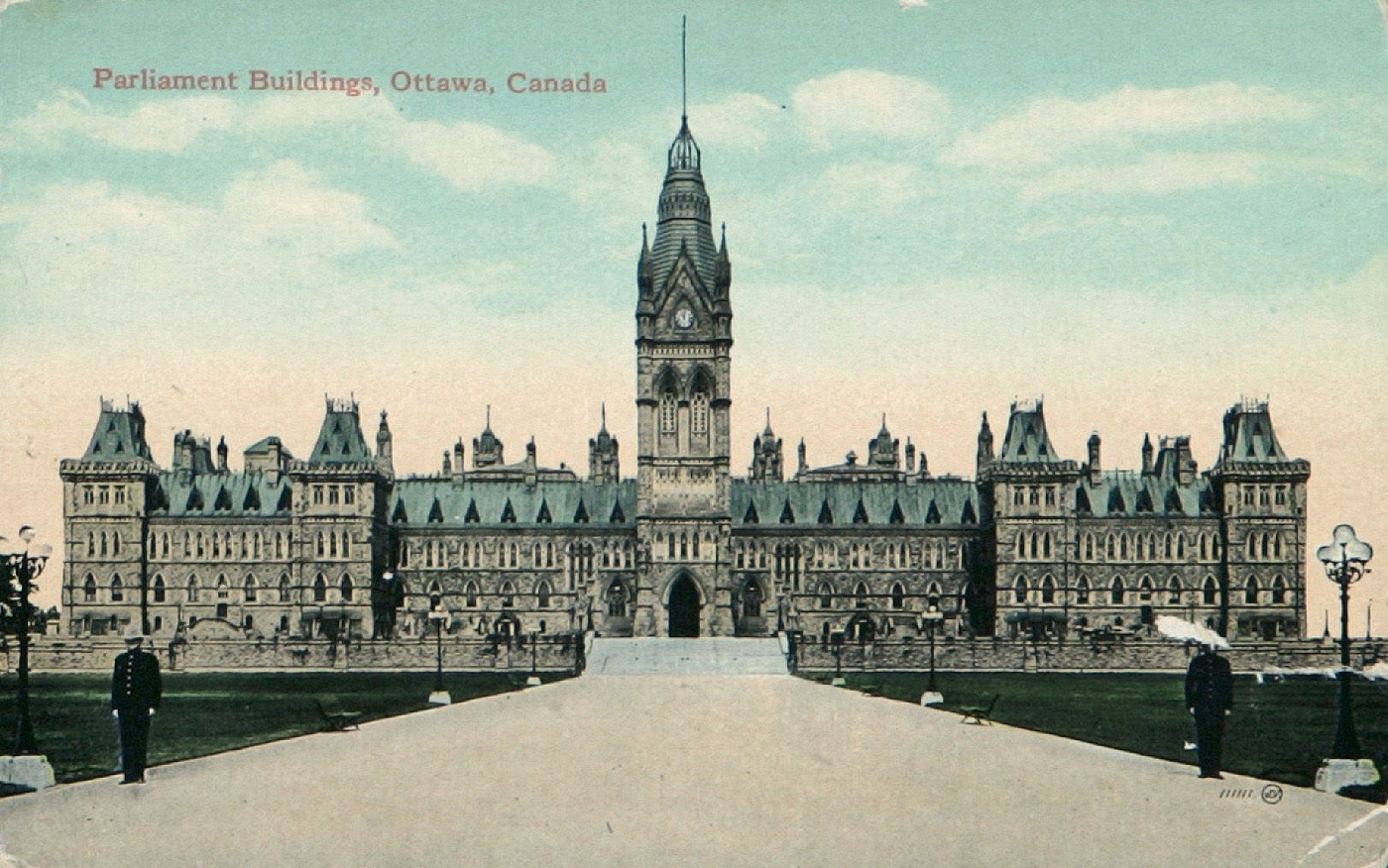
The Globe newspaper (Toronto) struck a commemorative medal for the Noble Thirteen. The Orange Lodge at Niagara Falls, Noble Thirteen L.O.L., takes its name from this vote and is still so known.
Consequences inside the Conservative caucus
The larger Orange membership of the Conservative caucus had largely voted with the government and against disallowance. Several of them, William McCulla, M.P. for Peel, among them, were formally censured by their home lodges for placing party loyalty above what the Order’s own resolutions called “the sacred principles of the order”. McCulla lost his Peel County seat in the 1891 general election to an insurgent anti-Jesuit Estates campaign. The federal Conservative majority in the new Parliament was sharply reduced from the 1887 margin.
Consequences inside the Order
Two things followed directly. First, the federal Conservative leadership, chastened by the loss of Orange votes in 1891, sponsored a Loyal Orange Association of British America Incorporation Bill.
Second, the Equal Rights Association was founded in 1889, drawing on Orange and evangelical Protestant constituencies that had mobilised against the Quebec act. D’Alton McCarthy, the Conservative MP for Simcoe North who would later carry the Equal Rights banner into Manitoba and into the 1890 Manitoba Schools crisis, was among its leading figures.
Long-term significance
J. R. Miller’s Equal Rights: The Jesuits’ Estates Act Controversy (McGill-Queen’s, 1979) argues that the 1888–1889 controversy was the moment at which mid-Victorian Canadian Protestant political mobilisation crystallised into a distinct political phenomenon, still tied to the Conservative Party, but no longer reliably controllable by it. The Manitoba Schools Question of 1890–1896, which brought down the Mackenzie Bowell government, can be read as the direct sequel: a fresh confrontation between Orange-backed English-Canadian Protestant opinion and a federal Conservative government that was now permanently squeezed between its Quebec Catholic and its English Protestant bases.
Trace Your Orange Roots
Surname matches, haplogroup placement, and living relatives. FamilyTreeDNA's testing kits pick up where archival records end.
Affiliate links. We earn a small commission at no cost to you. Full disclosure →
Sources
- An Act respecting the settlement of the Jesuits' Estates, S.Q. 1888, c. 13 (Quebec) — The Quebec statute itself. Original session volume held by the Bibliothèque et Archives nationales du Québec.
- House of Commons Debates, 3rd Session, 6th Parliament of Canada, 26–28 March 1889 — Primary record of the disallowance motion introduced by Lieutenant-Colonel W. E. O'Brien, the speeches supporting and opposing it, and the 13-to-188 vote.
- Miller, J. R. Equal Rights: The Jesuits' Estates Act Controversy. McGill-Queen's University Press, 1979. — The standard scholarly monograph on the controversy, covering the Quebec act, the disallowance debate, and its long after-effects on Orange, Equal Rights, and Conservative politics.
- The Globe (Toronto), coverage January 1889 through September 1891 — Contemporary press record; the Globe struck its own medal for the Noble Thirteen after the 1889 vote.
Further reading
As an Amazon Associate we earn from qualifying purchases. Full disclosure →
- Equal Rights: The Jesuits' Estates Act Controversy — J. R. Miller, McGill-Queen's, 1979. The definitive scholarly treatment.
- The Orange Order in Canada — David A. Wilson, ed. Four Courts Press, 2007. Contains an essay treating the Jesuit Estates controversy as the pivot of late-19th-century Orange political mobilisation.