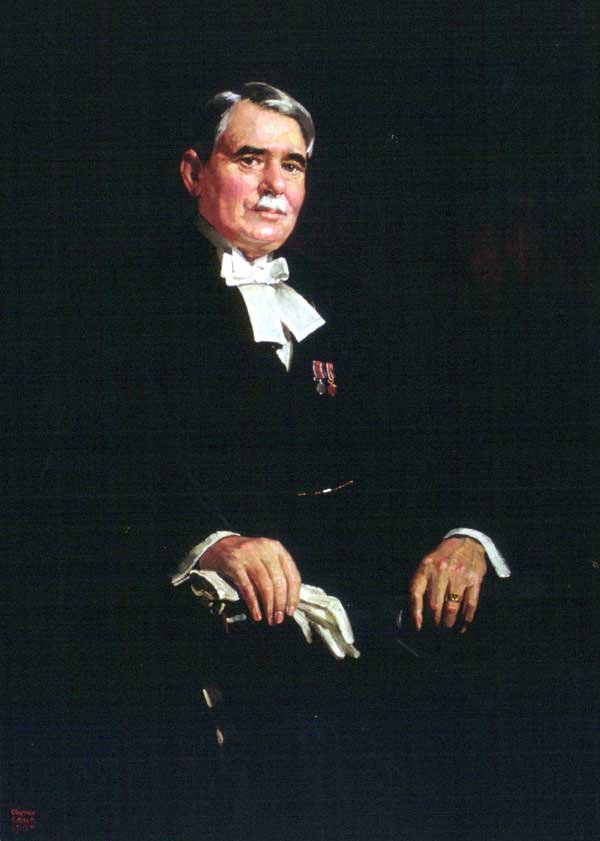
The Orange Order in Canada
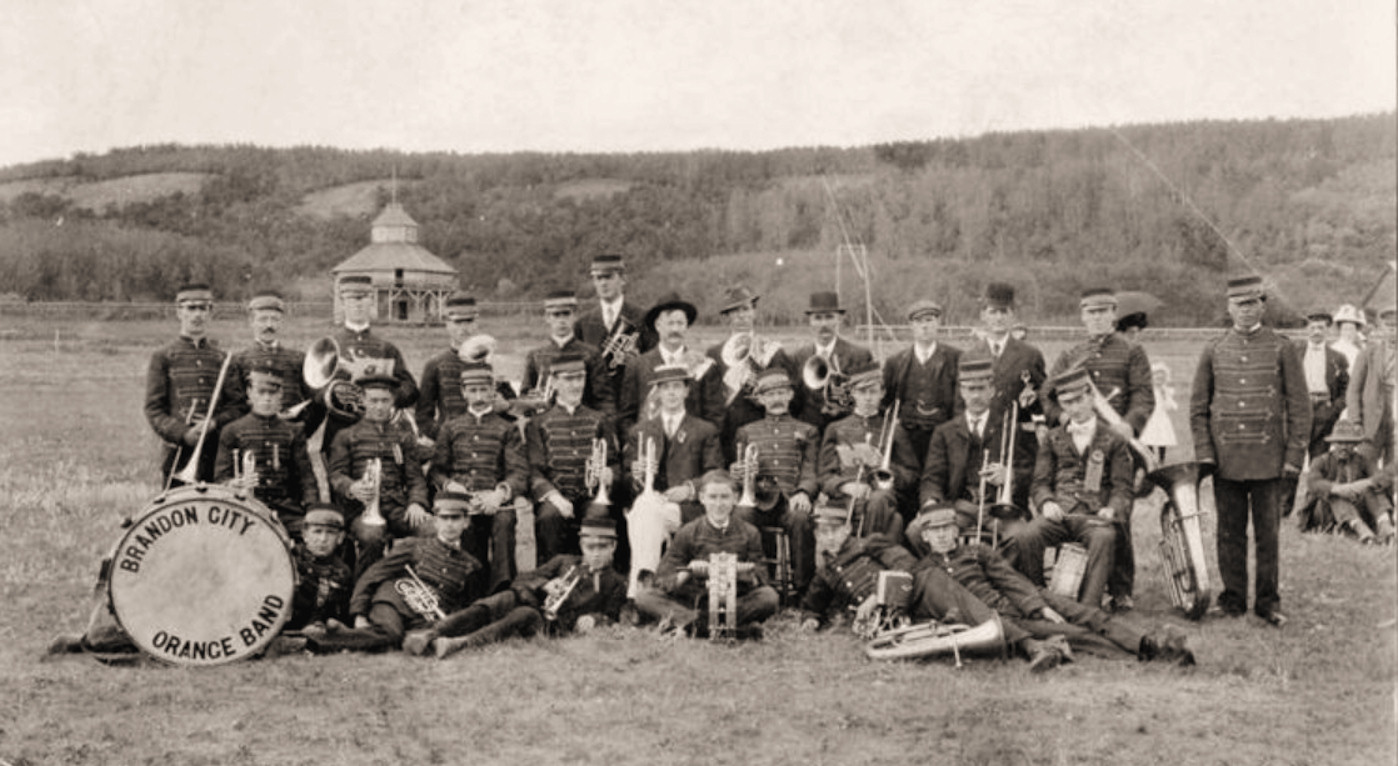
The Orange Order in Canada, formally the Loyal Orange Association of British America, was for over a century one of the most consequential voluntary organisations in Canadian public life. It was founded at Brockville, Upper Canada, on 1 January 1830. At its peak around 1900 it counted about a hundred thousand members across ten provincial grand lodges, roughly one hundred and seventeen county lodges, and some seventeen hundred and twenty-five primary lodges. It shaped Toronto’s municipal politics for nearly a hundred years, produced a Prime Minister of Canada (Mackenzie Bowell), at least seventeen mayors of Toronto, a dozen provincial premiers, hundreds of federal and provincial parliamentarians, and a paper record of nineteenth- and twentieth-century Canadian Protestantism that remains a primary source for historians of religion, politics, and immigration.
Origins in Ireland
The Loyal Orange Institution originated at the Battle of the Diamond in County Armagh, Ireland, in September 1795. It took its name from William of Orange, William III of England, Scotland, and Ireland, whose 1690 victory at the Boyne over the Catholic King James II is the central historical memory of the Order. Its Ireland lodges grew quickly through the 1798 United Irishmen rising and after, and by the 1820s Orange emigration to British North America was a routine feature of the Ulster departure.
The Canadian founding
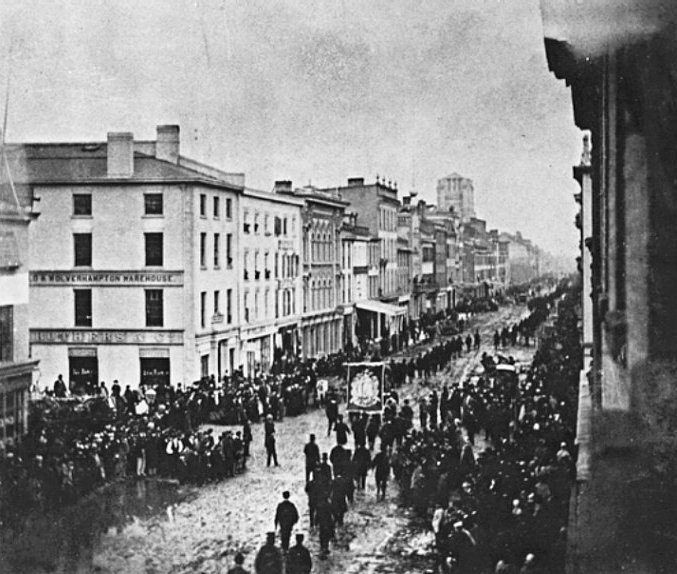
Ogle Robert Gowan, a newly emigrated Wexford-born Irish Orangeman with a fairly restless political biography, convened a meeting of existing colonial Orange lodge representatives at the Brockville courthouse on 1 January 1830. That meeting constituted the Grand Orange Lodge of British North America and elected Gowan as Deputy Grand Master. He soon became the organisation’s first Grand Master in Canada and remained its central figure for the next two decades. The founding is covered in detail in Donald Akenson’s biography The Orangeman (1986).
Legal status and 1890 incorporation
The Order operated without formal incorporation for the first six decades of its Canadian existence, a legal status that Orangemen experienced as a second-class political position compared with Roman Catholic institutions that had received colonial and provincial acts of incorporation. The Jesuit Estates Act crisis of 1888–1889 turned on exactly this point: after Quebec incorporated the Society of Jesus and set aside $400,000 as compensation for the 18th-century confiscation of Jesuit estates, Orange anger at the federal Conservative government’s failure to disallow the Quebec statute finally produced enough political leverage for the Order to secure its own federal act of incorporation. Queen Victoria assented to the Loyal Orange Association of British America Incorporation Act on 24 April 1890.
Organisational structure
By the end of the 19th century the Order in Canada operated through a four-tier hierarchy. Primary lodges, the local unit, met weekly or monthly in an Orange hall or a rented room. Primary lodges within a county combined into a county lodge. County lodges within a province fed into a provincial grand lodge. The ten provincial grand lodges at the 1900 peak (Ontario East, Ontario West, Quebec, Nova Scotia, New Brunswick, Prince Edward Island, Manitoba, Saskatchewan, Alberta, and British Columbia) sent representatives to the Grand Orange Lodge of British America, which met annually. A separate Grand Lodge of Newfoundland functioned as a parallel body until Newfoundland joined Confederation in 1949.
The order also operated auxiliary bodies: the Ladies’ Orange Benevolent Association (LOBA) for women members, the Orange Young Britons for young men, and the Royal Black Preceptory as a higher-degree body for senior men.
Geographic distribution and social base
Houston and Smyth’s The Sash Canada Wore (1980) mapped the Order’s lodge growth against Irish Protestant emigration and Ontario township-settlement patterns. Their central finding was that the Canadian Order was not, contrary to a persistent popular assumption, primarily an urban phenomenon. The dense clusters of Orange lodges were in the rural Protestant townships of south-central and eastern Ontario, in New Brunswick’s Saint John River valley, in the Ottawa Valley, in rural Newfoundland, and in the Protestant settler belt along the southern Prairies. Urban lodges in Toronto, Montreal, and Ottawa were politically prominent out of proportion to their numbers because they sat in the capitals of Canadian media and civic power.
Politics
The Order did not formally affiliate with any political party. In practice, between Confederation and the First World War, the large majority of Orange members in English Canada voted and stood as Conservatives. The alignment was not absolute, Horatio Hocken’s Reconstruction-adjacent urban-reform conservatism and Lewis Wallbridge’s Reform/Liberal career are cases in point, but it was the dominant pattern.
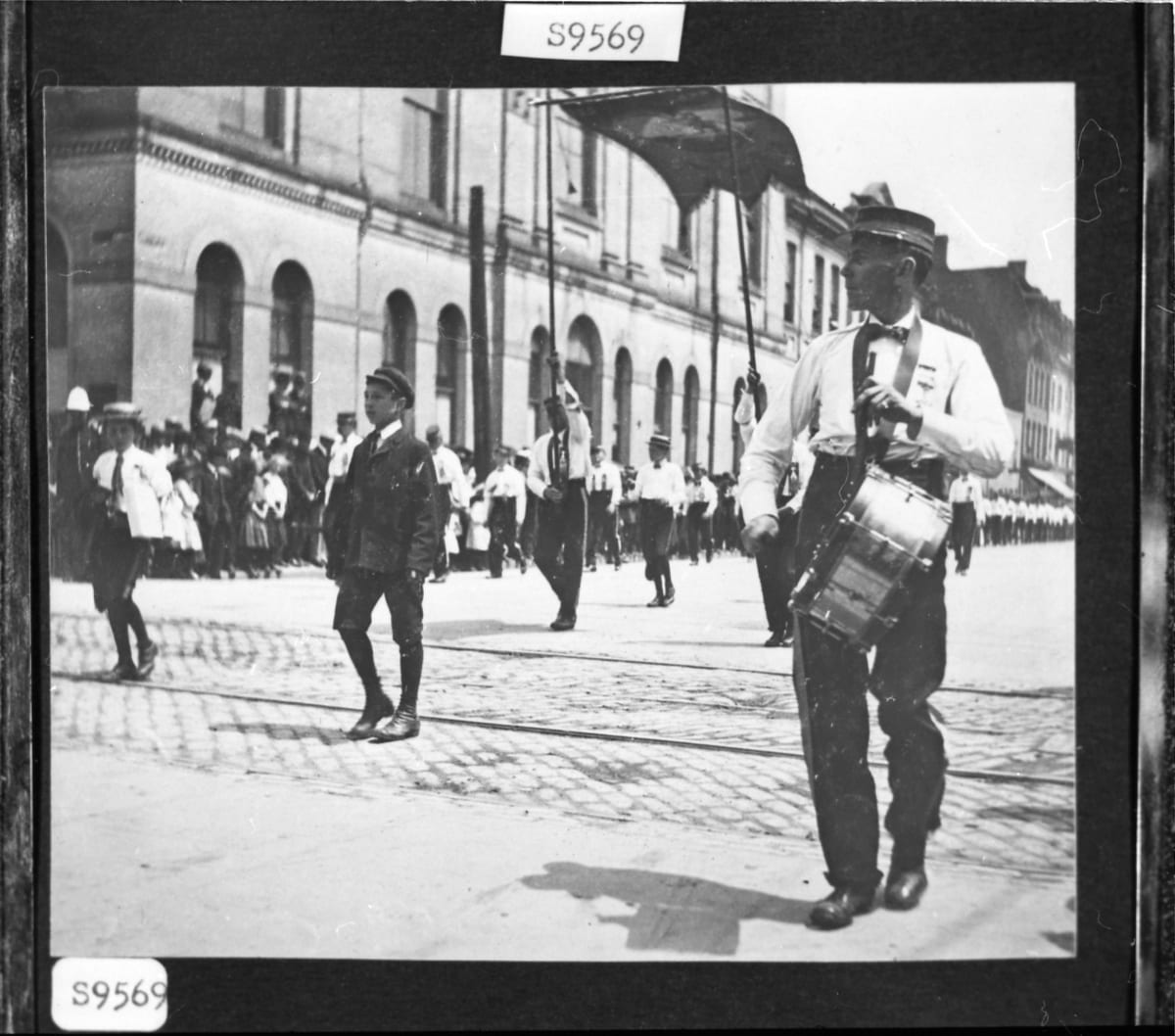
The Order’s political weight worked on three levels. First, nomination politics: an Orange MP or MPP could expect lodge endorsement in the primary nomination contest. Second, mass mobilisation: Order-affiliated newspapers, pre-eminently The Sentinel (after Hocken bought it in 1905, The Orange Sentinel), carried voting recommendations. Third, the 12th of July parade was a visible political rally as much as a religious commemoration.
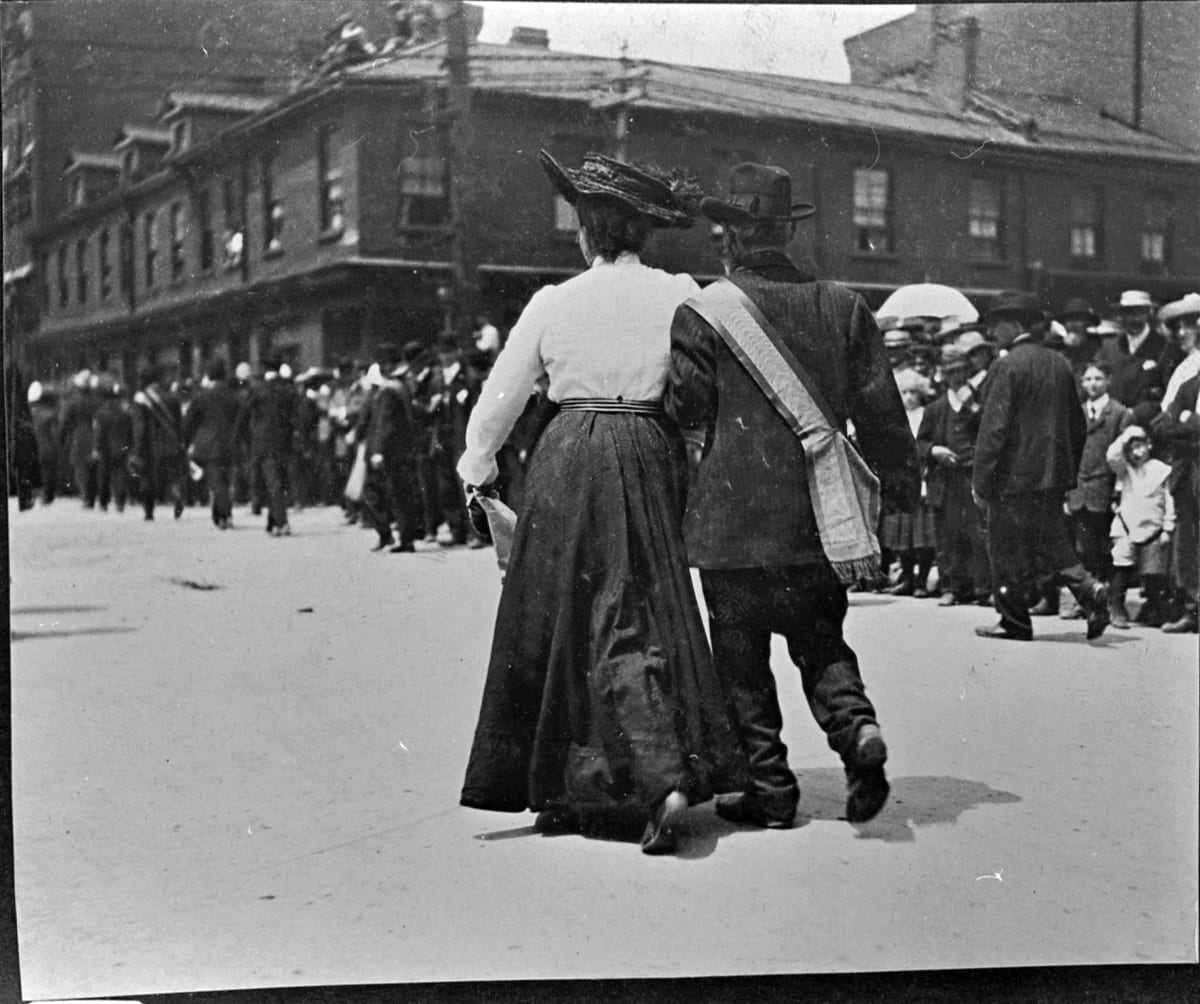
Scott See’s Riots in New Brunswick (1993) documents the dark side of this mobilisation in the 1840s, and William J. Smyth’s Toronto, the Belfast of Canada (2015) documents its long-running late-19th- and early-20th-century municipal face in Toronto. The Jubilee Riots of 1875 and the 1855 Toronto Circus Riot are examples from the Toronto record.
The First World War
The Order as an institution backed conscription in 1917 and contributed meaningfully to recruiting in rural and small-town Protestant Canada. Several Orange-affiliated battalions were raised, and individual Orange figures, among them Rev. John Weir Foote, later a Victoria Cross recipient at Dieppe, and Lieutenant-Colonel Milton K. Adams of the Loyal True Blue Association, were prominent in Canadian Expeditionary Force service. The Union Government election of 1917 marked the high point of the Order’s federal political influence.
Decline
Membership numbers peaked between 1910 and 1920 and declined steadily through the 1920s. Houston and Smyth attribute the decline to a combination of factors: the closing of the immigration tap from Ulster (the Order’s replenishment source since 1830), urbanisation and secularisation of Anglo-Protestant Canada, the decline of religious sectarianism as an organising principle in Canadian public life, and the gradual assimilation of Orange-associated causes (Protestant-separate-schools, anti-Catholic nativism) into wider nativist movements that were not lodge-based. By the 1960s the Order’s Canadian strength was a small fraction of its peak; most surviving lodges were rural Ontario and Newfoundland. The Grand Lodge still exists and functions, with significantly reduced membership.
The Order by region
| Region | Where the lodges were strongest | On this site |
|---|---|---|
| Ontario | The rural Protestant townships of south-central and eastern Ontario and the Ottawa Valley; Toronto’s lodges carried political weight beyond their numbers | The Orange Order in Ontario; the 1871 directory of lodges in western Ontario |
| Newfoundland and Labrador | The outports, where the lodge hall was often the largest building after the church | Orangemen’s Day, still a paid government holiday in the province; Sir James Spearman Winter |
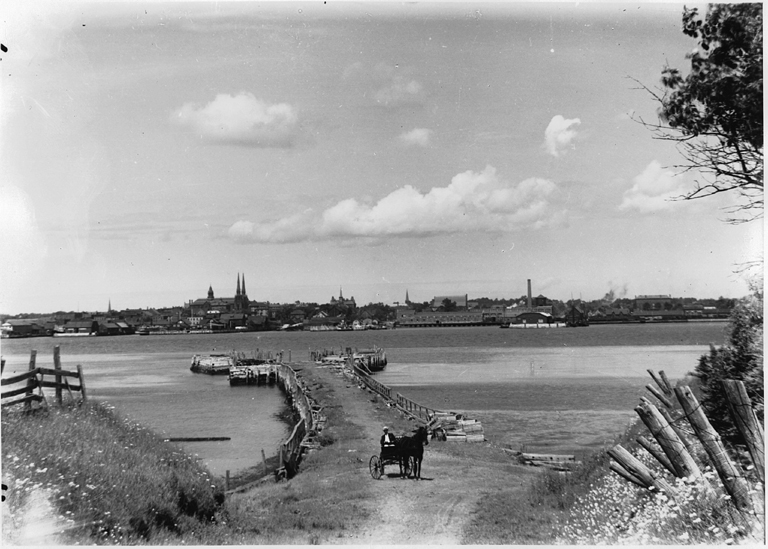
| Prince Edward Island | Charlottetown, from the chartering of Boyne Lodge in 1849 | Orangeism in Prince Edward Island |
| New Brunswick | The Saint John River valley | Covered in Scott See’s Riots in New Brunswick (see Politics above) |
| The Prairies | The Protestant settler belt along the southern Prairies | Not yet covered |
Reading further on this site
Pages under /bios/ document individual Orangemen whose lives are verifiable from primary sources and whose role in Canadian public life was historically significant. Pages under /topics/ cover the Order’s institutional life, its regional branches, and the public controversies it was part of. Pages under /events/ cover specific dated episodes.
For the canonical 20th-century scholarly treatments of the Order in Canada, Houston and Smyth, Senior, Akenson, See, and Wilson’s edited volume, see the consolidated Bibliography.
Trace Your Orange Roots
Surname matches, haplogroup placement, and living relatives. FamilyTreeDNA's testing kits pick up where archival records end.
Affiliate links. We earn a small commission at no cost to you. Full disclosure →
Sources
- Houston, Cecil J., and William J. Smyth. The Sash Canada Wore: A Historical Geography of the Orange Order in Canada. University of Toronto Press, 1980. — The canonical scholarly history of the Order in Canada, organised as a historical geography of lodge formation and Protestant settlement.
- Senior, Hereward. Orangeism: The Canadian Phase. McGraw-Hill Ryerson, 1972. — Early scholarly monograph tracing the Order from Ogle Gowan's 1830 founding through the later 19th century.
- Akenson, Donald Harman. The Orangeman: The Life and Times of Ogle Gowan. James Lorimer, 1986. — Full-length biography of the Order's Canadian founder.
- See, Scott W. Riots in New Brunswick: Orange Nativism and Social Violence in the 1840s. University of Toronto Press, 1993. — Focused study of Orange-Catholic street violence in the 1847–1849 Saint John period.
- Wilson, David A., editor. The Orange Order in Canada. Four Courts Press, 2007. — Edited volume emerging from the 2005 St. Michael's College conference on the Order.
- Smyth, William J. Toronto, the Belfast of Canada: The Orange Order and the Shaping of Municipal Culture. University of Toronto Press, 2015. — Single-city treatment covering Toronto's Orange-influenced municipal politics and public sphere.
Further reading
As an Amazon Associate we earn from qualifying purchases. Full disclosure →
- The Sash Canada Wore: A Historical Geography of the Orange Order in Canada — Houston and Smyth, 1980. The single best starting-point for any serious study of the Order in Canada.
- Toronto, the Belfast of Canada: The Orange Order and the Shaping of Municipal Culture — Smyth, 2015. Covers the 19th- and early-20th-century municipal machine that this site's biographies document.
- The Orange Order in Canada — Wilson (ed.), Four Courts Press, 2007. Academic essay collection spanning founding, immigration, violence, imperial loyalty, and decline.