Orangeism in Prince Edward Island
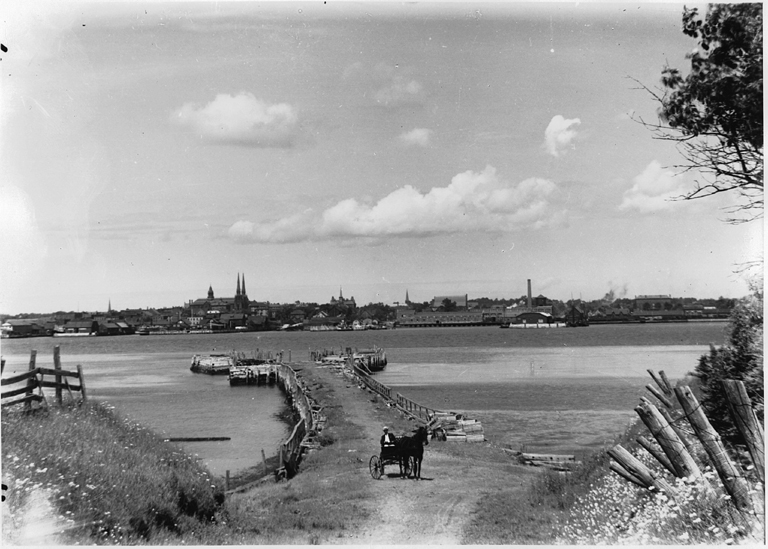
The Loyal Orange Association reached Prince Edward Island in 1849, just under twenty years after the founding of the Canadian Order at Brockville. The first lodge on the Island was chartered under the authority of the Grand Lodge of Nova Scotia and was formally confirmed by warrant from the Grand Lodge of British America in 1853. By the end of the 19th century the PEI jurisdiction had its own provincial grand lodge, a parliamentary act of incorporation for its senior lodge, and a cluster of about a dozen primary lodges scattered along the Island’s north- and south-shore settlement belts.
Boyne Lodge
Boyne Lodge was constituted at Charlottetown in 1849, meeting in the old Masonic hall above Reddin’s drugstore at Sunnyside. Its first Worshipful Master was a Mr. Blackwood, an artilleryman of the British contingent then garrisoned at the city’s Fort Edward. The chartering warrant originally came through the Grand Lodge of Nova Scotia. Warrant 614 was issued by the Grand Lodge of British America, dated 12 February 1853, regularising the Island lodge under the senior Canadian authority.
Boyne Lodge received its own Act of Incorporation from the Prince Edward Island Legislature in 1892. That statute is the earliest provincial-level legal recognition of an Orange body on the Island.
The 1859 Scarlet warrant
The first Scarlet warrant for a Royal Arch Purple degree body on the Island was granted on 24 July 1859. At that date the Association had four primary lodges on the Island.
Instituting the Grand Lodge of Prince Edward Island, 1862
At its Cobourg session of 9 August 1859, the Grand Lodge of British North America resolved that there would be separate local or provincial grand lodges under the general authority of the senior Grand Lodge, and specifically that the Island would constitute a distinct province under that arrangement.
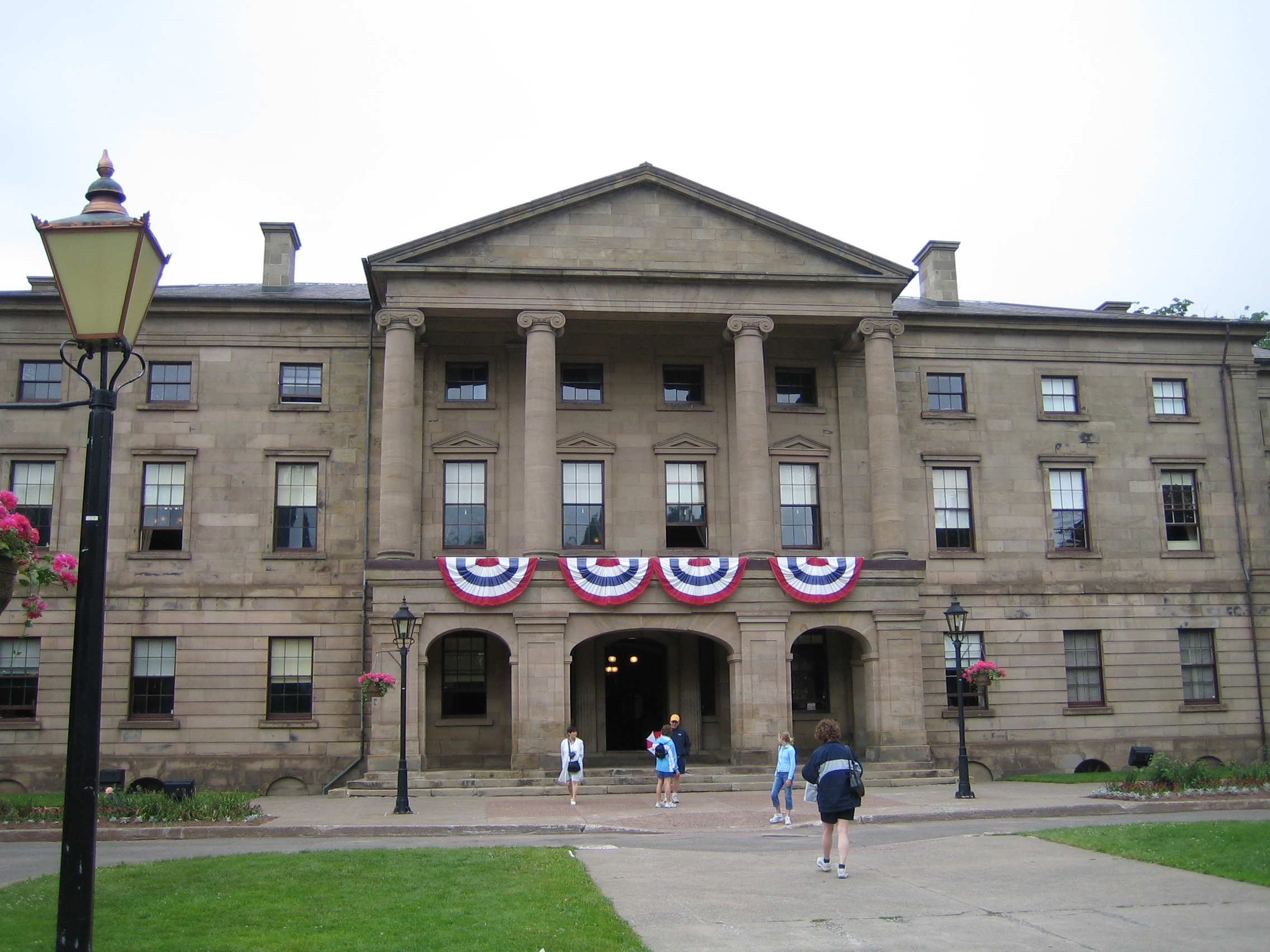
The founding meeting included the Worshipful Masters or representatives of Boyne Lodge (Dr. Thomas Leeming, acting Provincial Grand Secretary), Prince Edward Lodge (Nathaniel Acorn and Richard Smith), Rose Lodge (George Stanley), Lyone Lodge (David Ross), Trinity Lodge (Dr. D. Kaye), Barton Lodge (John Robertson), Tanton Lodge (Thomas Carson), Calvin Lodge (Thomas Bigger), and Dalmeney Lodge (Roderick McNeil), together with visitors from other lodges.
The authorising warrant itself carried the date of 26 July 1861, issued under the seal of the senior Canadian office, the Grand Master of British North America acting for the LOABA. Its terms gave the new Island Grand Lodge the right to elect officers, raise dues, subdivide the Island into counties and districts, and pass its own rules, subject always to the constitution of the senior grand lodge.
Context
The 1830s and 1840s saw the largest cohort of Irish Protestant emigration to the Maritime provinces since Loyalist times.
The Bible Question and Island sectarian politics
Boyne Lodge’s 1849 founding predated the Island’s most bitter sectarian political fight by several years. Between 1856 and 1860, Prince Edward Island politics turned on whether the King James Bible should be read, without note or comment, in the colony’s publicly funded schools. The Island’s Roman Catholic bishop opposed compulsory Bible reading in a system that drew pupils from both faiths, while Protestant opinion organized around the demand for “the open Bible in the schools” and found in it a cause strong enough to unseat a government. In the 1859 election, Edward Palmer’s Conservatives campaigned on the Bible Question and defeated George Coles’s Liberals in a colony whose population was close to half Roman Catholic. The new legislature passed a law in 1860 making Scripture reading a mandatory part of every teacher’s duties, over sustained Catholic protest. Historians of the period identify 1847 to 1877 as three decades of recurring political conflict on the Island organized along the same Protestant-Catholic line, of which the Bible Question was the sharpest single episode. Boyne Lodge and the Grand Lodge instituted in 1862 operated inside that climate, though the Island’s Orange lodges left no documented record of direct involvement in the Bible Question controversy itself, which was fought mainly in the House of Assembly and the Island press rather than through fraternal societies.
Growth and charitable work
Island Orangeism spread quickly once Boyne Lodge and the provincial Grand Lodge had given it an institutional backbone: by 1866 the Public Archives and Records Office’s own records count thirty-six Orange lodges on the Island, well above the roughly dozen primary lodges the jurisdiction settled into by the century’s end, a peak followed by consolidation rather than continuous growth. The Order’s civic role went beyond meetings and parades. In 1922 it established the first Protestant children’s orphanage on the Island, at Mount Herbert, and the Grand Lodge continued to support that institution and other Protestant welfare causes for decades afterward, a pattern of fraternal philanthropy consistent with Orange lodges elsewhere in Canada.
Decline and the present
The Island’s Orange membership declined through the 20th century along the same curve as mainland Canadian jurisdictions, and for the same combination of reasons: the post-1920 slowdown in Ulster emigration, mid-century secularisation of Maritime Protestantism, and the disappearance of sectarian politics from Island public life. A small number of PEI lodges continue to meet. The Public Archives of the Island holds the minute books, warrants, and officers’ correspondence of the jurisdiction going back to 1849, along with the Grand Lodge’s own annual proceedings from 1862 to 1998.
Trace Your Orange Roots
Surname matches, haplogroup placement, and living relatives. FamilyTreeDNA's testing kits pick up where archival records end.
Affiliate links. We earn a small commission at no cost to you. Full disclosure →
Sources
- 'An Act to Incorporate the Boyne Lodge No. 1 of the Loyal Orange Association of Prince Edward Island', Statutes of Prince Edward Island, 1892 — The incorporating statute; original session volume held by the Public Archives and Records Office of PEI.
- Public Archives and Records Office of Prince Edward Island — Loyal Orange Association of PEI fonds — Warrants, minute books, and grand-lodge correspondence for the PEI jurisdiction.
- Grand Lodge of British America — Report of Proceedings, 1859 session (Cobourg) — Records the August 1859 resolution authorising separate provincial grand lodges, under which PEI constituted as its own province.
- Houston, Cecil J., and William J. Smyth. The Sash Canada Wore: A Historical Geography of the Orange Order in Canada. University of Toronto Press, 1980. — Situates the PEI jurisdiction within the wider Maritime expansion of the Order.
- Ian Ross Robertson, 'The Bible Question in Prince Edward Island from 1856 to 1860', Acadiensis — Scholarly treatment of the Island's 1856-1860 sectarian schools controversy. Verified July 2026.
- Grand Orange Lodge of Prince Edward Island fonds, Public Archives and Records Office of PEI — 1866 lodge count and the 1922 Mount Herbert orphanage. Verified July 2026.
Further reading
As an Amazon Associate we earn from qualifying purchases. Full disclosure →
- The Sash Canada Wore: A Historical Geography of the Orange Order in Canada — Houston & Smyth, University of Toronto Press, 1980.
- Island Lives: A Social History of Prince Edward Island — Edward MacDonald. Acorn Press, various editions.