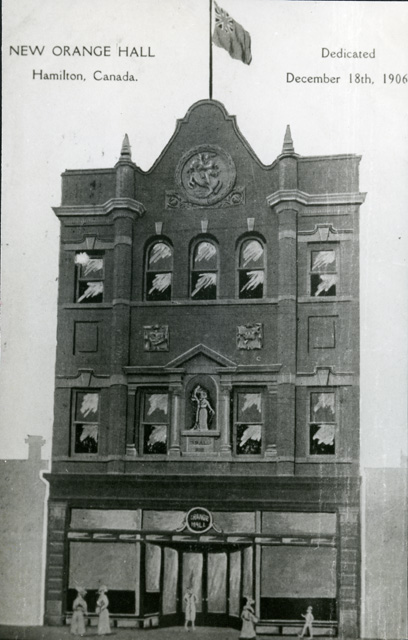
The Montreal Riots of 1849
- Date
- 1849-04-25 — 1849-08-18
- Location
- Montreal, Canada East
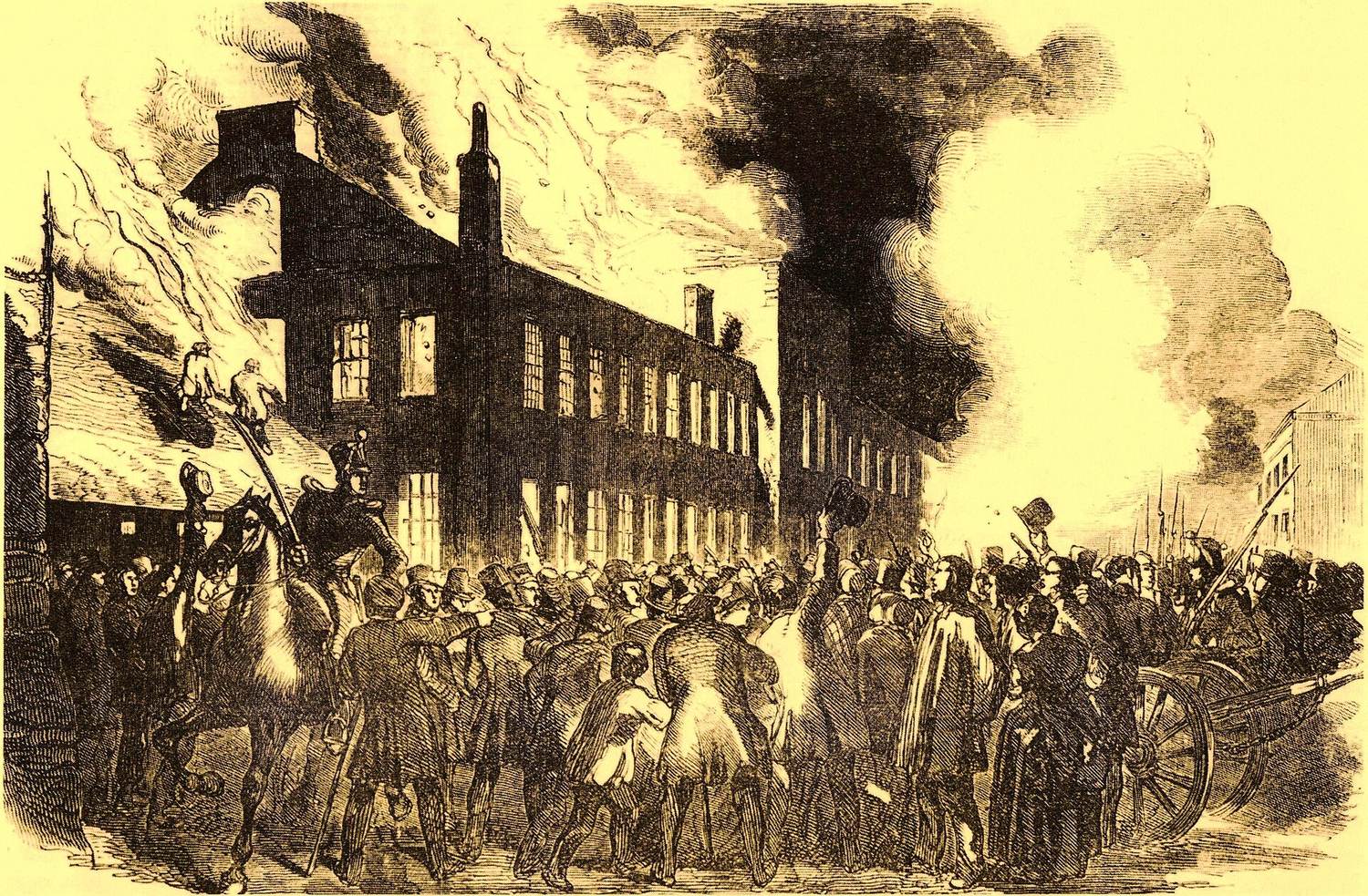
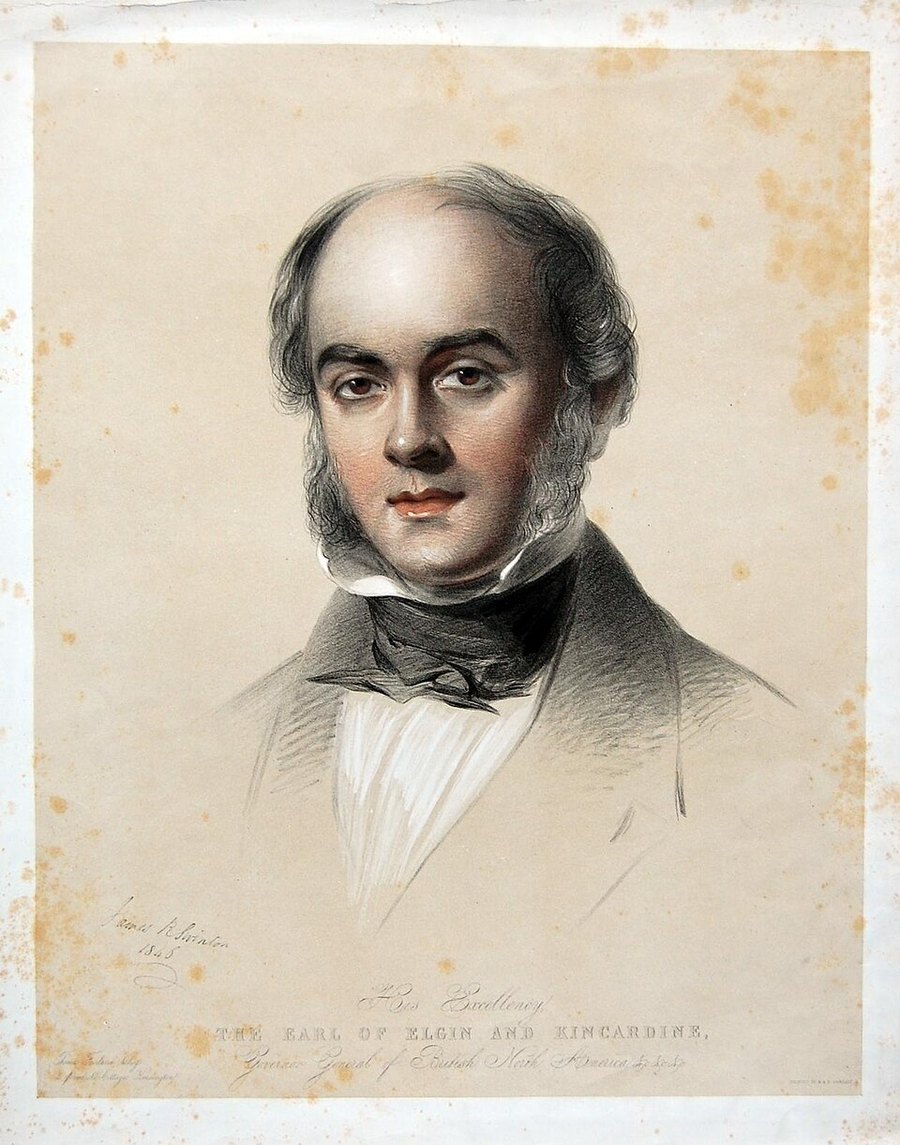
At about five o’clock on the afternoon of 25 April 1849, James Bruce, Earl of Elgin and Governor General of British North America, gave royal assent to the Rebellion Losses Bill in the Legislative Council chamber at Montreal. He was pelted with eggs and stones as he left the building an hour later. By ten that night the Parliament of the Province of Canada was on fire, and both legislative libraries, more than twenty-three thousand volumes, were burning with it. The disorder ran on into August, killed a young man named William Mason, produced ten arrests and no convictions, and ended Montreal’s career as the capital of Canada.
This page exists partly to answer a question readers bring to it, which is whether these were Orange riots. The short version is that one authoritative scholarly source says the mob was Tory and Orange, most of the standard accounts say only that it was Tory, and no Orange lodge has been shown to have organised, resolved on or led the attack. The long version is below, because the distinction is the useful part.
The Rebellion Losses Bill
The rebellions of 1837 and 1838 left property damage in both provinces. Upper Canada had already compensated its claimants. Louis-Hippolyte La Fontaine introduced a bill on 27 February 1849 to do the same for Lower Canada, excluding anyone convicted of high treason. A commission had put the claims at £241,965 10s. 5d.; the bill authorised £90,000.
The Tory objection was that this paid rebels. The Legislative Assembly passed the bill on 9 March by 47 to 18, and the internal split is the number worth keeping: Lower Canadian members voted 30 to 4 in favour, and Upper Canadian members also carried it, 17 to 14. The Legislative Council followed on 15 March, 20 to 14. Elgin declined Allan Napier MacNab’s pressure to withhold assent, on the ground that a governor who overrode a ministry with a majority would make responsible government meaningless. That decision, not the money, is why 1849 matters.
The evening of 25 April
Elgin’s assent surprised the spectators in the galleries, who had not expected him that day. He was mobbed on leaving at about six.
What happened next was organised in public and in print. James Moir Ferres, editor and chief proprietor of the Montreal Gazette, brought out an Extra calling on “Anglo-Saxons” to assemble at eight o’clock at the Place d’Armes. Its language was not ambiguous: “The puppet in the pageant must be recalled, or driven away by the universal contempt of the people.” Ferres had already promised his readers he would send a verbal fiery cross through the community, and had called the bill a nefarious attempt at robbery of the Anglo-Saxon population.
Between twelve and fifteen hundred people came, and the meeting moved to the Champ-de-Mars, where George Moffatt and Colonel Gugy spoke. Alfred Perry, a captain of volunteer firemen, later claimed the line that turned a meeting into a mob: the time for petitions was over, and if the men present were serious they should follow him to the Parliament Buildings.
They went by way of the offices of the Montreal Pilot, the only English-language daily in the city supporting the government, and broke its windows on the way.
The burning
Parliament was still sitting, in committee on a court of appeals bill. The journal of the House records the interruption in its own flat register: the proceedings of the committee were interrupted by continued volleys of stones and other missiles.
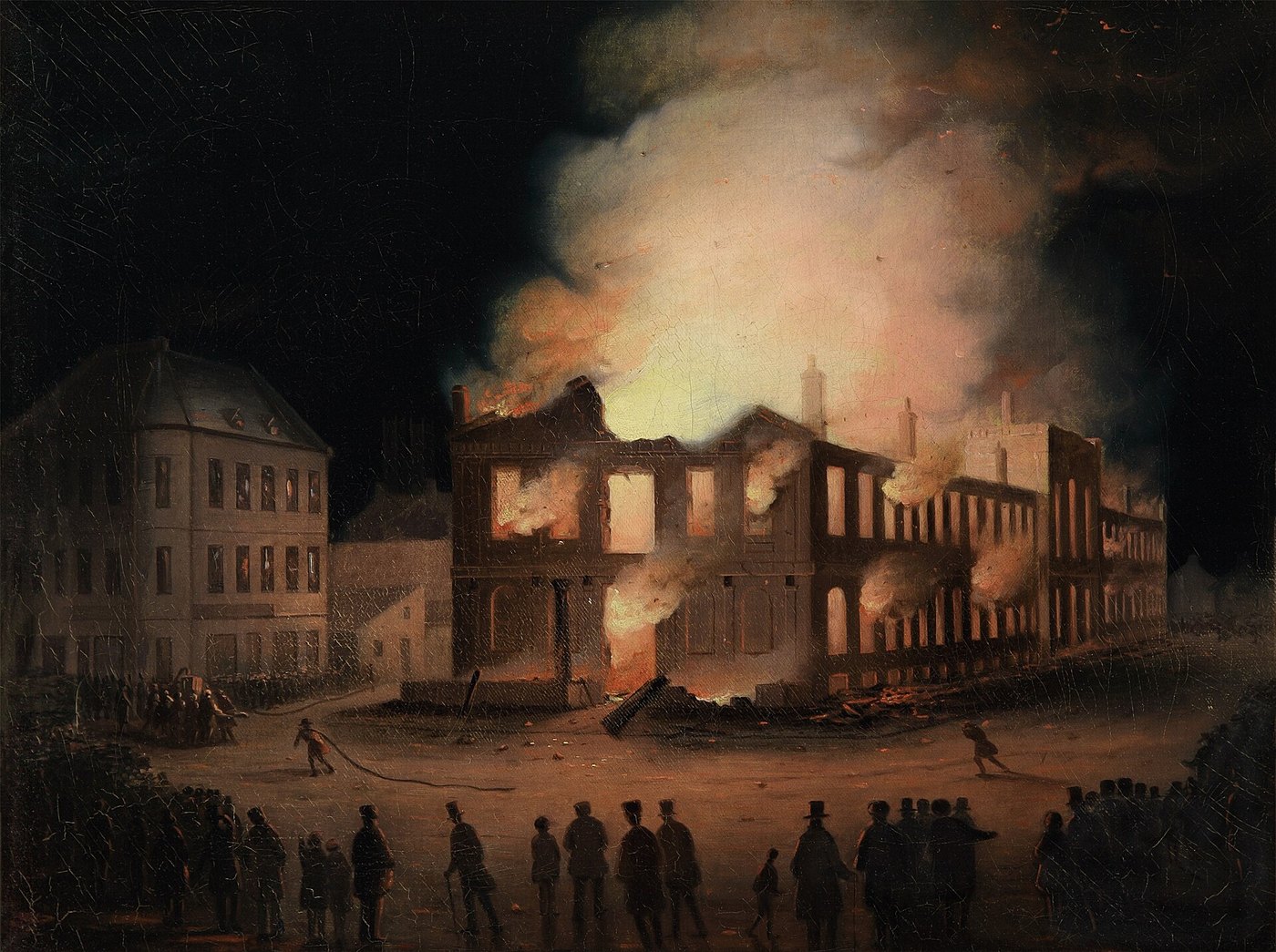
Perry, Augustus Heward and Alexander Courtney forced an entry using a thirty-five-foot ladder off a fire truck as a battering ram. By Perry’s own telling in 1887, he threw a brickbat at a clock he found offensive, missed, struck the gas chandelier, and the escaping gas from soft composition tubing burned upward into the loft. Other accounts put the fire down to torches thrown in from the street. Perry and Courtney lifted the ceremonial mace from the clerk’s desk and carried it to MacNab at the Donegana Hotel.
The building, the old Sainte-Anne market, burned out completely, and the fire spread to warehouses and to the Grey Nuns’ general hospital. Firefighters were kept off the parliament itself while being allowed to save the buildings around it, a detail Perry recalled with satisfaction: the surrounding buildings had been drenched with water, but not one drop had been thrown on the burning House.
What was lost
The two legislative libraries went, more than twenty-three thousand volumes between them, roughly fourteen thousand from the Assembly and eight thousand from the Council, including collections inherited from both pre-union provinces. Parts of the Upper and Lower Canadian archives went with them. About two hundred books were carried out, along with Queen Victoria’s portrait, rescued by a party including Sandford Fleming. Losses were put at over $400,000. The reconstructed library burned again at Quebec on 1 February 1854.
The rest of 1849
The violence did not stop with the fire. On 30 April, Elgin drove to Government House at the Château Ramezay to receive the Assembly’s address deploring the riot and was attacked again on the rue Notre-Dame. His brother Colonel Bruce was seriously injured by a rock to the head; the police superintendent, Ermatinger, and a Captain Jones were also hurt. Morton records that Elgin carried away a two-pound stone thrown into his carriage.
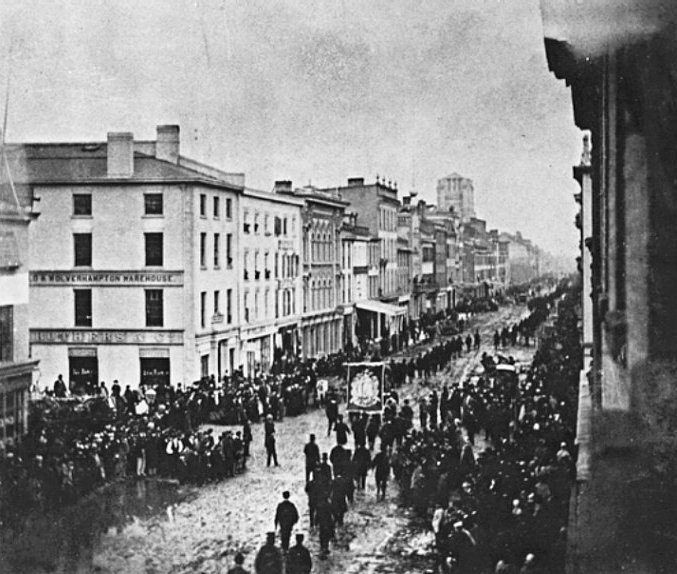
Through the summer, mobs went after the houses of La Fontaine and Hincks. On the night of 15 August a crowd attacked La Fontaine’s residence and William Mason, a blacksmith’s son from Craig Street, was fatally wounded. He was buried on 18 August behind a large funeral procession, and he is the only death the record attributes to the year’s disorder.
Were these Orange riots?
Here is the evidence, laid out rather than summarised, because the answer depends on which source you open.
For. W. L. Morton, writing the Dictionary of Canadian Biography entry on Elgin, states that after assent Montreal lay at the mercy of “an organized and aggressive Tory and Orange mob, which conservative citizens either actively joined or refrained from resisting.” That is a considered judgment by a major historian in a peer-reviewed reference work, and it should not be waved away. There is also contemporary participant evidence of Orange men in the crowd: Perry’s 1887 account describes Heward, “a stalwart Irishman” carrying a blackthorn, taking a blow from John Sandfield Macdonald as the mob forced the chamber, after which the blood flowed freely from his Orange brow.
Against. The DCB’s own framing essay for the event describes only “a mob” and does not mention the Order at all. Neither does the DCB entry on Ferres, the man who summoned the meeting, nor the Wikipedia article on the burning, nor the one on the Rebellion Losses Bill, nor the Legislative Assembly of Ontario’s account, nor Canada’s History on the fire, which instead calls the crowd a rabble made up of some of the city’s finest citizens and respectable members of the English community. The French Wikipedia article on the Order in Canada carries a Quebec section and says nothing about 1849 either. Those are the sources checked for this page, named here so a reader can see the size of the search rather than take a bare negative on trust.
What the mechanism actually was. The mob was convened by a newspaper Extra, addressed by merchants and a colonel at a public meeting, and led into the building by a volunteer fire captain. No lodge resolution, no lodge summons, no lodge officer acting as such, and no Orange procession appears anywhere in the assembling of that crowd, and the ten men arrested were prosecuted as individuals.
The reasonable conclusion. Individual Orangemen were in the crowd, and given the Tory politics of the Montreal English community in 1849 it would be odd if they had not been. The Order as an institution is not documented as having organised or directed the attack. Calling these the Orange riots of 1849 goes past the evidence; calling the crowd purely Tory drops something Morton thought worth saying. The accurate formulation is a Tory mob in which Orangemen took part, and this page is titled accordingly.
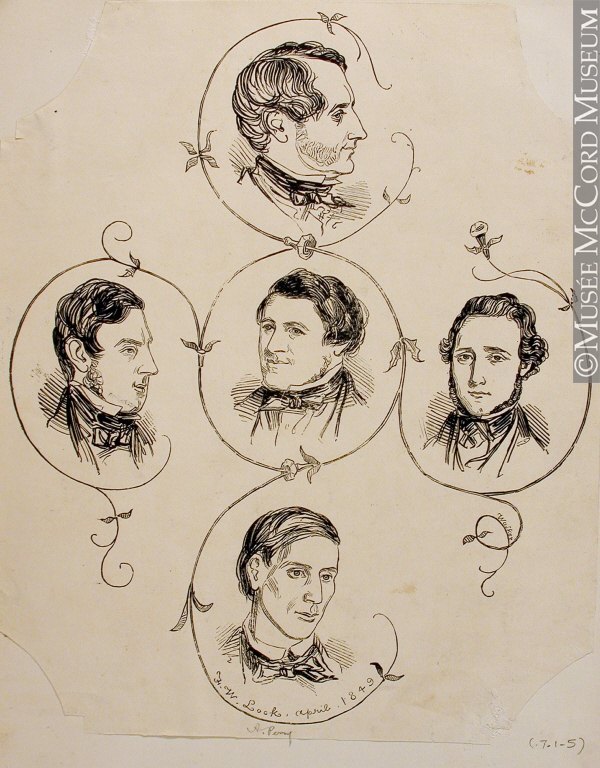
The Order in Montreal in 1849
For context rather than for blame, the Order was present in Lower Canada and was growing. A military lodge is reported at Montreal as early as 1800, and Arthur Hooper, an Irish Protestant who settled in the city in 1821, is credited with founding the first civil lodge in Quebec. English Wikipedia gives a different founding, dating a Montreal lodge to 1812 under William Burton, Arthur Hopper, John Dyer and Francis Abbott, which looks like the same founder under a variant spelling with a different date attached; the two accounts have not been reconciled here.
What is agreed is that Quebec has had a provincial grand lodge since 1849, and that by 1859 there were eleven lodges at Quebec, thirteen at Montreal and twenty in Argenteuil County. So the year of the riots was also the year Quebec Orangeism acquired its own provincial structure. That is a coincidence of date, not a demonstrated connection, and it should not be pressed into one.
It is worth adding where the Order’s documented anger at the Rebellion Losses Bill actually went. Ogle Robert Gowan, the Order’s founder in Canada and the most prominent Orange opponent of the bill, ran his campaign against Elgin in Canada West: in demonstrations during the governor general’s tour of the upper province and in the columns of his own Brockville Statesman. It cost him his commission of the peace and his militia lieutenant-colonelcy in 1849. The Orange response to 1849 that can be traced in the record is an Upper Canadian one, and it was conducted in print and at public meetings rather than with a ladder.
The prosecutions
Five men were arrested on 26 April: Ferres, William Gordon Mack, Hugh E. Montgomerie, Augustus Heward and Perry. They were bailed on 28 April and taken from the prison to the Bank of Montreal in a procession of omnibuses and cabs, where they addressed their supporters. Five more were arrested on 15 August: John Orr, Robert Cooke, John Nier junior, John Ewing and Courtney, all bailed except Courtney.
Nobody was convicted. Ferres’s case, according to his DCB entry, evidently never came to trial at all. Ten arrests followed the destruction of a parliament building, a fatal attack on the premier’s house and repeated assaults on a governor general, and the courts of Canada East convicted no one. Compare the Harbour Grace Affray thirty-four years later, where nineteen men were tried twice for four deaths and acquitted both times. Juries drawn from a community rarely convicted its own in these cases.
Consequences
The bill stood. That was the point, and Elgin’s refusal to be intimidated is the reason responsible government held in Canada.
Everything else moved. On 19 May Henry Sherwood carried a motion, 34 to 29, to alternate the seat of government between Toronto and Quebec every four years. Deputy Governor William Rowan prorogued Parliament on 30 May. In October the Annexation Manifesto appeared at Montreal, signed by a long list of commercially and politically significant men urging union with the United States; Morton reads it as an act of desperation by men whose world had been turned upside down. Elgin proclaimed the change of capital on 14 November, and Parliament reopened at Toronto on 14 May 1850. Montreal never got it back. In 1857 Queen Victoria settled the question on Ottawa.
The Gavazzi riots of 1853 are a different event
Readers looking for sectarian violence in Montreal often land on the Gavazzi riots and merge them with 1849. They should not be merged. Alessandro Gavazzi, a former Barnabite friar lecturing against the papacy, was attacked at Quebec on 6 June 1853 and at Montreal on 9 June. The attackers in both cities were Irish Catholics opposed to his lectures. The deaths came from the troops: a regiment stood by at Mayor Charles Wilson’s request, was ordered to fire on the crowd, and five men fell dead in Montreal.
No Orange organisational role in the 1853 riots turned up in the sources checked for this page. The nearest connection is retrospective and literary, a poem about the affair in Robert McBride’s The Canadian Orange Minstrel of 1870, which is evidence that Orangemen remembered the event, not that they took part in it.
What survives
Very little of the building came out of the fire, and the fate of the fragments is the strangest part of the story. The mace went to MacNab’s hotel and back into parliamentary use. The royal coat of arms, carved in pine and about a metre high, had hung above the Speaker’s seat in the Legislative Assembly chamber from 1844 and came through the fire nearly intact. It then vanished from Canada entirely, resurfacing in New York, where it was bought by a collector who happened to be a former Solicitor General of Canada, Robert P. Kaplan. He donated it to Pointe-à-Callière in 2010, on hearing that the museum intended to excavate the site.
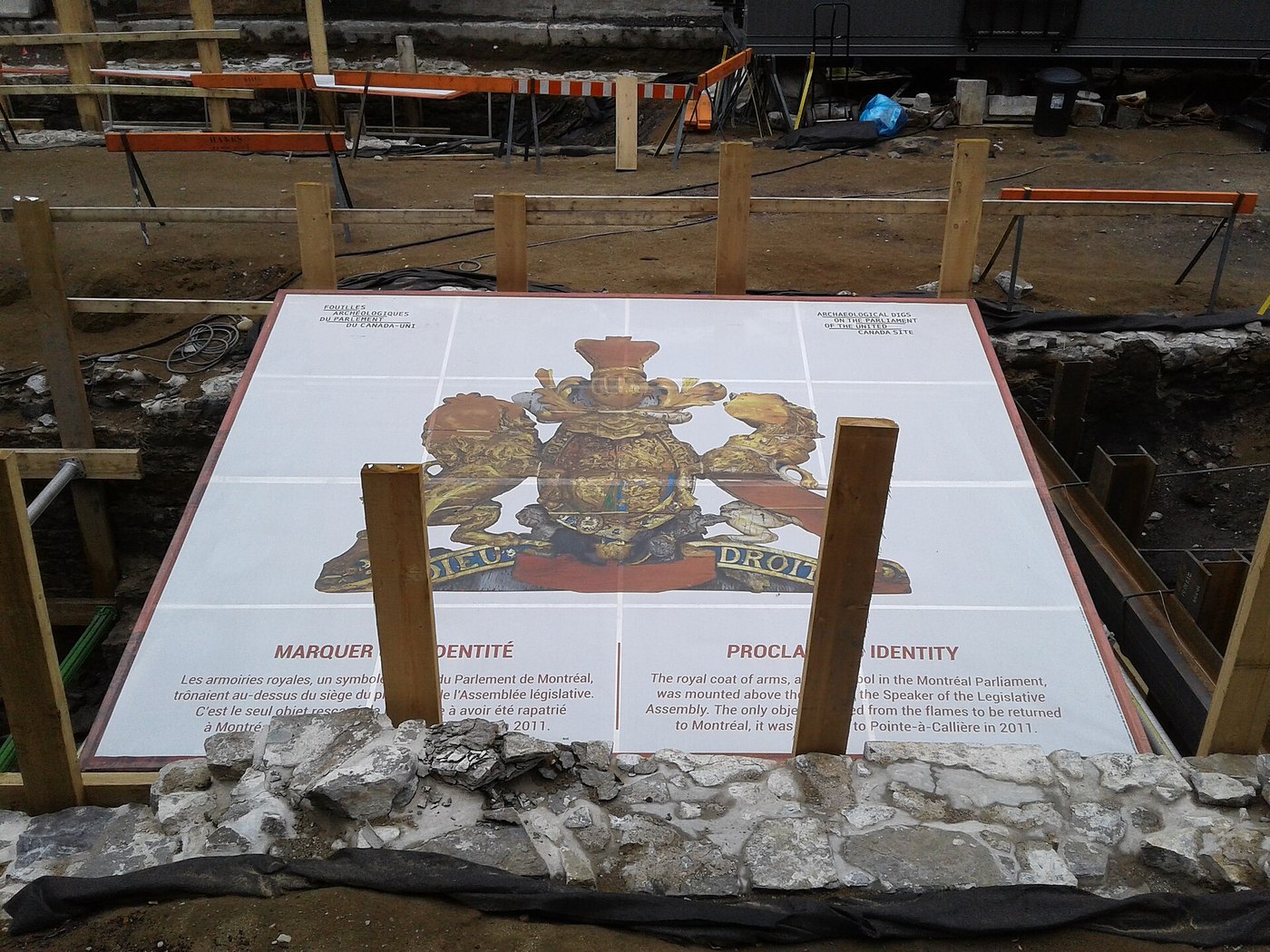
The dig began in 2011 under Louise Pothier and found the foundations preserved to a degree nobody had expected, along with a large quantity of material from the building’s final hours. The site sits beneath Place d’Youville, under a hoarding that reads, in French and English, that there is a parliament beneath your feet.
Trace Your Orange Roots
Surname matches, haplogroup placement, and living relatives. FamilyTreeDNA's testing kits pick up where archival records end.
Affiliate links. We earn a small commission at no cost to you. Full disclosure →
Sources
- MORTON, W. L. 'BRUCE, JAMES, 8th Earl of ELGIN', Dictionary of Canadian Biography, vol. 9 (1976) — The single scholarly source found that names the Order. Morton describes 'an organized and aggressive Tory and Orange mob, which conservative citizens either actively joined or refrained from resisting', and records the two-pound stone thrown into Elgin's carriage. Read August 2026.
- 'Burning of the Montreal parliament building (1849)', Dictionary of Canadian Biography topic page — The DCB's own framing essay for the event refers to 'a mob' and does not mention the Orange Order. Associated biographies: Blake, Bruce, Faribault, Ferres, Gugy, La Fontaine, Morin, Richardson, Viger. Read August 2026.
- STE. CROIX, LORNE. 'FERRES, JAMES MOIR', Dictionary of Canadian Biography, vol. 9 (1976) — The Montreal Gazette editor who called the meeting. Describes the bill as 'a nefarious attempt at robbery' of the Anglo-Saxon population and his promise to send a verbal 'fiery cross' through the community. No Orange affiliation is recorded. Read August 2026.
- Perry, Alfred. 'A Reminiscence of '49: Who Burnt the Parliament Buildings?', Montreal Daily Star, Carnival Number, 1887 — First-hand participant account, written thirty-eight years later. The source of the 'Orange brow' reference to Heward, of the brickbat and chandelier story, and of the claim that no water was thrown on the burning House. Read August 2026.
- 'Burning of the Parliament Buildings in Montreal', Wikipedia — Used for the chronology, the division lists, the named arrests of 26 April and 15 August, the library losses, and the removal of the capital. The article does not mention the Orange Order.
- 'Rebellion Losses Bill', Wikipedia — Passage dates and votes, the commission's estimate of £241,965 10s. 5d. and the £90,000 authorised. No mention of the Orange Order.
- 'Association loyale d'Orange du Canada', Wikipédia (French) — Quebec section: a military lodge reportedly founded at Montreal in 1800, Arthur Hooper as founder of the first civil lodge after settling in Montreal in 1821, a Quebec provincial grand lodge from 1849, and by 1859 eleven lodges at Quebec, thirteen at Montreal and twenty in Argenteuil County. Read August 2026.
- Jolivet, Simon. 'Orange, vert et bleu: les orangistes au Québec depuis 1849', Bulletin d'histoire politique, vol. 18, no. 3 (2010), pp. 67-84. — The standard short scholarly treatment of Quebec Orangeism. Cited here from its bibliographic record; not consulted directly for this page.
- 'The Royal Coat of Arms Gets a Facelift', Pointe-à-Callière, Montréal Archaeology and History Complex — The carved pine royal arms that hung above the Speaker's seat from 1844, its survival, its rediscovery in New York, and its 2010 donation by Robert P. Kaplan ahead of the excavation of the site. Read August 2026.
- 'The Parliament of United-Canada in Montreal, 1843-1849: an exceptional archaeological site', Canadian Parliamentary Review, vol. 40 no. 4 — The Pointe-à-Callière excavation of the Sainte-Anne market and parliament site under Louise Pothier.
Further reading
As an Amazon Associate we earn from qualifying purchases. Full disclosure →
- The Orange Order in Canada — David A. Wilson (ed.), Four Courts Press, 2007. The essay collection to read before assuming the Order was behind any given nineteenth-century riot.
- The Sash Canada Wore: A Historical Geography of the Orange Order in Canada — Houston and Smyth, 1980. Maps where the Order actually was in 1849, which is most of the answer.