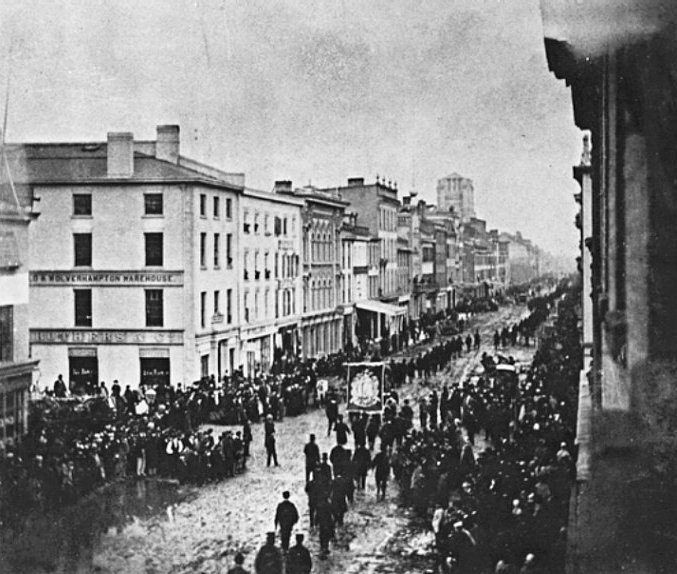
SCHOLES, John Francis
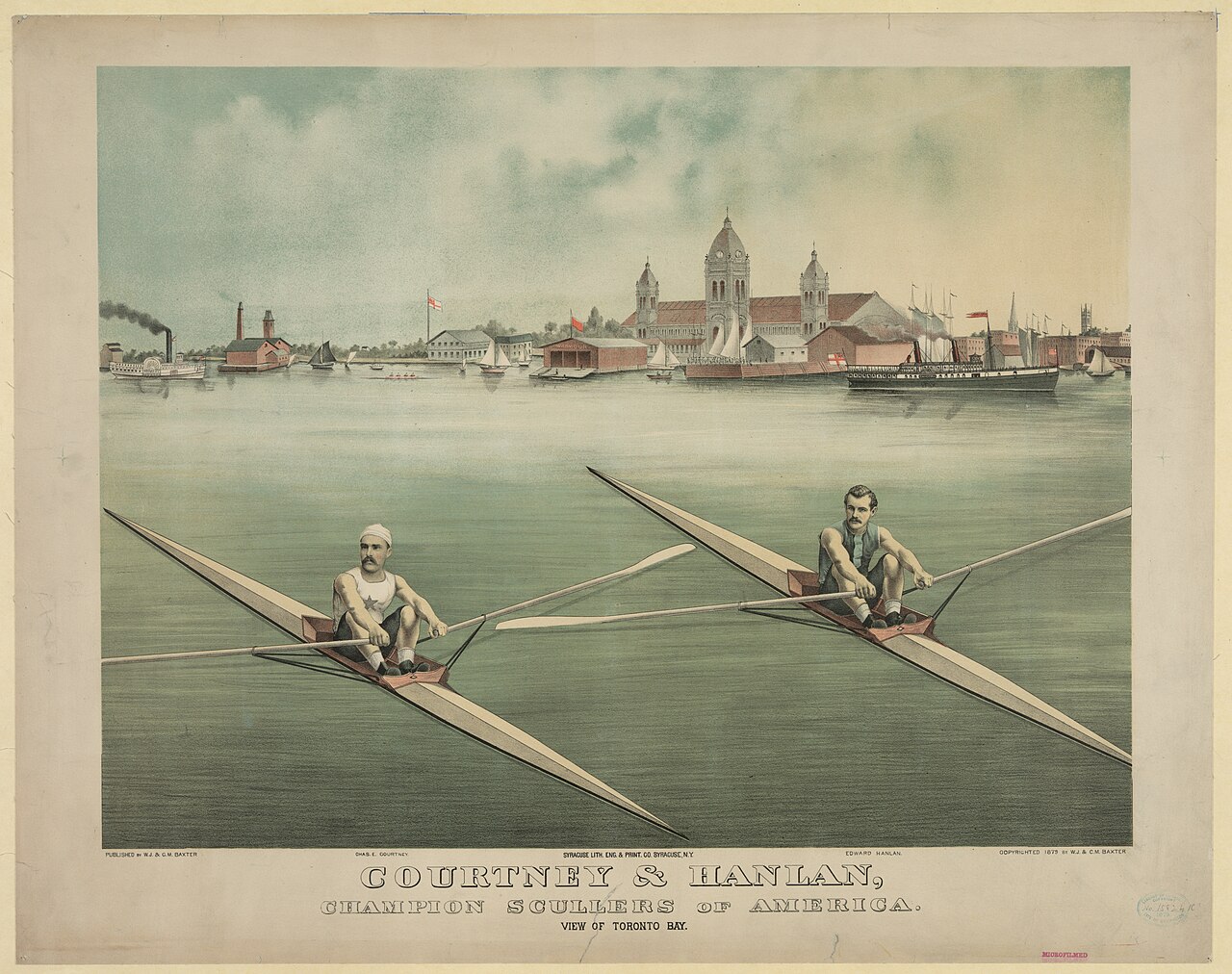
- Born
- 1843-12-21
Queen's County, Ireland (now County Laois) - Died
- 1918
Toronto, Ontario - Role
- Canadian single sculls champion 1877; boxer and boxing trainer; member of Brunswick L.O.L. 404, Toronto
John Francis Scholes was a Toronto athlete who reached championship standard in three sports and made his lasting reputation in a fourth. Born in Queen’s County, Ireland, on 21 December 1843, he came to Toronto with his family as a boy, raced at the top level in rowing and snowshoe running, played lacrosse well, and then spent thirty years boxing exhibition matches against the best heavyweights in the world without being beaten in one. He belonged to Brunswick L.O.L. 404 and died at Toronto in 1918.
That lodge number is the detail most researchers arrive here for, so it is worth stating early: Brunswick Loyal Orange Lodge No. 404, Toronto. His son belonged to the same lodge.
What the archived record says
This page rests substantially on the site’s own earlier page for Scholes, archived in February 2019 and now restored here. It is a short account and it is the fullest single source located. Two of its claims sit awkwardly against the standard histories of Canadian rowing, and both are set out below rather than quietly dropped or quietly repeated. A reader with access to Toronto newspapers of the 1870s could probably settle either one in an afternoon.
Rowing, and a contested championship
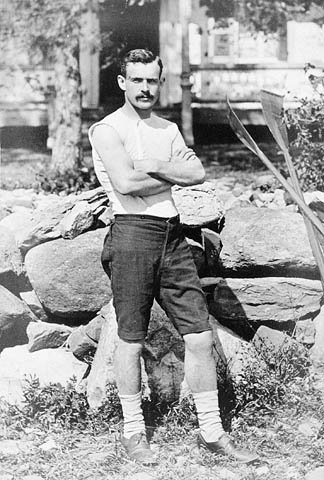
The archived account credits Scholes with the Canadian single sculls championship in 1877, and with a place in the four-man crew that took an international championship in 1878.
The difficulty is that Edward “Ned” Hanlan, Toronto’s own and later the world sculling champion, is recorded as Canadian champion in 1877 as well. Both men cannot have held the same title in the same year. The likeliest explanations are that the two titles were different events, that one of the dates is out by a year, or that the archived page is simply mistaken. This page does not choose between them. If Scholes did take a Canadian single sculls title, the year is not securely established.
The second claim is that Scholes trained Hanlan. Hanlan’s coach is generally given as George Warin, the boatbuilder who went on to patent a sliding seat in 1882, and the standard account of Hanlan’s career does not mention Scholes at all. Hanlan turned professional around 1874 or 1875, was Canadian champion in 1877, United States champion in 1878, English champion on 16 June 1879, and world sculling champion from 1880 until Bill Beach beat him on the Parramatta River on 16 August 1884. Plenty of hands were involved in a career of that length, and an early trainer can drop out of the record entirely, so the archived claim is not implausible. It is simply not corroborated, and it is recorded here as the archive’s assertion rather than as established fact.
What is not in dispute is that Scholes was a serious oarsman in the most competitive sculling city in the world at the time. Toronto Bay in the late 1870s was where the world championship was effectively decided.
Snowshoes and lacrosse
Before the boxing, Scholes held the Canadian record for long distance snowshoe racing and was, in the archived page’s phrase, a great lacrosse player. Both belong to the same Victorian Canadian sporting culture as the sculling: organised, intensely competitive, heavily wagered on, and reported at length in the daily press.
Neither the snowshoe record nor the lacrosse career has been independently verified for this page. Snowshoe racing records of the 1860s and 1870s were kept by individual clubs, principally in Montreal, and are not centrally indexed.
The boxing career
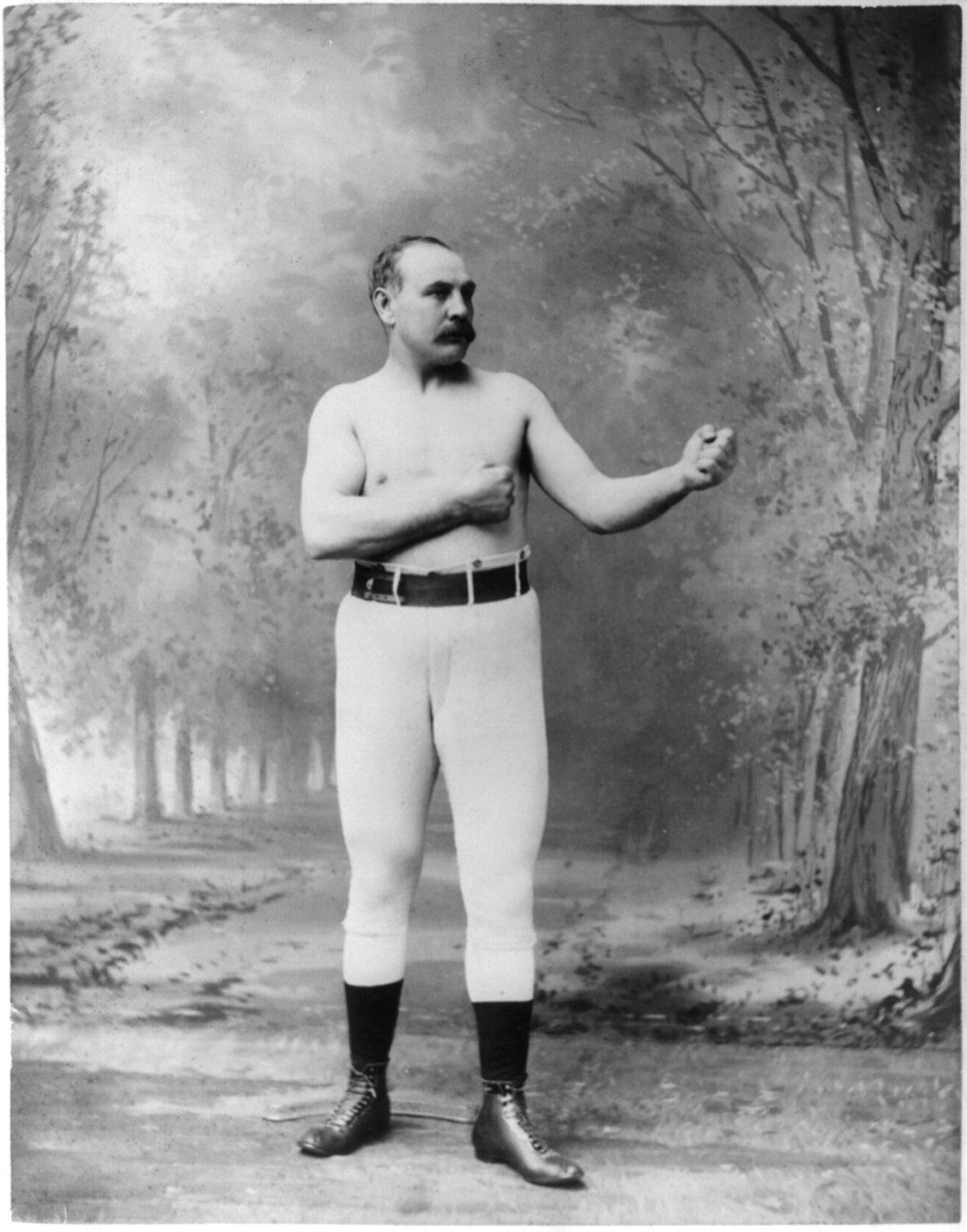
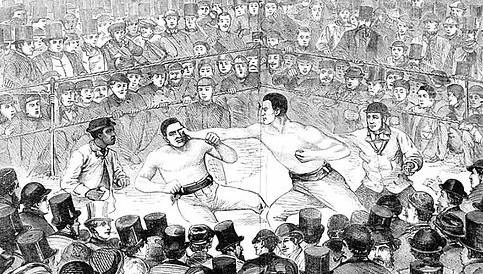
Boxing was the sport Scholes held dearest, and the one he was best at. From the early 1860s to the 1890s he fought most of the world heavyweight champions of the period in exhibition matches and, by the archived account, was never beaten in one.
The distinction between an exhibition and a prize fight matters here and is easy to lose. Prize fighting was illegal in most of the jurisdictions Scholes worked in. Exhibitions were sparring matches of a few rounds, often with gloves, staged in halls and gardens, sometimes for a purse and usually for gate money. An unbeaten exhibition record is a real achievement in front of a paying crowd, but it is not the same as an unbeaten fighting record, and the archived page does not claim it was.
The best documented of these bouts is also the most striking. On 8 January 1897, at Allan Gardens in Toronto, Scholes boxed three exhibition rounds with Jem Mace. Mace, born at Beeston in Norfolk on 8 April 1831 and generally called the father of modern boxing, was sixty-five years old and near the end of a career that had carried the bare-knuckle era into the gloved one. Scholes was fifty-three. CanadianBoxing.com’s history of the sport in Canada records the same bout on the same date, which makes this the one episode in Scholes’s athletic life confirmed by a source independent of this site.
Brunswick L.O.L. 404
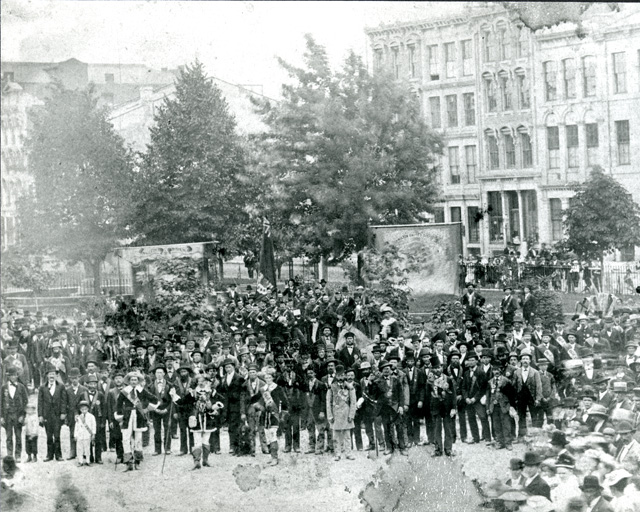
Scholes was a member of Brunswick Loyal Orange Lodge No. 404 in Toronto. A Toronto primary lodge in this period sat under a district lodge, then the county lodge of Toronto, then the Grand Orange Lodge of Ontario West, and finally the Grand Orange Lodge of British America, whose seat had been in Toronto since 1867.
One warning applies to the number as much as to any other. Orange lodge numbers were reused: when a lodge folded its number fell vacant and a surviving lodge could take it, in order to march nearer the front of the Twelfth of July parade. A record of lodge 404 from a different decade or a different town is not necessarily Brunswick. The name is the safer identifier, and the pairing of name and number is safest of all. The same caution is set out at more length in the 1871 directory of Orange lodges in western Ontario.
Toronto had over twenty lodges by 1860 and thirty-one by 1880, so Brunswick 404 was one of a crowded field, and a sporting figure of Scholes’s standing would have been a visible asset to it.
His son, John Lewis Scholes
John Lewis Scholes was born at Toronto on 2 November 1878 and followed his father into the ring, where he was the better competitive fighter of the two.
By the archived account he took the Canadian championship of the 125 pound division in 1897 after a fight at the Toronto Athletic Club, travelled to England in 1899 and won the English championship there after several bouts, took the American title in New York City in 1900, defended it in 1901, and retired undefeated. He belonged to Brunswick L.O.L. 404 like his father.
None of the son’s titles has been independently confirmed for this page. Lightweight and featherweight championship claims of the 1890s and 1900s were frequently contested, with rival claimants recognised in different cities, so the absence of corroboration is not by itself evidence against the account.
There is one further loose thread worth flagging for anyone working on this family. A Lewis Francis Scholes Sr., born at Toronto on 15 June 1880 and died there on 19 April 1942, won the Diamond Challenge Sculls at the Henley Royal Regatta in 1904 rowing for Toronto Rowing Club, and competed in the single sculls at the 1908 Olympics. The surname, the city, the sport and the approximate generation all match a son of a championship Toronto sculler. No source consulted for this page gives his parentage, so the connection is unestablished. It is recorded here because it is the obvious next question, and because a researcher with access to Toronto parish registers or the 1891 census could probably answer it.
Research notes
The 1871 and 1881 censuses of Canada should place the family in Toronto, with John Francis Scholes as head of household and children including John Lewis, born 1878. Toronto assessment rolls will give addresses. Toronto newspapers of the 1870s through the 1890s are the richest source for the athletic career, since sculling races, snowshoe meets and boxing exhibitions were all reported in detail.
For the lodge, look for Brunswick L.O.L. 404’s own minute books if they survive, and for the annual 12 July parade reports, which named participating lodges and their officers year after year.
Corrections and additions to this page, particularly on the 1877 sculling championship, the Hanlan training claim, and the parentage of Lewis Francis Scholes, are welcome.
Trace Your Orange Roots
Surname matches, haplogroup placement, and living relatives. FamilyTreeDNA's testing kits pick up where archival records on the Scholes line end.
Affiliate links. We earn a small commission at no cost to you. Full disclosure →
Sources
- John Francis Scholes, canadianorangehistoricalsite.com, archived 8 February 2019 — The site's own pre-2020 page, the source for Scholes's birth date and place, his athletic record, the Mace exhibition, his Brunswick L.O.L. 404 membership, his death, and the account of his son. Two of its claims conflict with the standard rowing histories and are flagged in the text below.
- A History of Boxing in Canada, CanadianBoxing.com — Independently confirms the 8 January 1897 three-round exhibition at Toronto between 'local fighter John F. Scholes' and 'Gypsy' Jem Mace, and gives Mace's dates as 8 April 1831 to 30 November 1910. Verified August 2026.
- Ned Hanlan, Wikipedia — Hanlan's dates (12 July 1855 to 4 January 1908), his 1877 Canadian championship, his world title 1880–1884, and his coach George Warin. Names no Scholes, which is the basis for the caution recorded on this page. Verified August 2026.
- Lou Scholes, Wikipedia — Lewis Francis Scholes Sr., 15 June 1880 to 19 April 1942, Toronto sculler and 1904 Diamond Sculls winner. No parentage given, so the relationship to John Francis Scholes remains unestablished. Verified August 2026.
- Fraternal and Benevolent Societies in Ontario: Loyal Orange Order — Toronto lodge structure and the lodge-numbering practice relevant to identifying Brunswick L.O.L. 404. Verified August 2026.
Further reading
As an Amazon Associate we earn from qualifying purchases. Full disclosure →
- Toronto, the Belfast of Canada: The Orange Order and the Shaping of Municipal Culture — William J. Smyth, 2015. The civic world in which a Toronto lodge like Brunswick 404 operated.
- Robertson's Landmarks of Toronto — John Ross Robertson's multi-volume compilation, the standard contemporary reference for Toronto sporting and fraternal life in this period.