Orange Lodges of Western Ontario, a Directory for 1871
In 1871 every Orange lodge in Ontario west of the western boundary of Victoria County came under one jurisdiction, the Grand Orange Lodge of Ontario West. That single administrative line is the most useful thing a researcher can know before starting, because it determines which grand lodge minute books an ancestor’s lodge reported into, and therefore where to look.
This page is a reconstruction, not a reprint. No single published Orange directory for western Ontario in 1871 has been located for it. What follows is compiled from surviving lodge records and archival finding aids, and every entry can be checked against the sources listed above.
What “Ontario West” meant
The jurisdiction was created in 1859, when three provincial grand lodges were established across the united Province of Canada. Canada East became the Provincial Grand Lodge of Quebec. Central Canada became Ontario East in 1867. Canada West became Ontario West in the same year, taking its new name at Confederation.
The dividing line between the two Ontario jurisdictions is the western boundary of Victoria County. Everything west of it, which is to say Toronto, Peel, York, Halton, Wentworth, Simcoe, Wellington, Waterloo, Grey, Bruce, Huron, Perth, Middlesex, Oxford, Brant, Elgin, Norfolk, Lambton, Kent and Essex, was Ontario West. Kingston, Ottawa, Brockville and the eastern counties were Ontario East. A researcher chasing an ancestor’s lodge in the wrong grand lodge’s records will find nothing and conclude, wrongly, that the lodge did not exist.
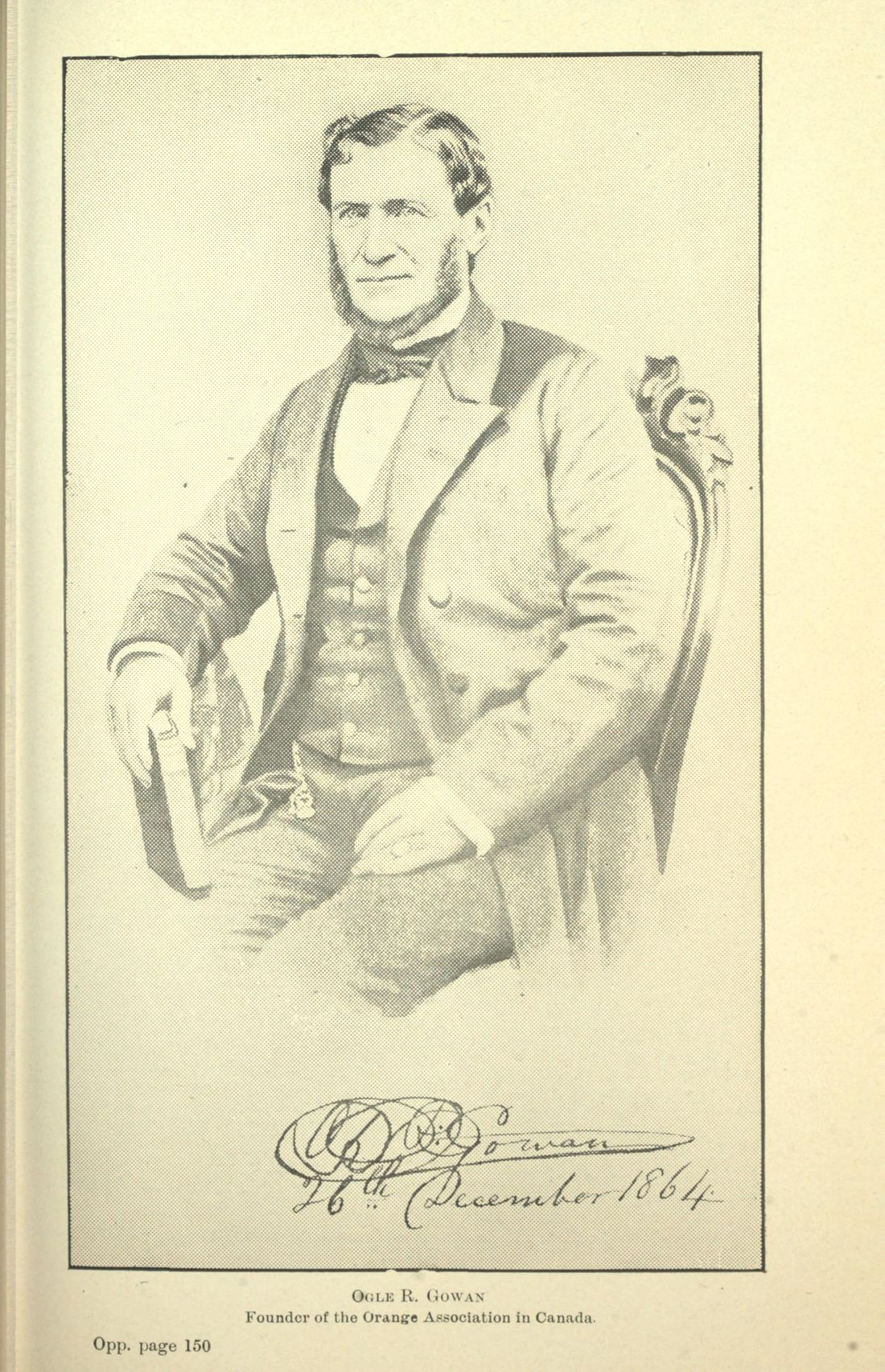
Above the primary lodge the structure ran upward in stages. Primary lodges, generally written LOL and numbered, grouped into district lodges. District lodges grouped into county lodges. County lodges reported to the provincial grand lodge, and the provincial grand lodges to the Grand Orange Lodge of British America, which had moved its seat to Toronto in 1867 after its 1830 founding at Elizabethtown, later Brockville. Above everything sat the Imperial Grand Orange Council.
Lodge numbers are not stable identifiers
This is the single largest trap in Orange genealogy, and it is worth understanding before reading the table below.
In an Orange parade the lodges marched in number order, so a low number put a lodge near the front. When a lodge folded, its number fell vacant, and surviving lodges with higher numbers competed to take it. Numbers were therefore transferred between unrelated bodies in different places, sometimes more than once.
Western Ontario supplies a clean documented example from exactly this period. The lodge at Cedar Mills in Peel County held warrant 807 until 1870, when it acquired warrant 455 and thereafter appears under that number. Both numbers refer to one lodge, and 807 subsequently means something else. Similar duplications run through the Ontario series: numbers 5, 6, 47, 49, 126, 127, 142, 157, 185, 212 and 255 all appear against two distinct lodges in different towns.
The practical rules that follow are simple. Always record the lodge’s place alongside its number. Never assume two records sharing a number describe one lodge. Where a lodge has a name as well as a number, the name is the more reliable identifier.
The directory: lodges documented in Ontario West by 1871
These are the primary lodges in the Ontario West jurisdiction for which an establishment date on or before 1871 is documented. The date given is the establishment year recorded in Dunford’s survey. Where a closing year is known it is given too. This is a floor, not a census: many lodges working in 1871 have left no dated warrant record, and the true number in the jurisdiction was considerably larger.
| No. | Name | Place | Established | Closed |
|---|---|---|---|---|
| 22 | Orangeville | 1830 | ||
| 146 | Bolton, Peel County | 1834 | 1933 | |
| 288 | Kincardine, Bruce County | 1840 | 1888 | |
| 63 | Mono Road, Peel County | 1847 | 1892 | |
| 76 | Campbell’s Cross, Peel County | 1847 | 1877 | |
| 249 | Snelgrove, Peel County | 1847 | 1902 | |
| 427 | Aaron | Orangeville | 1847 | 1868 |
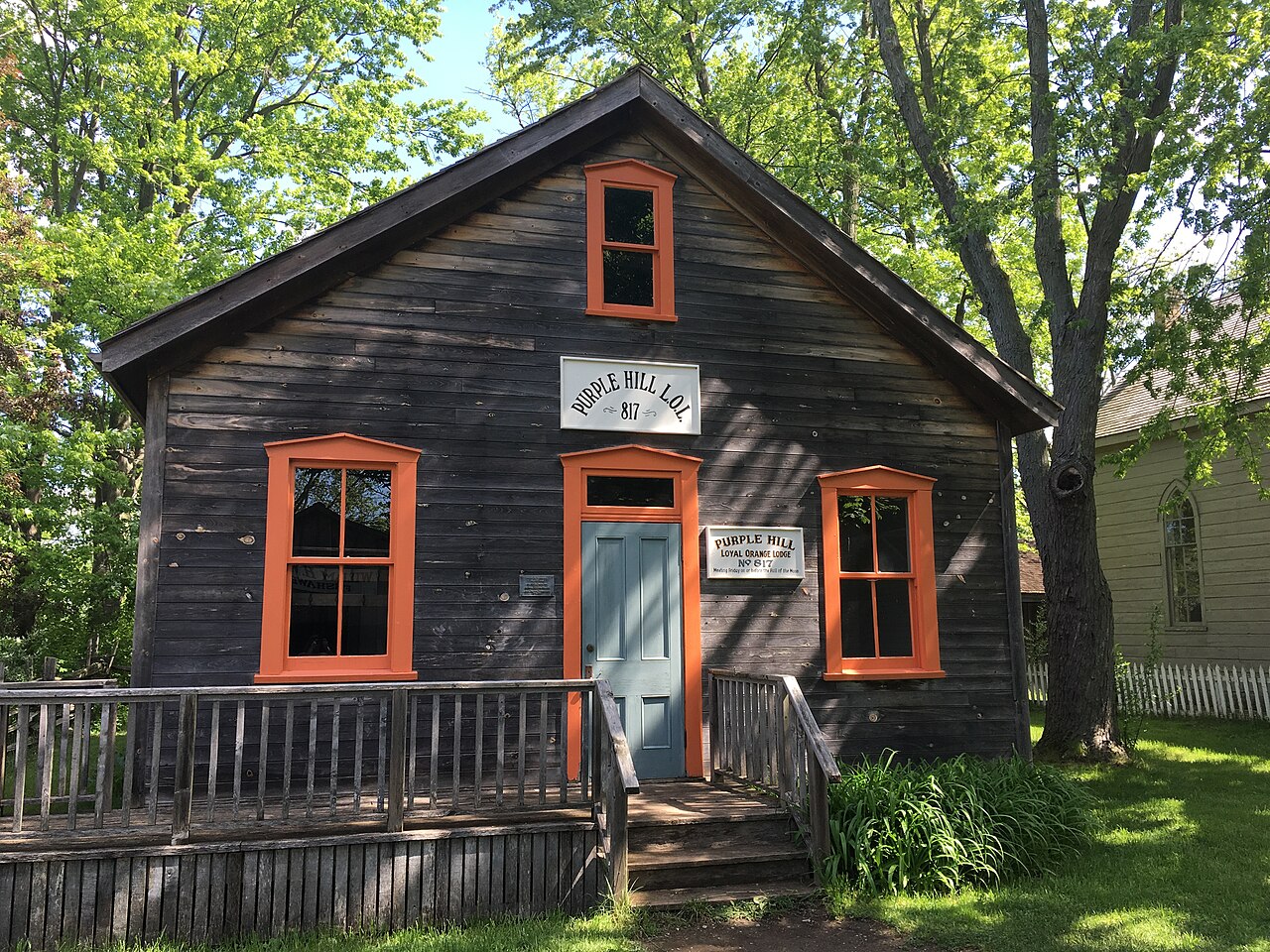
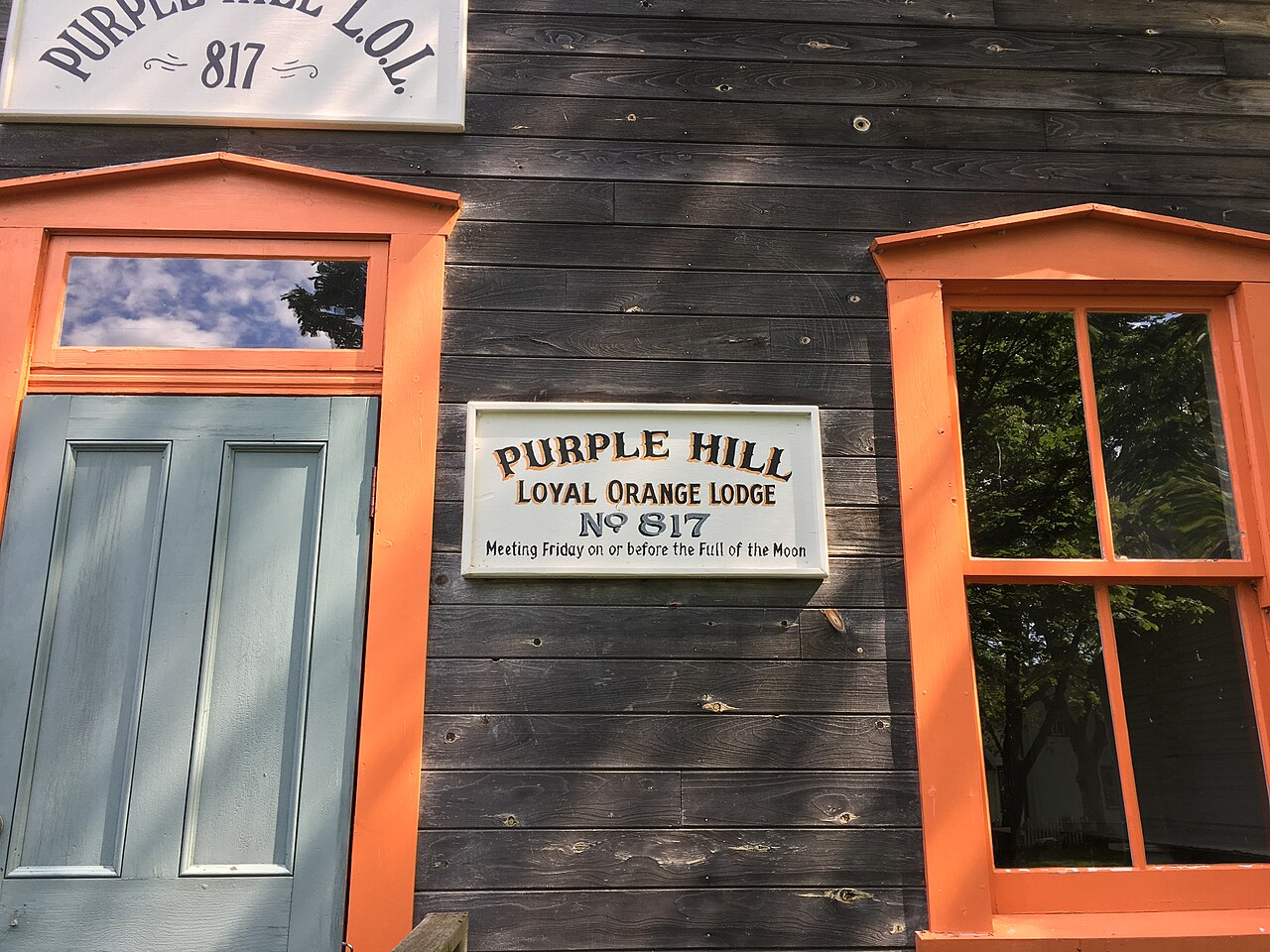
| 84 | Purple Hill | Clark’s Hall, Peel County | 1848 | |
| 260 | Black Horse | Enniskillen | about 1850 | 1893 |
| 138 | William Henry | Cheltenham, Peel County | 1854 | |
| 604 | Tullamore, Peel County | 2 January 1855 | 1890 | |
| 635 | Orangeville | 1855 | 1868 | |
| 696 | Albert | Castlemore, Peel County | 1856 | 1888 |
| 770 | Alton, Peel County | 1856 | ||
| 808 | Leamington | Leamington, Essex County | 1856 | 1866 |
| 163 | Lake Shore | Port Credit, Peel County | 1856 | |
| 708 | Eldon Temperance | Meadowvale, Peel County | 1857 | 1879 |
| 946 | Brampton, Peel County | 1858 | 1870 | |
| 1020 | Columbia | 1859 | 1879 | |
| 1174 | Brampton, Peel County | 1864 | 1881 | |
| 1181 | Cooksville, Peel County | 1864 | 1927 | |
| 455 | Cedar Mills, Peel County | 1870 | ||
| 1331 | Prince Arthur | Guelph, Wellington County | 1871 |
Several entries carry detail that matters more than the dates. Lodge 138, William Henry at Cheltenham, moved there from York in 1854. Lodge 604 at Tullamore amalgamated with lodge 5 in 1890, so post-1890 Tullamore members appear in lodge 5’s records. Lodge 1020, Columbia, was absorbed by lodge 146 at Bolton in 1879. Lodge 260, Black Horse at Enniskillen, moved in 1874 to County 10 Lodge 24 in Albion Township. Lodge 148, Victoria, at North Albion in Peel County, originally met at Castlemore, was meeting at Macville by 1866, and was at Cedar Mills when it closed. A lodge that appears to vanish has very often merged or moved.
Prince Arthur LOL 1331 at Guelph, warranted in 1871 itself, is the one lodge in the table whose founding is contemporaneous with this directory, and its records run forward well into the twentieth century.
The Peel County concentration is real, and partly an artefact
Peel County dominates the table above, and a reader should be careful about what that means. Orangeism was genuinely strong in Peel, Dufferin and the Toronto hinterland, and the concentration of crossroads lodges at Tullamore, Castlemore, Snelgrove, Campbell’s Cross, Cedar Mills, Alton and Mono Road is not an illusion.
But the table also reflects where the record-keeping happened to be good. The southwestern counties were heavily lodged too, and their surviving records sit in a different repository with a different finding aid. Western University’s archives hold thirty-four fonds from Orange lodges and affiliated bodies in Middlesex, Oxford and Lambton, including London LOL 188, Britannia 156, Thorndale 248, Boyne 298, Thamesford 625, Hackett 805, Delaware 902, Diamond 965, Ekfrid Centre Appin 981, Byron 2060, Pottersburg 2056, Beaver 2101, Nassau 2170, Dorchester 3250 and Star of Bethlehem 2769, along with several Ladies Orange Benevolent Association lodges and collections for Lambton County and West Williams Township.
Those fonds do not carry warrant dates in the online finding aid, so none of them could be placed in the 1871 table with confidence. The low numbers on several, particularly Britannia 156, London 188 and Thorndale 248, suggest early warrants, but a low number is not a date and this page will not treat it as one. Anyone researching a southwestern Ontario lodge should request the finding aid PDF for that fonds directly.
Related bodies working in the same halls
Not everything that met in an Orange hall in western Ontario was a primary lodge, and mistaking one for another wastes a lot of searching.
The Royal Black Preceptory was a separate order with its own numbering series, open only to Orangemen who had taken the Royal Arch Purple degree. Its preceptories usually met in the local Orange hall on a different night.
The Orange Order in Canada worked four degrees, Orange, Royal Blue, Royal Arch Purple and Royal Scarlet, and Royal Scarlet chapters kept their own records. Two bodies in the table’s period had not yet been founded and cannot appear in an 1871 search: the Ladies Orange Benevolent Association was formed in 1894, and the Orange Young Britons, the juvenile lodges for boys aged six to sixteen, had a district lodge in Toronto by 1875. A woman or a child in an Orange record before those dates is in some other capacity.
Scale, for context
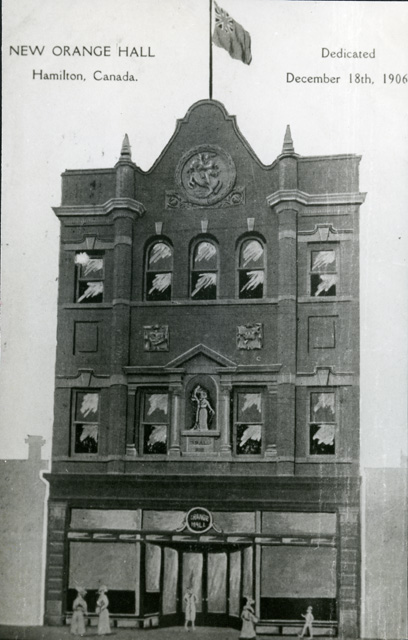
Toronto alone, inside the Ontario West jurisdiction, had over twenty lodges by 1860, thirty-one by 1880 and fifty-six by 1895. Across Canada the Order reached roughly a hundred thousand members around 1900, spread over ten provincial grand lodges, about a hundred and seventeen county lodges and some seventeen hundred and twenty-five primary lodges, and its lodge count peaked around 1920 at about two thousand.
Set against those figures, the twenty-three dated lodges in the table are a small fraction of what was working in western Ontario in 1871. Treat the directory as a set of confirmed anchor points, and expect the lodge you are looking for to be one of the many that left no dated warrant behind.
How to search from here
Start with the place, not the number. Identify the township and county, then the county lodge, then the district. Local museums and county archives hold most surviving minute books: Bruce County Archives, Grey Roots at Owen Sound, Peel Archives, and Western University for Middlesex, Oxford and Lambton.
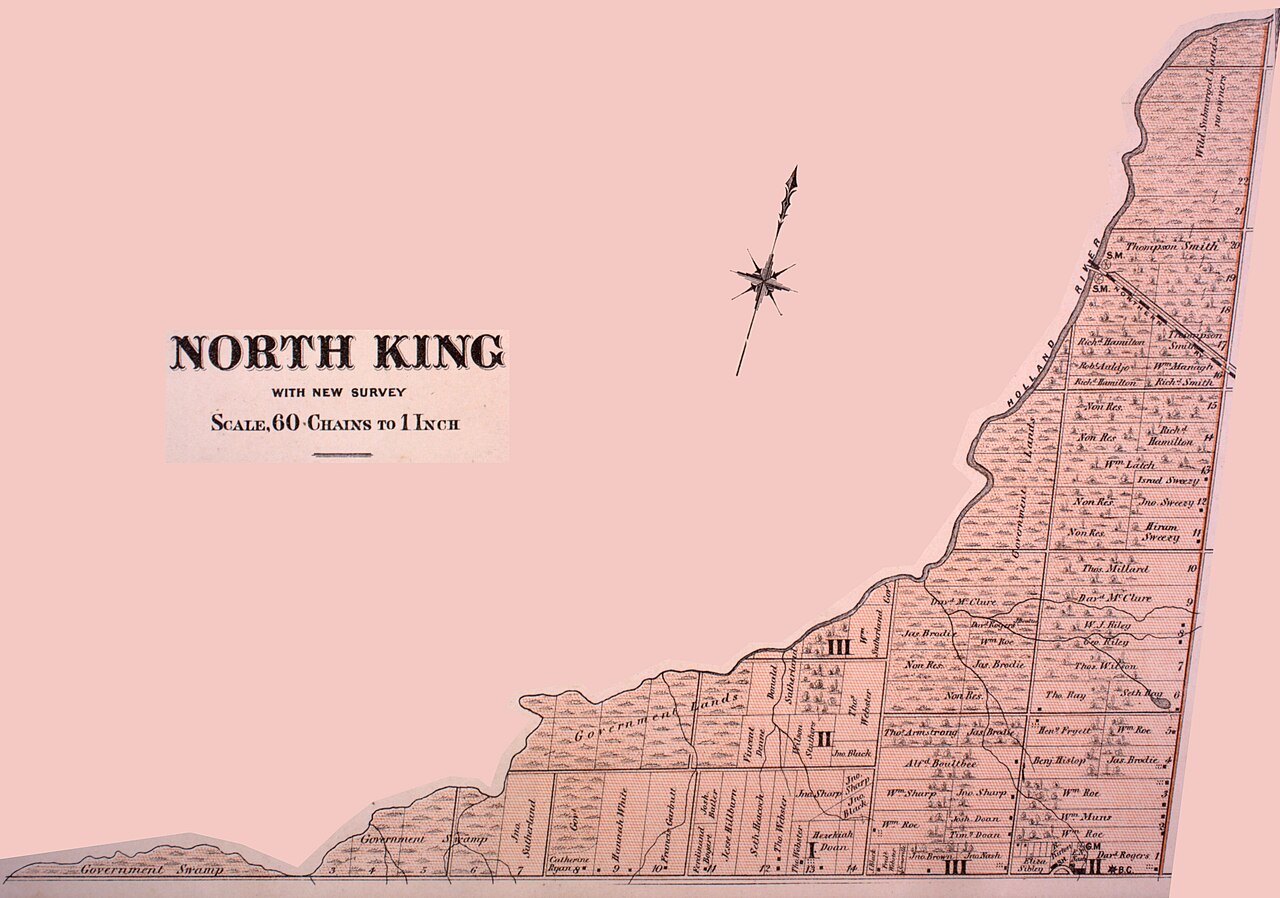
Pair every lodge with a county atlas sheet. The Ontario county atlases of the 1870s, digitised in McGill’s Canadian County Atlas Digital Project, name landowners lot by lot, so a lodge recorded as meeting at a named crossroads can usually be tied to a specific concession.
Then read the county newspaper for 12 July. Orangemen’s Day parade reports name visiting lodges by number and their officers by name, year after year, and for many lodges that annual notice is the only surviving record of who belonged. The same papers carried the lodge resolutions of the autumn of 1885 during the campaign over Louis Riel, which is another reliable point at which individual lodges named themselves in print.
Trace Your Orange Roots
Surname matches, haplogroup placement, and living relatives. FamilyTreeDNA's testing kits pick up where archival records end.
Affiliate links. We earn a small commission at no cost to you. Full disclosure →
Sources
- Fraternal and Benevolent Societies in Ontario: Loyal Orange Order — Fraser Dunford's reference. Source for the 1859 creation of the three provincial grand lodges, the 1867 renaming to Ontario West, the Victoria County boundary, the lodge hierarchy, the four Canadian degrees, and the lodge-number reuse practice. Verified August 2026.
- Primary (LOL) Lodges in Ontario, Fraternal and Benevolent Societies in Ontario — Working list of Ontario primary lodges with numbers, names, places, and establishment and closing dates. The source for the directory table on this page. Verified August 2026.
- Loyal Orange Lodges, Western University Archives and Special Collections — Thirty-four fonds from Orange lodges and affiliated bodies in Middlesex, Oxford and Lambton counties, with lodge names and numbers. Verified August 2026.
- Orange Order in Canada, Wikipedia — Founding at Elizabethtown in 1830, Toronto lodge counts for 1860, 1880 and 1895, and the 1920 peak figures. Verified August 2026.
- The Canadian County Atlas Digital Project, McGill University — Digitised Ontario county atlases of the 1870s, the standard cartographic companion to any lodge-location search. Verified August 2026.
Further reading
As an Amazon Associate we earn from qualifying purchases. Full disclosure →
- The Sash Canada Wore: A Historical Geography of the Orange Order in Canada — Houston and Smyth, 1980. Maps lodge formation against Protestant settlement, county by county.
- Toronto, the Belfast of Canada: The Orange Order and the Shaping of Municipal Culture — William J. Smyth, 2015.