The Orange Order in Ontario
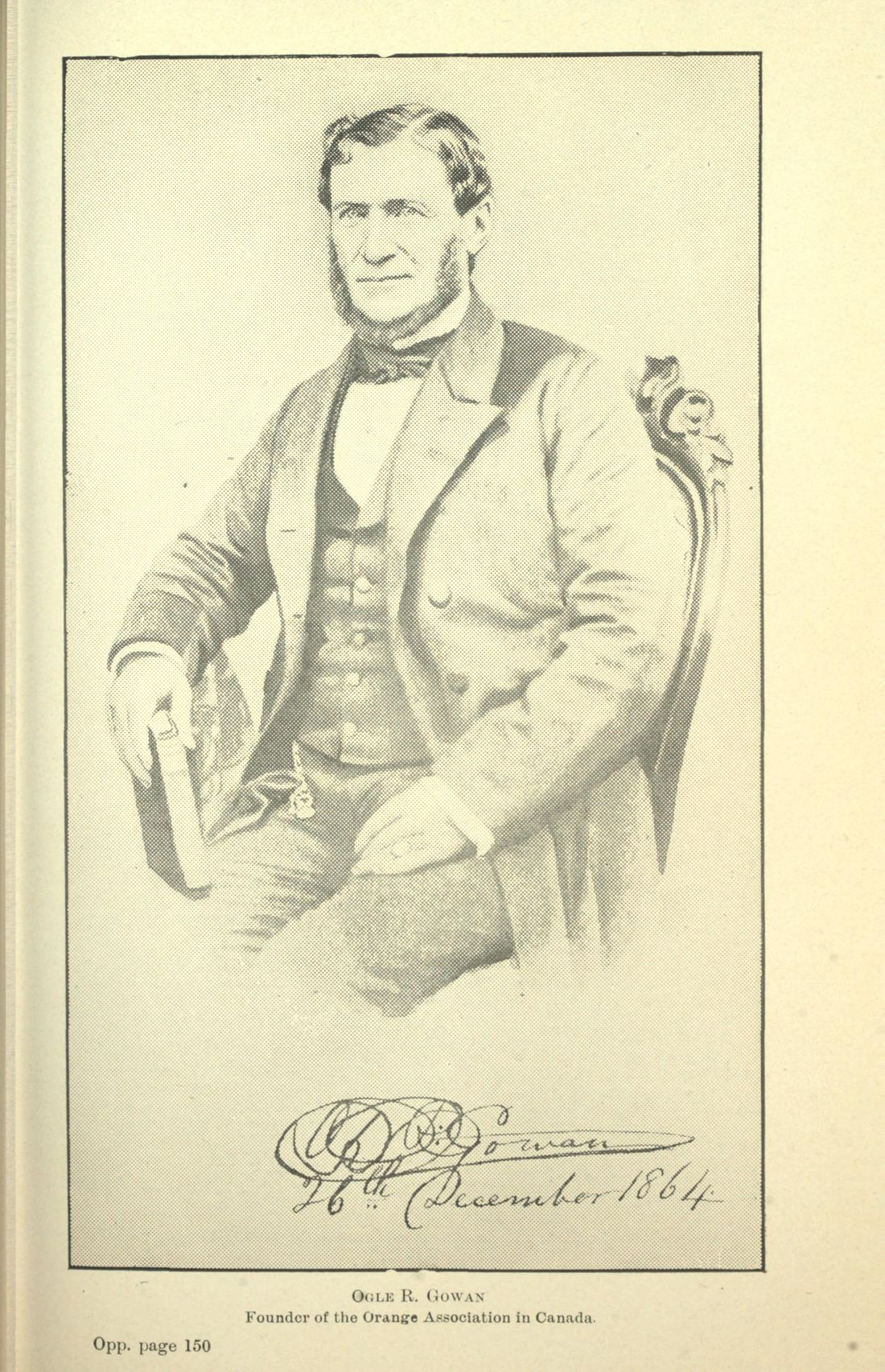
Ontario is where the Canadian Orange Order actually lived. The Grand Orange Lodge of British North America, the root of the Orange Order in Canada, was founded at Brockville in 1830 by Ogle Robert Gowan, an emigrant from County Wexford who had been in the province less than a year, and for the next century the province supplied most of the Order’s members, most of its money, most of its officers and nearly all of its political weight. The best short description of what that meant in practice is the one Toronto earned for itself: the Belfast of Canada.
Why Ontario and not somewhere else
The Order arrived with people. Ulster Protestant emigration into Upper Canada ran heavily through the 1820s, 1830s and 1840s, and the lodges followed the settlers into the townships they took up. Cecil Houston and William Smyth mapped that process in The Sash Canada Wore (1980) and reached a conclusion that still surprises readers: the Canadian Order was not primarily an urban phenomenon. Its dense clusters sat in the rural Protestant townships of south-central and eastern Ontario, in the Ottawa Valley, and along the front of the St. Lawrence. Lodges in Toronto, Hamilton and Ottawa were politically loud out of proportion to their numbers because they sat where the newspapers and the patronage were.
The rural lodge was the ordinary case. Houston and Smyth put the typical rural lodge at twenty-five to forty members and the typical urban one at roughly double that. A township lodge of thirty men meeting monthly above a store is a very different institution from a city machine, and most of Ontario Orangeism was the former.
Primary lodge, county lodge, grand lodge
The structure had four tiers and each did a distinct job.
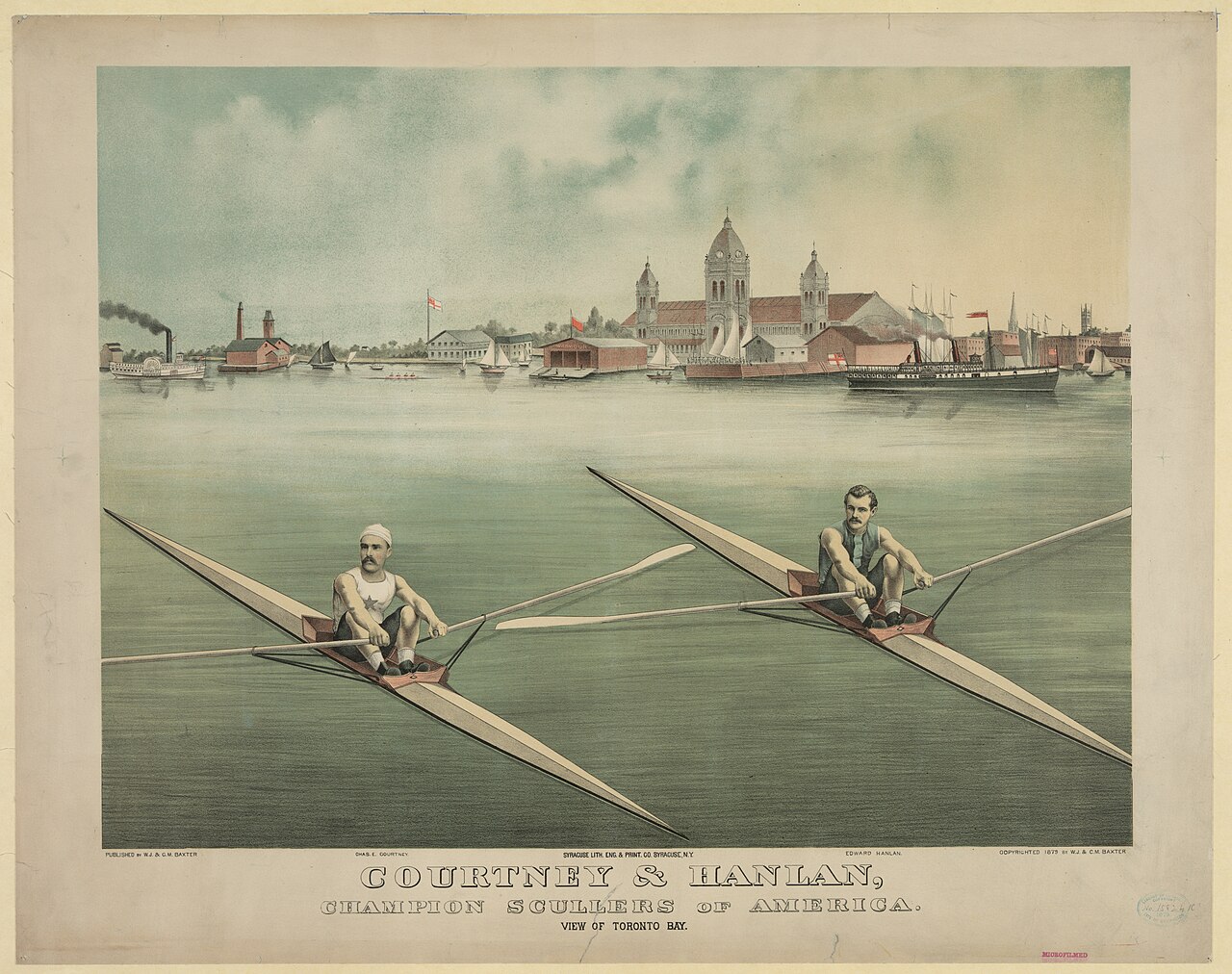
The primary lodge was the local unit, numbered in a single national series, meeting weekly or monthly. Lodge numbers are the detail most researchers arrive looking for, because a number identifies a place and a period: Brunswick L.O.L. 404 was the Toronto lodge of the sculler and boxer John Francis Scholes; McKinley L.O.L. 275 carried Francis Henry Medcalf, John Shaw and Frederick Burton Robins at different dates; L.O.L. 557 was the Lindsay-district lodge of John Carew; Riverdale L.O.L. 2097 held Thomas Erlin Kaiser even after twenty years’ residence in Oshawa. A high number generally means a late warrant.
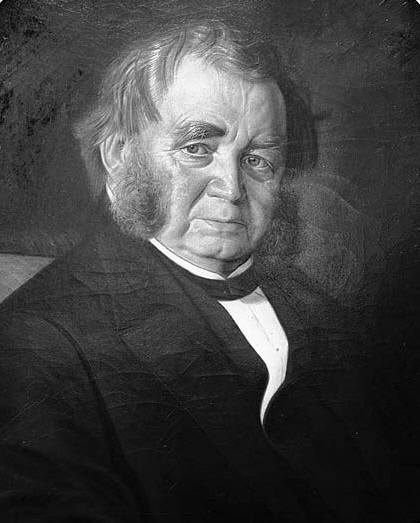
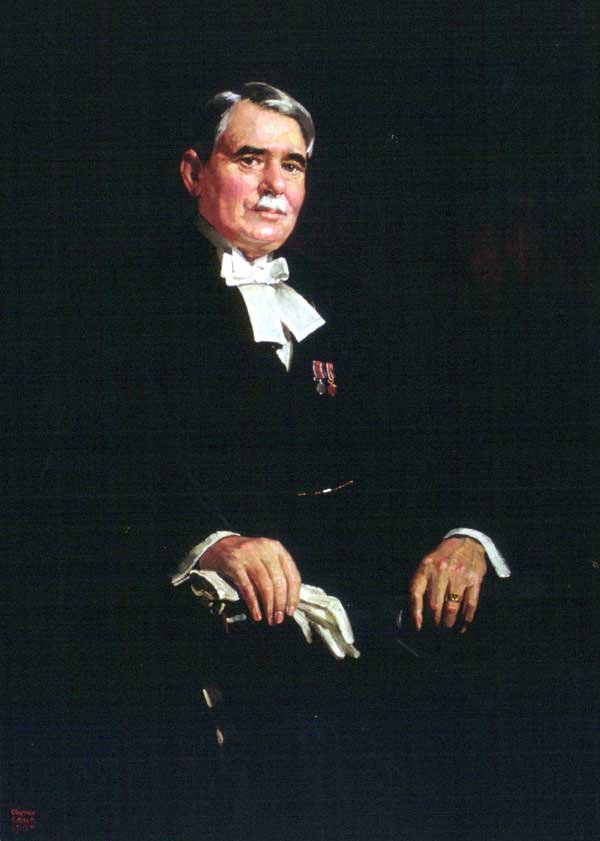
The county lodge combined the primaries within a county and is the tier where lodge politics turned into county politics. Medcalf chartered the County Orange Lodge of Toronto as its first County Master in 1860, and the office kept its weight for two generations: Joseph Elijah Thompson was elected County Master of Toronto for 1907 and 1908, which put him at the head of the largest Orange jurisdiction in the country and gave him the base he used to reach the Speaker’s chair at Queen’s Park.
Above that sat the provincial grand lodge, and above that the Grand Orange Lodge of British America, meeting annually. At the Order’s peak around 1900 the national body ran ten provincial grand lodges, roughly 117 county lodges and some 1,725 primary lodges.
Ontario East and Ontario West
Ontario has two provincial grand lodges rather than one, and the reason is a proposal Gowan made near the end of his career. At the June 1859 meeting of the Grand Orange Lodge of British America at Hamilton he moved that a supreme Grand Lodge be created with provincial grand lodges beneath it. The proposal carried, and at Cobourg that August, under Grand Master John Hillyard Cameron, Upper Canada was divided into two jurisdictions, central and western, with Lower Canada named Eastern Canada.
The western body’s warrant was issued on 20 February 1860 and its first annual meeting was held at St. Catharines that April under T. H. Buckley as first Grand Master. Its boundary was drawn, in the Order’s own words, from the west side of the county of Victoria south to Lake Ontario in the east, to a line running north and south through Ignace on the Canadian Pacific in the west. After Confederation the two became Ontario East and Ontario West, and Ontario West was incorporated on 11 September 1891.
That division is why records split. A search that turns up nothing in one jurisdiction’s returns may sit in the other, and this site holds transcriptions from both, including a list of Orange lodges in Ontario west of Victoria County in 1871 and the 1911 death returns of the Grand Lodge of Ontario West.
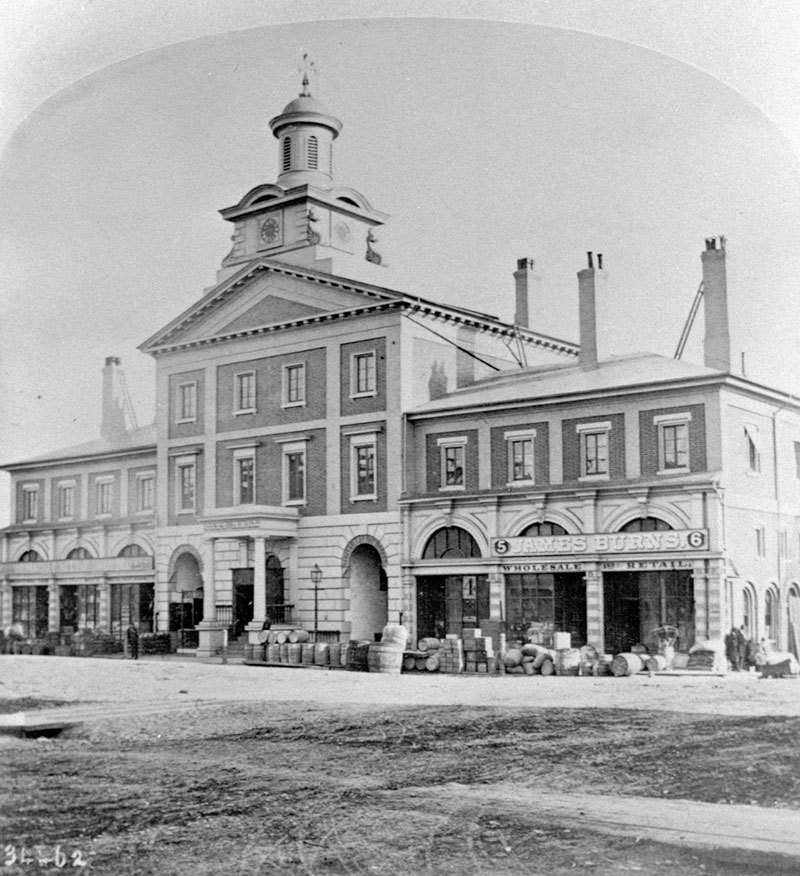
Toronto city hall
The Toronto story is the one that gets told, and the figures behind it need care because the standard accounts do not agree.
The direction of travel is not in doubt. Toronto had more than twenty lodges by 1860, thirty-one by 1880 and fifty-six by 1895. By 1844 six of the city’s ten aldermen were Orangemen. As late as 1942, sixteen of the twenty-three members of city council belonged. Where the sources part company is on the mayoral count: the overview of the Order in Canada on this site puts it at at least seventeen mayors of Toronto, while other accounts claim twenty of the twenty-three men who held the office during the nineteenth century. Nobody has published a reconciled list with lodge numbers attached, and until somebody does, the honest statement is that Orange membership was the normal condition of a Toronto mayor for roughly a century rather than a fixed and countable proportion.
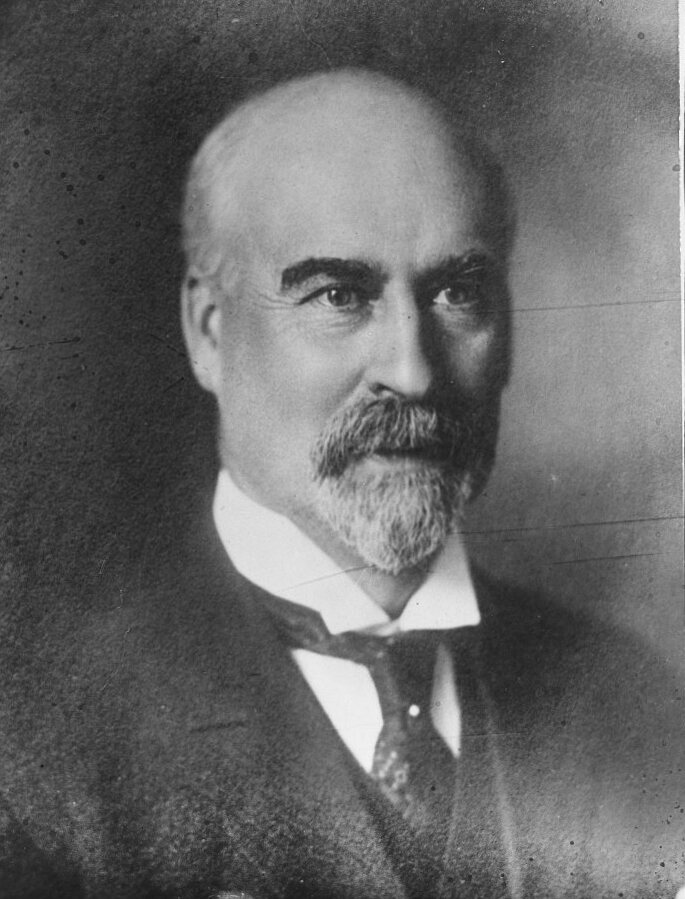
This site documents several of them individually: Joshua George Beard, mayor in 1854; Medcalf, mayor across 1864 to 1866 and again in 1874 and 1875; John Shaw, mayor from August 1897; and Horatio Clarence Hocken, mayor from 1912 to 1914 and Grand Master of the Grand Orange Lodge of British America from 1914 to 1918, who cut the city’s communicable-disease death rate by three-quarters while holding both.
What the machine actually did
Municipal power in nineteenth-century Toronto ran through appointments, and the Order held the appointments. Police and fire hiring, tavern and shop licences and civic contracts moved through networks that overlapped almost exactly with lodge membership, which is why the Toronto Circus Riot of 1855 is remembered less for the brawl that started it than for the fact that the police, themselves lodge members, watched.
The Order never affiliated formally with a party, and it is worth saying plainly that it was not a party in disguise. Lodges endorsed candidates in nomination contests, Order-adjacent papers carried voting recommendations, and the Twelfth of July doubled as an annual rally. But Orangemen sat on both sides of the House. Lewis Wallbridge made his career as a Reformer and became Speaker of the Legislative Assembly of the Province of Canada; Hocken’s politics were urban-reform; John Weir Foote, initiated at Fraserville lodge in 1934, went on to a Victoria Cross at Dieppe and then a provincial ministry.
The Twelfth, and the law against processions
The parade was the Order’s public face and the recurring flashpoint. Robertson’s Landmarks of Toronto preserves the order of march for the Toronto Twelfths of the 1850s and 1860s in the words of the city papers, down to the count of banners displayed from windows and the collection taken for the Orphans’ Home, with Gowan repeatedly on the platform. The tone of that reporting is deliberately reassuring, which is itself evidence: the papers were arguing that a Twelfth could pass off without disturbance because so often it had not.
Governments tried to legislate the processions away twice. The British Parliament banned Orange processions in Ireland by the Party Processions Act of 1832, and the Legislative Assembly of the United Canadas followed in 1843. In the same session Robert Baldwin brought in a bill to bar Orangemen from office under the Crown and from jury service, and to put at risk the liquor licences of taverns where lodges met. Sir Charles Metcalfe reserved that bill for the imperial parliament, where it was disallowed, while allowing the processions measure to pass. An Orange crowd burned Baldwin and Hincks in effigy outside the Baldwin home in Toronto on the night of 8 November. Repeal of the processions law became a standing Orange demand, and the grand master who eventually secured it collected the credit.
Riot
Between 1839 and 1866 the Order was involved in twenty-nine riots in Toronto, sixteen of which have been classed as directly political. The two best documented are the Circus Riot of 1855 and the Jubilee Riots of 1875.
The Jubilee episode deserves its complication. Catholic pilgrimages through the streets in the papal jubilee year drew opposition; the first, on 19 September 1875, passed without incident, while those of 26 September and 3 October produced stone-throwing, pistol fire and injuries to almost every policeman in the city. The Toronto Orange lodge demanded that further processions be suppressed, and the Young Britons, the Order’s youth body, were accused in witness testimony and in Globe editorials of incitement. And the man who rode at the head of the police and cavalry defending the Catholic marchers on 3 October was Mayor Medcalf, the founding County Master of Toronto Orangeism. That is the kind of fact that survives only if you decline to simplify the period.
The Orange hall
The lodge hall is the Order’s surviving physical footprint in Ontario and the reason the subject is still visible in the landscape. Rural halls were plain frame or brick single rooms, often the only public building in a hamlet apart from a church and a school, and they were used for far more than lodge nights: socials, suppers, meetings, elections and dances. In villages that had nothing else, the Orange hall was the community hall.
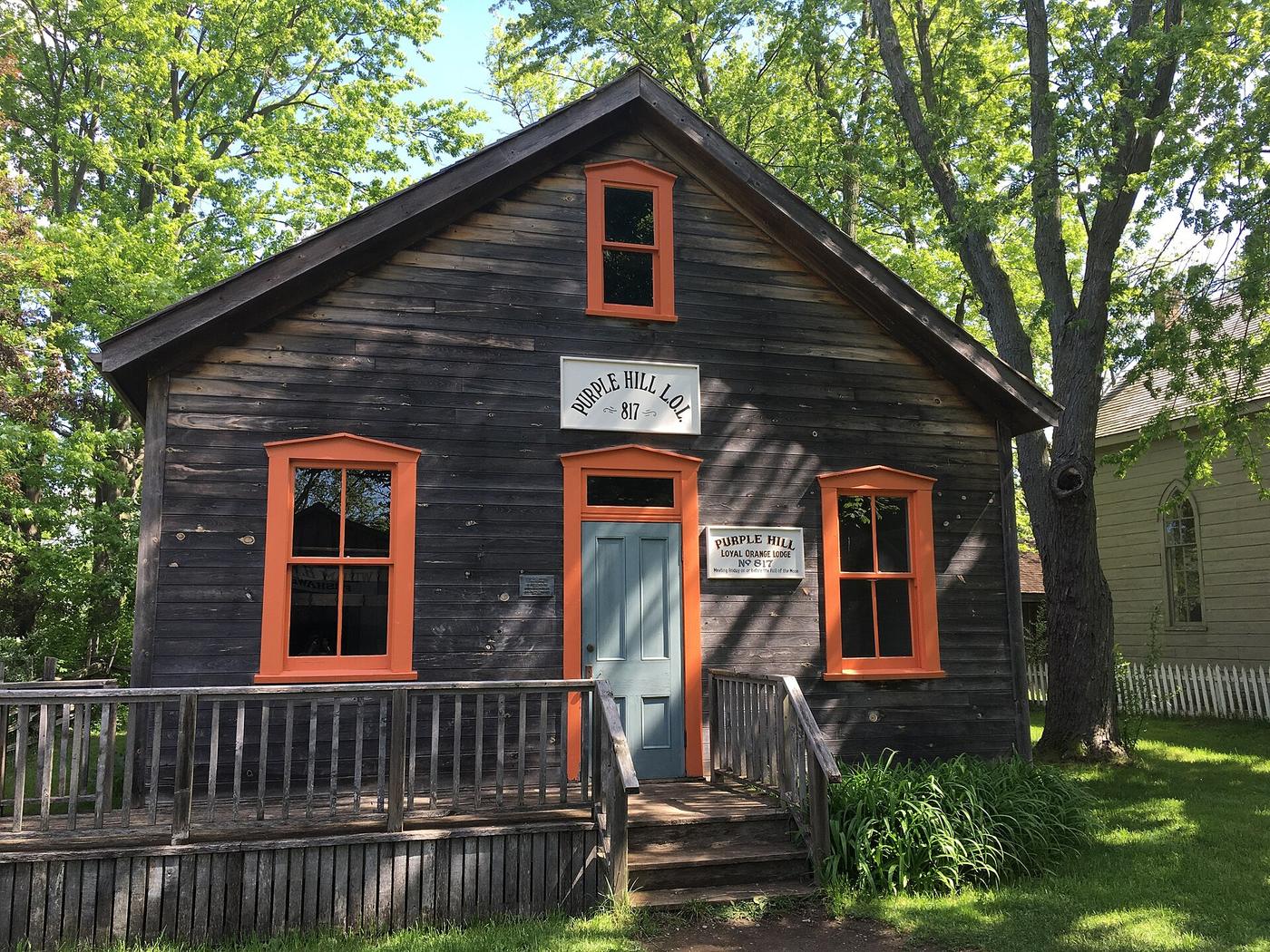
Town halls were more ambitious. The Orange Hall at 50 John Street in Port Hope is a brick building with arched windows that would read as a small chapel or a lodge of any other order if you did not know what it was, and that ambiguity is the point: by the 1880s the Order was building to look permanent.
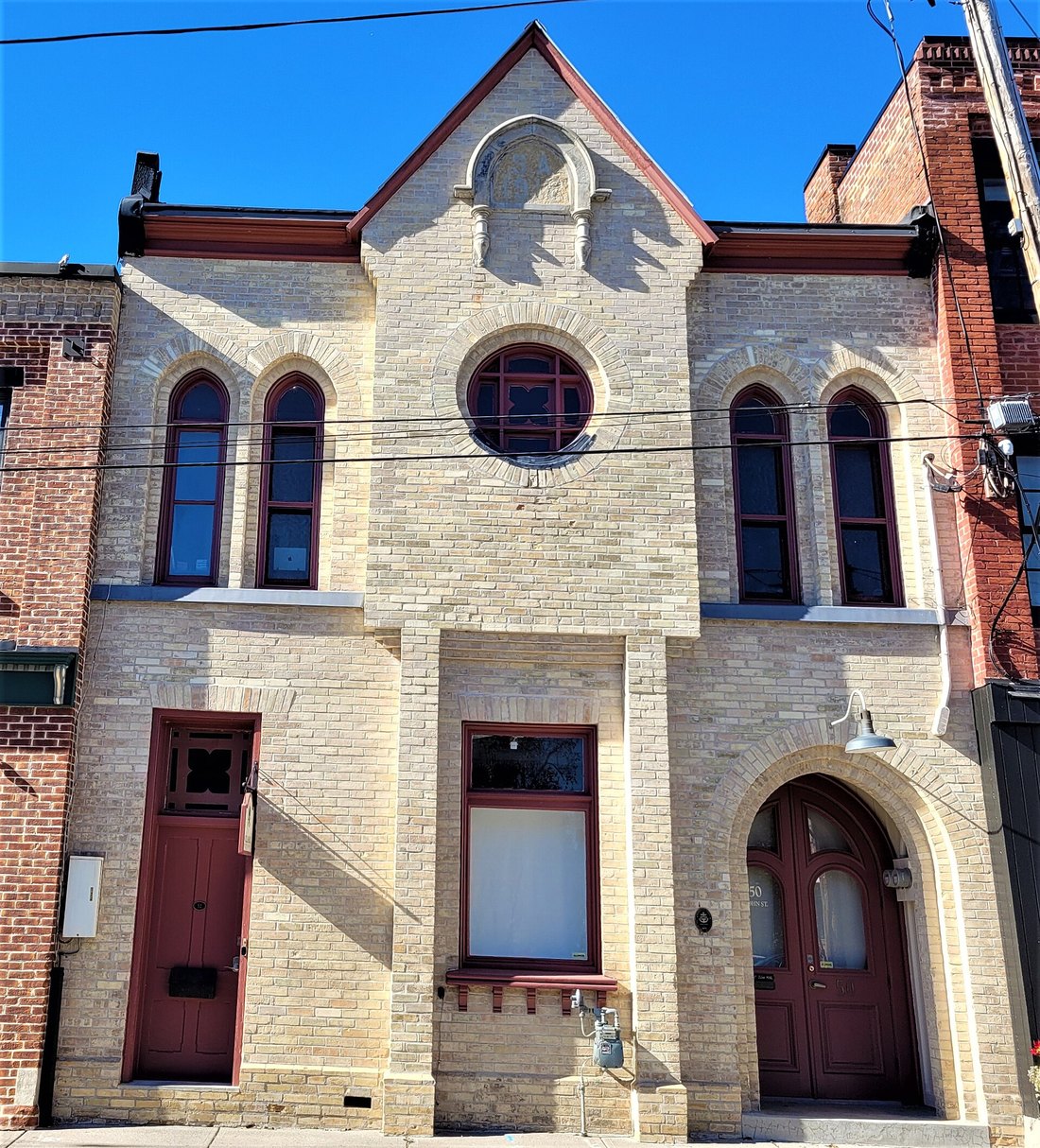
Many halls have been sold, converted or lost. Where one survives, the deed trail and the local land registry will usually give you a lodge number and a date, and that is frequently the fastest route into a lodge’s history when the minute books have gone.
Beyond the city
Ontario’s rural and small-town Orangeism sent men to Queen’s Park steadily rather than spectacularly. Samuel Armstrong sat for Parry Sound from 1886 and was afterwards sheriff of the district for twenty-six years. William James Gardhouse, whose lodge was the rural Parkhill in the farming townships west of Toronto, was reeve of Etobicoke, warden of York County and MPP for West York from 1934. Robert Ellsworth Elliott sat for Hamilton East across two separate stretches after 1945. Carew represented Victoria South from 1914. Kaiser was mayor of Oshawa and then MP for Ontario riding.
The Order’s institutional life extended past the lodge room as well, into the Royal Black Preceptory as a senior degree body and into charitable work, most visibly the Loyal True Blue and Orange Home at Richmond Hill. Its political interventions could be national: the Ontario reaction to the Jesuit Estates Act in 1888 and 1889 was strong enough to win the Order its own federal act of incorporation in 1890, and the 1885 petition against clemency for Louis Riel came out of Toronto lodges.
Decline
Membership peaked between about 1910 and 1920 and fell away through the 1920s and after. Houston and Smyth attribute the fall to several things at once: Ulster emigration, which had replenished the lodges since 1830, largely stopped; Anglo-Protestant Ontario urbanised and secularised; sectarian identity stopped being a useful organising principle in Canadian public life; and the causes the Order had owned were absorbed by movements that did not need a lodge.
Toronto marked the turn on a single day. On 6 December 1954 Leslie Howard Saunders, an Orange leader who published the monthly Protestant Action and campaigned as “Leslie Saunders, Protestant”, lost the mayoralty to Nathan Phillips, who was Jewish. William Dennison, mayor from 1967 to 1972, is generally described as the last Orangeman to hold the office.
The Order in Ontario did not disappear, and the current numbers are the most exact measure of the distance travelled. The Grand Lodge of Ontario West reports 18 county lodges, 95 primary lodges and 17 scarlet chapters. A century earlier the national body counted primary lodges in the thousands, and most of them were in this province.
Where the records are
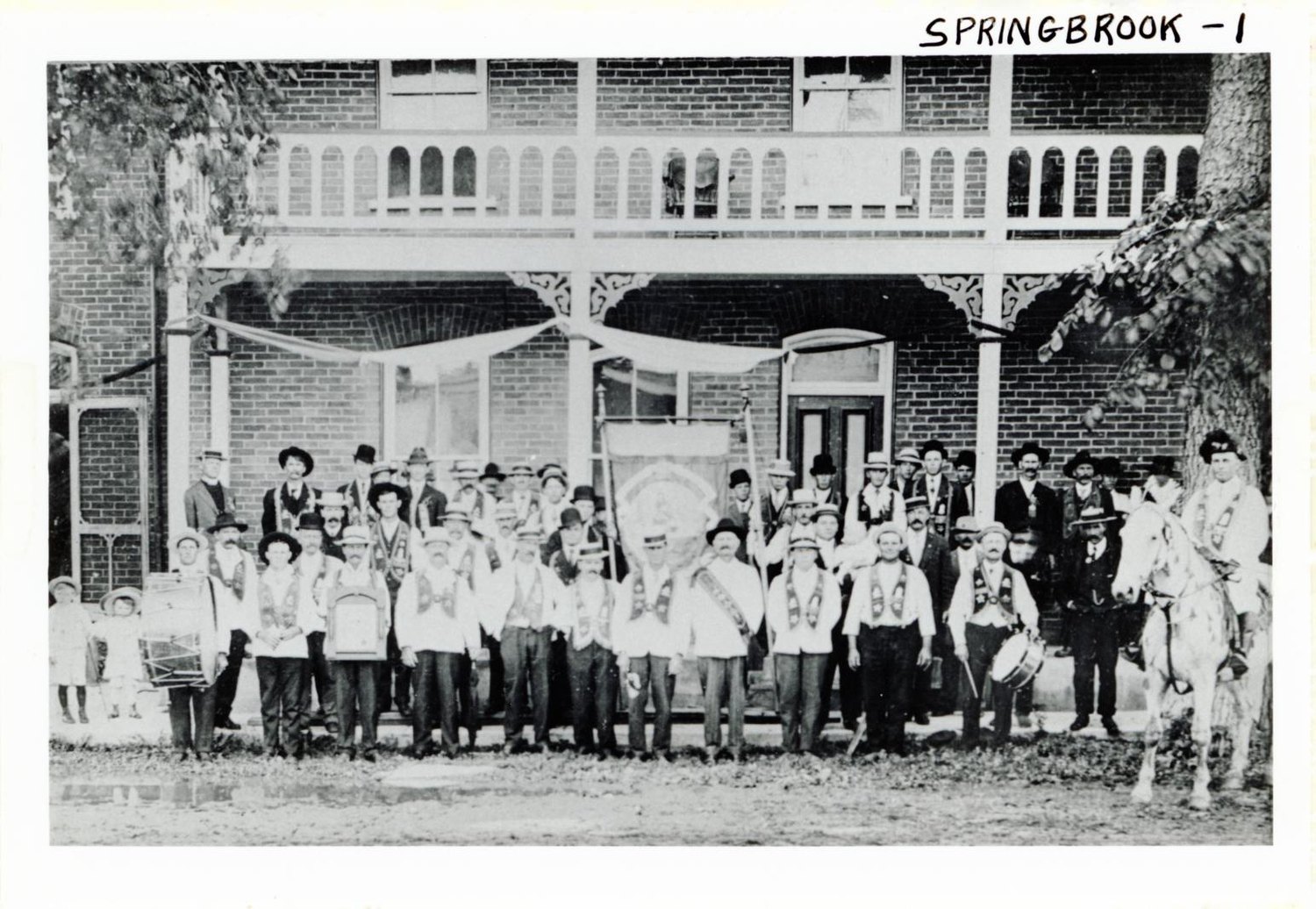
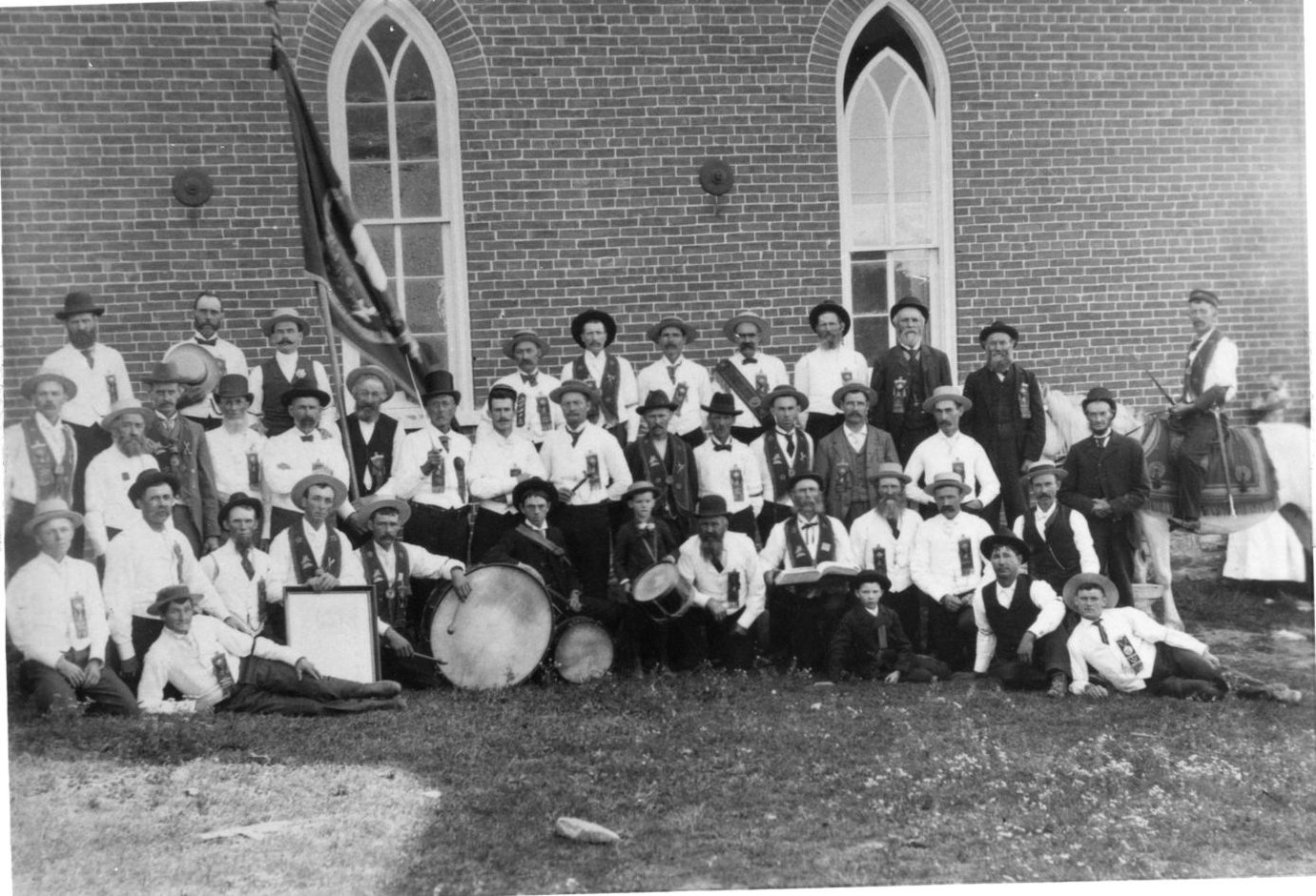
Ontario Orange records are scattered and incomplete, and a great deal of what survives is in private and municipal hands rather than in a single archive. Lodge minute books, warrants and membership rolls have gone to county museums, local archives and historical societies; the Community Archives of Belleville and Hastings County holds photographs of Hastings lodges from which two of the images on this page come. Grand lodge proceedings, printed annually, are the best serial source and record deaths, warrants issued and lodges lapsed. This site holds transcriptions of several such documents, including the recovered Orange obituaries and the recovered biographical sketches, which between them name several hundred Ontario Orangemen not indexed anywhere else.
Trace Your Orange Roots
Surname matches, haplogroup placement, and living relatives. FamilyTreeDNA's testing kits pick up where archival records end.
Affiliate links. We earn a small commission at no cost to you. Full disclosure →
Sources
- Houston, Cecil J., and William J. Smyth. The Sash Canada Wore: A Historical Geography of the Orange Order in Canada. University of Toronto Press, 1980. — The canonical study. Its central finding, that the Order's density lay in rural Protestant townships rather than in cities, is the basis of the geography described here.
- Smyth, William J. Toronto, the Belfast of Canada: The Orange Order and the Shaping of Municipal Culture. University of Toronto Press, 2015. — Single-city treatment of the municipal machine that this site's Toronto biographies document individually.
- Senior, Hereward. Orangeism: The Canadian Phase. McGraw-Hill Ryerson, 1972. — Covers the 1830 founding, the 1843 legislation, and the mid-century schism.
- 'A Brief History', Grand Orange Lodge of Ontario — Institutional source for the June 1859 Hamilton proposal, the Cobourg division into Ontario East and Ontario West, the Ontario West warrant of 20 February 1860, the first annual meeting at St. Catharines in April 1860 under T. H. Buckley, the 1867 renaming, the incorporation of 11 September 1891, and the current count of 18 county lodges, 95 primary lodges and 17 scarlet chapters. Read August 2026.
- SENIOR, HEREWARD. 'GOWAN, OGLE ROBERT', Dictionary of Canadian Biography, vol. 10 (1972) — Source for the 1843 Baldwin legislation, its reservation and disallowance, and the party processions bill that was allowed to pass.
- Robertson, J. Ross. Robertson's Landmarks of Toronto, vol. 6. Toronto, 1914. — Chapter XXXII, 'The Glorious Twelfth', reprints Toronto press accounts of the parades of the 1850s and 1860s, with the order of march, the lodge numbers, and the platform speakers named. Portrait plates of Ogle R. Gowan, Harcourt R. Gowan, Francis H. Medcalf, George L. Allen and others.
- 'Jubilee riots' and 'Toronto circus riot', Wikipedia — Sequence of the September and October 1875 pilgrimages and the role of Mayor Medcalf and the Young Britons. Used for chronology; the underlying press accounts are in the Globe, the Mail and the Leader for those dates.
- '1954 Toronto municipal election' and 'Leslie Saunders', Wikipedia — The 6 December 1954 defeat of Leslie Howard Saunders by Nathan Phillips, and Saunders's Orange leadership and publication of Protestant Action.
- 'Fraternal and Benevolent Societies in Ontario', Orange section — Lodge numbering practice and typical lodge sizes in rural and urban Ontario. Used elsewhere on this site for lodge identification.
Further reading
As an Amazon Associate we earn from qualifying purchases. Full disclosure →
- The Sash Canada Wore: A Historical Geography of the Orange Order in Canada — Houston and Smyth, 1980. Start here for the Ontario township geography.
- Toronto, the Belfast of Canada: The Orange Order and the Shaping of Municipal Culture — Smyth, 2015. The Toronto municipal machine in detail.
- The Orange Order in Canada — David A. Wilson (ed.), Four Courts Press, 2007. Essay collection covering founding, immigration, violence and decline.